


In the winter of 1996, the tranquil Willamette Valley of Oregon, United States, was ravaged by a calamitous flood that left a trail of destruction in its wake, totaling a staggering $500 million in property damage across the Pacific Northwest. This catastrophic event, known as the Willamette Valley Flood, would etch its name in the annals of history as one of the most devastating natural disasters to afflict the region.
The Willamette Valley Flood was a consequence of a rare conjunction of climatic factors. A prolonged period of heavy rainfall, coupled with the region's unique geography, created a perfect storm that overwhelmed the valley's waterways. The collision of a Pineapple Express, a warm, moist air mass from Hawaii, with a cold front from the Gulf of Alaska, triggered a deluge of biblical proportions. The resulting rainstorm dumped an astonishing 20-30 inches of rainfall over a five-day period, shattering records and pushing the Willamette River to its breaking point.
In the wake of the disaster, a massive relief effort was launched, with local, state, and federal agencies working in tandem to provide aid to the affected communities. The Federal Emergency Management Agency (FEMA) declared the Willamette Valley a federal disaster area, unlocking vital funding for rebuilding and reconstruction efforts. Meanwhile, local residents, businesses, and organizations rallied together, displaying a spirit of resilience and community that would become a defining characteristic of the region's response to the flood.
The Willamette Valley Flood served as a stark reminder of the importance of preparedness and mitigation in the face of natural disasters. In its aftermath, the region implemented a range of measures to mitigate the risk of future flooding, including the creation of more robust flood control infrastructure and the development of more stringent building codes. The flood also spurred significant advances in hydrological research, as scientists sought to better understand the complex interplay of factors that contributed to the disaster.
Today, the Willamette Valley stands as a testament to the power of community resilience and the importance of continued disaster preparedness. As the region looks to the future, it does so with a renewed sense of purpose, determined to build upon the lessons learned from the Great Deluge of 1996. In the words ofOregon Governor John Kitzhaber, "The Willamette Valley Flood was a devastating event, but it also brought out the best in our communities. We came together, we rebuilt, and we emerged stronger than ever."
The economic impact of the Willamette Valley Flood was far-reaching, with the agricultural sector being one of the hardest hit. The floodwaters destroyed crops, damaged farm equipment, and disrupted supply chains, resulting in an estimated $100 million in losses for Oregon's agricultural industry.
In addition to agricultural losses, the flood also had a significant impact on the region's tourism industry. Many businesses, including hotels, restaurants, and recreational facilities, were forced to close temporarily, resulting in lost revenue and job losses.
The flood also had long-term economic implications, including increased costs for flood control measures and infrastructure repairs. However, the disaster also brought about new economic opportunities, such as the development of flood-resistant construction materials and flood-related tourism initiatives.

The Willamette Valley Flood had a profound impact on the region's cultural identity, with many residents referencing the event as a turning point in the valley's history.
The flood inspired a sense of community and resilience, with many residents coming together to support each other in the aftermath of the disaster.
The event also inspired a range of creative works, including literature, art, and music, that reflected on the flood's impact on the region and its people.
In the years leading up to the Willamette Valley Flood, a combination of factors contributed to the region's vulnerability to flooding.
Decades of deforestation and land development had altered the region's natural habitats, reducing the ability of the soil to absorb excess rainfall.
Meanwhile, the construction of dams and water control structures had also altered the natural flow of the Willamette River, making it more prone to flooding.
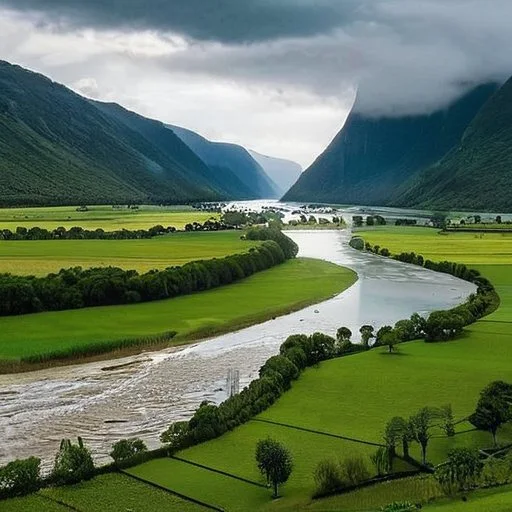
The Willamette Valley Flood had a significant impact on the region's ecosystems, with many species of plants and animals affected by the disaster.
The floodwaters washed away habitats and disrupted the natural food chain, leading to a decline in populations of fish and other aquatic species.
However, the flood also brought about new opportunities for restoration and conservation efforts, including the creation of wetlands and habitat restoration projects.
The Willamette Valley Flood spurred significant advances in hydrological research and flood forecasting technology.
Scientists used data from the flood to develop more accurate models of flood behavior, which have since been used to inform flood control policies and emergency response planning.
The event also highlighted the need for more effective communication systems during emergencies, leading to the development of new emergency alert systems and communication protocols.