


The Finnish War, fought between 1808 and 1809, is infamous for its sudden and unprovoked ignition, as Russian troops, under the command of Emperor Alexander I, crossed the border into Sweden's eastern Finland without declaration of war. This brazen act of aggression would ultimately result in Sweden ceding the eastern half of its territory, Finland, to Russia, reshaping the region's governance and leaving an indelible mark on European history.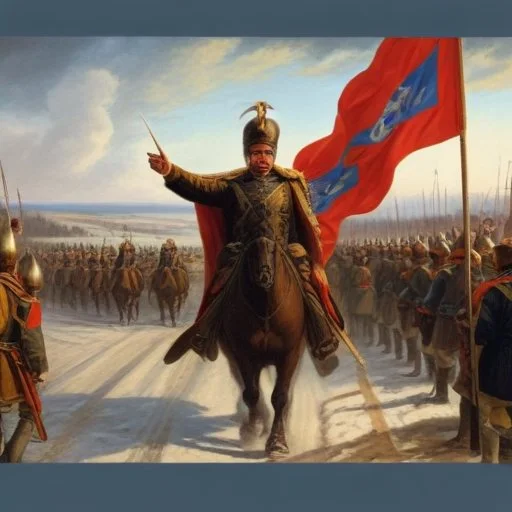
In the early 19th century, Russia was rapidly expanding its empire, driven by a desire for territorial growth and economic dominance. Emperor Alexander I, determined to strengthen Russia's position in Europe, had been eyeing the strategically located Finland, which shared a border with Sweden. Finland's geographical importance, combined with its natural resources and access to the Baltic Sea, made it an attractive prize for the Russian Empire.
February 1808: Russian troops, under General von Buxhoeveden, cross the border into Finland, catching the Swedish forces by surprise.
February-March 1808: The Russian army advances rapidly, capturing key towns and fortifications, including the strategic city of Helsinki.
March-September 1808: The Swedish army, led by King Gustav IV Adolf, launches a series of counterattacks, but is ultimately unable to stem the Russian tide.
September 17, 1809: The Treaty of Fredrikshamn is signed, ceding Finland to Russia and establishing it as a Grand Duchy of the Russian Empire.
The Finnish War resulted in the loss of Finland, Sweden's eastern half, to Russia, marking a significant shift in the region's balance of power.
The war led to the establishment of Finland as a Grand Duchy of Russia, with the Russian monarch as its grand duke, a status that would last until Finland's declaration of independence in 1917.
The war also led to the reform of the Finnish governance system, with the creation of a Senate and the introduction of Russian administrative structures.
The Finnish War played a crucial role in shaping Finland's national identity, fostering a sense of resistance and resilience in the face of foreign occupation.
The war also led to the growth of Finnish nationalism, as the country sought to maintain its cultural heritage and distinctiveness under Russian rule.
As we reflect on the Finnish War, we are reminded that even in the darkest moments of history, there lies the potential for resistance, resilience, and ultimately, the forging of a nation's identity.
The Finnish War was not an isolated event, but rather a culmination of centuries-long geopolitical tensions between Sweden and Russia. Finland's location on the Baltic Sea made it a strategic prize, offering access to trade routes and naval power. Russia's expansionist policies, driven by the desire to become a European great power, had long targeted this region.
The war also highlighted the complex web of alliances and rivalries in Europe at the time. Sweden, weakened by the Napoleonic Wars, was unable to counter Russia's aggression, while France, bound by the Treaty of Tilsit, remained neutral.
In this tumultuous environment, Finland became a pawn in the great power struggle, its fate decided by the whims of its more powerful neighbors.

Emperor Alexander I, the mastermind behind the Finnish War, was a complex figure, driven by both idealism and ambition. On one hand, he was a liberal reformer, committed to modernizing Russia's administration and economy. On the other hand, he was an authoritarian ruler, willing to use force to achieve his goals.
Alexander's decision to invade Finland was motivated by a desire to strengthen Russia's position in Europe and to expand its territory. However, his actions were also influenced by a sense of rivalry with Napoleon, whom he sought to outmaneuver in the struggle for European dominance.
The Finnish War had significant economic repercussions for both Sweden and Russia. The conflict disrupted trade and commerce, leading to a decline in economic output and a surge in inflation.
Russia's occupation of Finland led to the imposition of heavy taxes and tributes, which drained the region's resources and stifled its economic growth. Sweden, meanwhile, was forced to divert resources from its own economy to fund its military efforts.
The war also led to a shift in the balance of trade, as Russia gained control of Finland's natural resources, including timber, iron, and copper.
The Finnish War had a profound impact on Finland's cultural identity, fostering a sense of nationalism and resistance against foreign occupation. The war spurred the development of a distinct Finnish culture, as the country sought to preserve its language, literature, and traditions in the face of Russian domination.
The war also led to a growth in Finnish literature and art, as writers and artists sought to express their nation's struggles and aspirations.
In this sense, the Finnish War marked a turning point in Finland's cultural history, laying the groundwork for the country's eventual independence movement.
Historians have long debated the motivations behind the Finnish War, with some viewing it as a straightforward act of Russian aggression, while others see it as a more complex struggle for power and influence.
Recent research has challenged traditional narratives, highlighting the role of Swedish-Finnish tensions and the impact of the Napoleonic Wars on the region.
As new archival sources become available, historians are continuing to refine our understanding of this pivotal conflict, revealing a more nuanced and multifaceted picture of the Finnish War.