


June 1916 marked the beginning of a rebellion that would forever alter the landscape of the Middle East. Led by Sherif Hussein bin Ali, the Emir of Mecca, the Arab Revolt against the Ottoman Empire was a daring attempt to break free from centuries of Ottoman rule and forge a unified Arab state.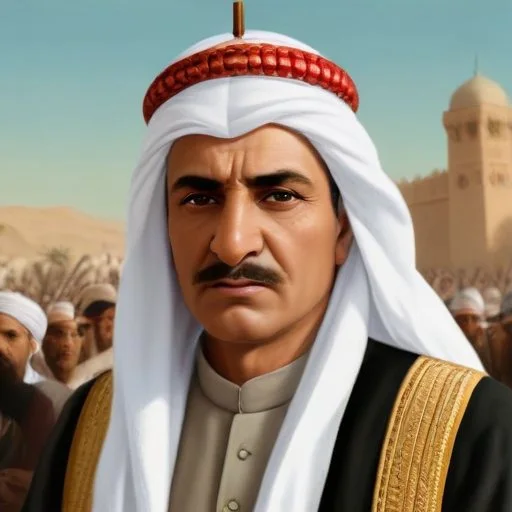
The Ottoman Empire, once a mighty power, had been in decline for centuries. Its grip on the Arab world was stifling, and the Emir of Mecca, Sherif Hussein bin Ali, had grown weary of the Empire's heavy-handed rule. The Arab people were denied basic rights, and cultural and religious freedoms were curtailed. The stage was set for a rebellion that would shake the foundations of the Empire.
The Arab Revolt was a decisive blow to the Ottoman Empire, ultimately leading to its collapse. The rebellion also paved the way for the creation of modern Arab states, including Jordan, Iraq, and Saudi Arabia. The revolt also had significant cultural and social implications, including the emergence of Arab nationalism and the development of modern Arabic literature.
The Arab Revolt was not without controversy. Critics accused the British of exploiting Arab nationalism for their own interests, and the revolt was also marked by inter-tribal conflicts and rivalries. Despite these controversies, the Arab Revolt remains a powerful symbol of Arab resistance against imperialism and a testament to the bravery and determination of the Arab people.
The Arab Revolt was a catalyst for change in the Middle East, inspiring a new generation of Arab leaders and intellectuals. The rebellion's legacy continues to shape the region's politics, culture, and identity, making it a critical chapter in the history of the Arab world.
The Arab Revolt against the Ottoman Empire was a pivotal moment in modern Middle Eastern history. It marked the beginning of the end of Ottoman rule and paved the way for the creation of modern Arab states. The rebellion's legacy continues to shape the region's politics, culture, and identity, making it a critical chapter in the history of the Arab world.
Faisal bin Hussein, the son of Sherif Hussein, was a skilled military leader and a charismatic figure who played a crucial role in the Arab Revolt. He was known for his bravery, strategic thinking, and ability to unite the Arab tribes.
Faisal's early campaigns against the Ottomans were marked by a series of victories, including the capture of Yanbu in October 1916. His military prowess and leadership skills earned him the respect and admiration of his contemporaries, including T.E. Lawrence.
Faisal's charisma and diplomatic skills were instrumental in negotiating with the British and securing their support for the Arab Revolt. He went on to become the King of Iraq and played a key role in shaping the modern Middle East.

The Arab Revolt took place against the backdrop of World War I, with the Ottoman Empire fighting against the Allied Powers. The rebellion was part of a larger struggle for power and influence in the Middle East, with various regional and global players vying for control.
The British, who had long been interested in expanding their influence in the region, saw an opportunity to weaken the Ottoman Empire and gain a strategic advantage. They provided military and financial support to the Arab rebels, with the aim of creating a unified Arab state that would be friendly to British interests.
The Arab Revolt was also influenced by the rise of nationalism and anti-colonial sentiment in the Middle East. The rebellion was seen as a way to throw off the yoke of Ottoman rule and create a new era of Arab independence and self-determination.
The Arab Revolt had a profound cultural impact on the Middle East, inspiring a new generation of Arab leaders and intellectuals. The rebellion's emphasis on Arab nationalism and self-determination helped to create a sense of shared identity and purpose among Arabs across the region.
The Arab Revolt also contributed to the development of modern Arabic literature, with many writers and poets drawing inspiration from the rebellion's ideals and values. The rebellion's leaders, including Sherif Hussein and Faisal bin Hussein, were celebrated as heroes and symbols of Arab resistance against imperialism.
The rebellion's cultural impact extended beyond the Arab world, influencing anti-colonial movements and nationalist struggles across the globe. The Arab Revolt was seen as a beacon of hope and inspiration for people fighting against colonial rule and oppression.

Historians have long debated the significance and impact of the Arab Revolt, with some viewing it as a key moment in the development of Arab nationalism and others seeing it as a flawed and ultimately unsuccessful rebellion.
Some historians have argued that the Arab Revolt was a pivotal moment in the modern history of the Middle East, marking the beginning of the end of Ottoman rule and paving the way for the creation of modern Arab states. Others have been more critical, highlighting the rebellion's failure to achieve its goals and its dependence on British support.
Recent scholarship has sought to reassess the Arab Revolt in the context of global history, exploring its connections to other anti-colonial movements and nationalist struggles around the world. This new research has helped to shed fresh light on the rebellion's significance and legacy.
The Arab Revolt had significant economic implications for the Middle East, disrupting trade and commerce across the region. The rebellion's guerrilla war tactics and sabotage of Ottoman supply lines and communication networks had a devastating impact on the regional economy.
The rebellion also led to a significant shift in the global economy, with the Middle East emerging as a major player in the post-war world. The discovery of oil in the region in the 1920s further cemented the Middle East's importance, with the Arab states becoming major oil producers and exporters.
The economic impact of the Arab Revolt was not limited to the Middle East. The rebellion's disruption of global trade and commerce had far-reaching consequences, contributing to a global economic downturn in the post-war period.