


In the torrential rain of August 1914, the Serbian army, led by General Stepa Stepanović, secured a resounding victory against the Austro-Hungarian forces in the Battle of Cer, marking the first major Allied triumph in World War I. This pivotal battle not only boosted morale but also stalled the Austro-Hungarian invasion of Serbia, proving that the tide of war could indeed be turned in favor of the Allies.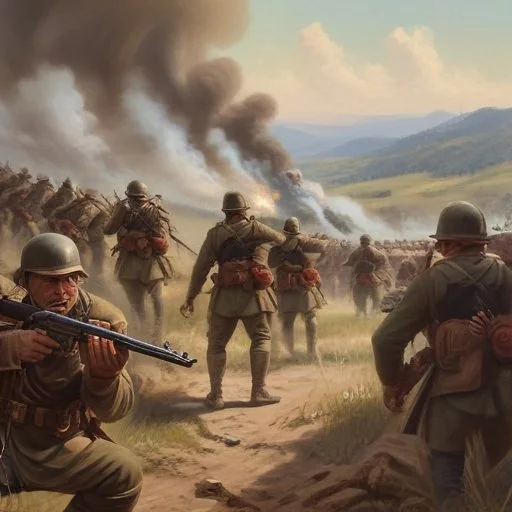
In the complex tapestry of alliances and rivalries that characterized the early 20th century, the Austro-Hungarian Empire had long been perceived as a dominant force in the region. However, with the assassination of Archduke Franz Ferdinand in June 1914, the delicate balance of power began to shift. As tensions escalated, the Austro-Hungarian army, confident in its superior numbers and firepower, set its sights on Serbia, a small but fiercely independent nation.
Under the leadership of General Stepanović, the Serbian army, comprising seasoned veterans and raw recruits, displayed a remarkable degree of resilience and determination. Despite being outnumbered and outgunned, they outmaneuvered and outflanked their opponents, leveraging their intimate knowledge of the rugged terrain to devastating effect.
The Battle of Cer sent shockwaves throughout the international community, as the Allies, buoyed by this unexpected triumph, began to reassess their chances of success. The Austro-Hungarian Empire, meanwhile, was forced to confront the limitations of its military might and the unyielding resolve of its Serbian adversaries. As the war raged on, the Battle of Cer would serve as a beacon of hope for the Allies, inspiring fresh determination and resolve.
In the annals of World War I, the Battle of Cer occupies a unique and significant place, serving as a testament to the bravery, tenacity, and strategic genius of the Serbian army. As we reflect on this pivotal moment in history, we are reminded that even in the darkest of times, the human spirit can persevere, adapt, and ultimately triumph.
General Stepa Stepanović, a seasoned military strategist, played a crucial role in the Battle of Cer. Born in 1856, Stepanović joined the Serbian army at the age of 17 and quickly rose through the ranks, earning a reputation for his bravery and tactical genius. As the commander of the Serbian army, he leveraged his intimate knowledge of the terrain to outmaneuver the Austro-Hungarian forces. His leadership and vision were instrumental in securing the Serbian victory at Cer.
Despite his pivotal role in the battle, Stepanović remained humble and dedicated to his country, continuing to serve the Serbian army until his retirement in 1919. Today, he is remembered as a national hero in Serbia, and his legacy serves as a testament to the power of courage and determination in the face of overwhelming odds.

The Battle of Cer occurred against the backdrop of a complex web of alliances and rivalries that characterized the early 20th century. The Austro-Hungarian Empire, having long dominated the region, saw itself as the guardian of European stability and order. However, the rising tide of nationalism and anti-imperial sentiment among the Balkan states, including Serbia, threatened to upset the established balance of power.
In this context, the Battle of Cer marked a significant turning point, as it demonstrated the ability of a smaller nation to resist the might of a larger power. The Serbian victory sent shockwaves throughout the international community, forcing a reevaluation of the alliances and rivalries that had defined European politics for centuries.
The Battle of Cer is often compared to the Battle of the Marne, fought in September 1914, in which French and British forces halted the German advance on Paris. Both battles share a common thread – they marked a decisive shift in momentum in favor of the Allies.
Like the Battle of Cer, the Battle of the Marne was a testament to the bravery and resilience of the Allied forces, who against all odds managed to stem the tide of the enemy's advance. These two battles, fought on different fronts, served as a beacon of hope for the Allies, inspiring fresh determination and resolve in the face of overwhelming odds.
The Battle of Cer had significant economic implications for Serbia and the wider region. The Austro-Hungarian Empire, having suffered heavy losses, was forced to divert resources from its economy to replenish its military. This, in turn, led to a decline in the empire's economic fortunes, creating opportunities for other nations to exploit.
For Serbia, the victory at Cer brought a surge in national pride and confidence, leading to increased investment in the country's infrastructure and economy. The battle also marked the beginning of closer economic ties between Serbia and the Allies, paving the way for future cooperation and growth.
Historians have long debated the significance of the Battle of Cer, with some arguing that it marked a turning point in the war, while others see it as a minor skirmish in the larger context of World War I.
Some historians, such as John Reed, have argued that the Battle of Cer was a crucial moment in the war, as it demonstrated the ability of the Allies to resist the Austro-Hungarian Empire's aggression. Others, like Barbara Tuchman, have downplayed the battle's significance, viewing it as a localized conflict with little impact on the wider war effort.