


The Battle of Fromelles, fought on July 19-20, 1916, is infamously remembered as one of the worst Allied defeats of World War I, with a staggering 5,500 casualties in a single night. This brutal and futile attack, part of the larger Battle of the Somme, was a baptism by fire for the Australian Imperial Force (AIF) and British troops, who suffered devastating losses in a poorly planned and executed diversionary assault.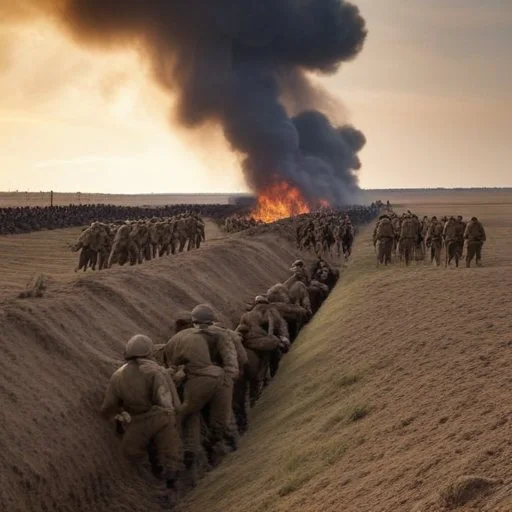
In the summer of 1916, the Western Front was locked in a brutal stalemate. The Allies, determined to break through the German defenses, devised a plan to launch a massive offensive along the Somme River. To support this effort, a diversionary attack was conceived to distract the German army and prevent them from reinforcing their Somme defenses. The chosen site for this diversion was Fromelles, a small village in northern France, where the 5th Australian Division and the British 61st Division would launch a combined assault against the German trenches.
The Battle of Fromelles was a catastrophic failure, with the Allies suffering over 5,500 casualties, including 1,500 Australians killed or wounded in a single night. The attack not only failed to divert German attention from the Somme, but it also exposed the inexperience and poor planning of the Allied commanders. The devastating loss of life and the futility of the attack shocked the Australian public, leading to widespread criticism of the British High Command.
The Battle of Fromelles had a profound impact on Australian society, shaking the nation's faith in the British military leadership and sparking a growing sense of Australian nationalism. The tragedy also inspired a wave of patriotic fervor, as Australians rallied to support their troops and honor the fallen. In the years that followed, the Battle of Fromelles became a symbol of Australian resilience and sacrifice, etched into the nation's collective memory.
The Battle of Fromelles was widely criticized in both Australia and Britain, with many questioning the wisdom of the attack and the competence of the Allied commanders. The debacle sparked a heated debate about the Allies' strategy and tactics, with some calling for greater autonomy for Australian forces and others demanding greater accountability from the British High Command.
"We were told to charge across no man's land, but it was like running into a hail of bullets. I saw men falling all around me, and I knew we were in trouble." - Private William Barry, 5th Australian Division
The lessons of Fromelles were not lost on the Allied commanders. The disaster led to a reevaluation of tactics and strategies, with a growing emphasis on combined arms warfare and more sophisticated artillery tactics. The experience also shaped the development of Australian military doctrine, as the nation's leaders sought to avoid similar debacles in the future.
In conclusion, the Battle of Fromelles was a pivotal, if brutal, turning point in the history of World War I. The courage and sacrifice of the Australian and British troops who fought and died in this ill-fated battle will never be forgotten, serving as a poignant reminder of the devastating consequences of war.
The planning and execution of the Battle of Fromelles were marred by a series of critical errors and miscalculations. The decision to launch a diversionary attack on the German lines was made without adequate intelligence, and the Allied commanders severely underestimated the strength and determination of the German defenses.
Moreover, the artillery barrage that preceded the infantry assault was inadequate, failing to sufficiently soften up the German trenches. This meant that the Australian and British troops were forced to face withering machine-gun fire as they attempted to cross no man's land, leading to devastating losses.
The failure of the Battle of Fromelles was also due in part to the inexperience of the Allied commanders. General Richard Haking, who led the British XI Corps, was guilty of gross overconfidence, and his decision to push ahead with the attack despite the obvious difficulties was a grave mistake. Similarly, Brigadier General Harold 'Pompey' Elliott, who commanded the 5th Australian Division, was unable to adapt to the changing circumstances on the battlefield, leading to further unnecessary losses.
General Charles Monro, the commander of the British First Army, was a seasoned veteran of the Western Front.
However, his role in the planning and execution of the Battle of Fromelles remains shrouded in controversy. Critics have accused him of being overly cautious and indecisive, failing to provide sufficient support to the Australian and British troops as they struggled to make headway against the German defenses. Despite this, Monro remained in command for several months after the battle, a testament to the often-glacial pace of military promotion and accountability.
The Battle of Fromelles had a profound impact on Australian culture and society.
The devastating loss of life and the futility of the attack shocked the Australian public, leading to widespread criticism of the British military leadership and a growing sense of Australian nationalism.
The battle also inspired a wave of patriotic fervor, as Australians rallied to support their troops and honor the fallen. In the years that followed, the Battle of Fromelles became a symbol of Australian resilience and sacrifice, etched into the nation's collective memory.
The political fallout from the Battle of Fromelles was immediate and far-reaching.
The debacle sparked a heated debate about the Allies' strategy and tactics, with many calling for greater autonomy for Australian forces and others demanding greater accountability from the British High Command. The Australian government, in particular, faced intense criticism for its role in the disaster, with many questioning the wisdom of subservience to British military leadership.
Among the most significant artifacts to emerge from the Battle of Fromelles are the letters and diaries of the soldiers who fought and died on that fateful night.
These personal accounts provide a poignant and intimate glimpse into the experiences of the ordinary men who were caught up in the maelstrom of war.
The letters of Private William Barry, who fought with the 5th Australian Division, are particularly evocative, offering a harrowing account of the chaos and carnage that characterized the battle.: