


The First Russian Army, led by the seasoned commander Paul von Rennenkampf, penetrated the borders of East Prussia on August 17, 1914, triggering a chain reaction of events that would forever alter the landscape of World War I. This pivotal moment marked the first major military operation on German territory, setting the stage for a brutal and devastating conflict that would ravage the continent.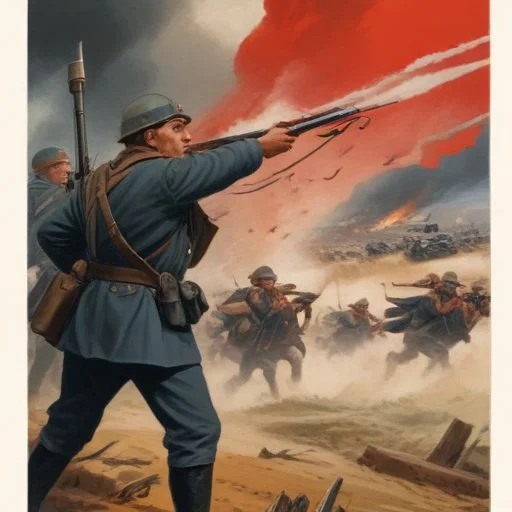
As the fragile peace in Europe began to unravel, the Russian Empire, bound by treaty to France and Serbia, found itself drawn into the conflict. Germany, fearful of being encircled, declared war on Russia on August 1, 1914. The stage was set for a colossal clash of arms, with East Prussia, a strategically vital region, becoming the focal point of the initial confrontation.
Paul von Rennenkampf, a seasoned Russian general of Baltic German descent, was tasked with leading the First Russian Army into East Prussia. Rennenkampf's military prowess was well-respected, having served with distinction in the Russo-Japanese War. However, his tactical decisions during this campaign would be scrutinized, and the outcome would have far-reaching consequences for the Russian war effort.
The First Russian Army's entry into East Prussia set off a series of events that would have a profound impact on the war's trajectory. The initial Russian advance was slow and laborious, allowing German forces to regroup and counterattack. The subsequent Battle of Tannenberg, fought from August 23 to 30, 1914, would see the German army inflict a crushing defeat on the Russians, marking a turning point in the war.
The invasion of East Prussia was met with widespread panic and displacement among the local civilian population. As the Russian army advanced, many Germans fled their homes, leaving behind a trail of devastation and chaos. The cultural heritage of the region, including historic towns and cities, was also threatened, as the war raged on.
Russian soldiers, many of whom were conscripted peasants, were often poorly equipped and ill-prepared for the harsh conditions of war. Eyewitness accounts speak of soldiers struggling to cope with the unfamiliar terrain and the daunting task of facing the German army. Meanwhile, German civilians, caught in the midst of the conflict, faced unimaginable hardship, with many forced to abandon their homes and livelihoods.
The First Russian Army's entry into East Prussia marked a fateful turning point in the early stages of World War I. As the war raged on, the consequences of this initial incursion would be felt far beyond the battlefields of East Prussia, shaping the course of history in ways that would be felt for generations to come.
The Russian Empire's decision to mobilize its military forces in response to Austria-Hungary's declaration of war on Serbia on July 28, 1914, was a pivotal moment that led to the First Russian Army's entry into East Prussia. The subsequent German declaration of war on Russia on August 1, 1914, further escalated the situation, ultimately resulting in the invasion of East Prussia. This chain of events was set in motion by a complex system of alliances and nationalist tensions that had been simmering in Europe for decades.
The Russian Empire's military strategy, known as the "Period Preparatory to War," was designed to mobilize its forces quickly and efficiently in response to a potential threat from Germany. However, this strategy ultimately proved to be flawed, as it failed to take into account the complexities of modern warfare and the German army's superior operational capabilities.
Paul von Rennenkampf, the commander of the First Russian Army, was a seasoned military officer with a reputation for bravery and tactical skill. Born in 1854 in Konigsberg, East Prussia, Rennenkampf was of Baltic German descent and had served with distinction in the Russo-Japanese War. Despite his impressive military credentials, Rennenkampf was also known for his cautious and methodical approach to warfare, which often put him at odds with his more impulsive colleagues.
Rennenkampf's leadership style was marked by a strict adherence to protocol and a reliance on traditional military tactics. This approach would ultimately prove to be a liability in the face of the German army's more modern and agile operational capabilities. Despite his flaws, however, Rennenkampf remained a respected figure in Russian military circles, and his legacy continues to be studied by historians and military strategists today.
The Russian army's invasion of East Prussia had a profound impact on the local civilian population, many of whom were forced to flee their homes and livelihoods in the face of advancing military forces. The cultural heritage of the region, including historic towns and cities, was also threatened, as the war raged on.
The invasion also had a significant impact on the local art scene, as many artists and intellectuals were forced to flee the region or go into hiding. The war would ultimately lead to the destruction of many cultural institutions and the loss of countless works of art, crippling the region's cultural infrastructure for generations to come.
The Russian Empire's decision to invade East Prussia was motivated by a complex set of geopolitical considerations, including the need to protect its strategic interests in the region and to prevent the German army from gaining a foothold in Eastern Europe. The invasion was also driven by a desire to secure the empire's western borders and to demonstrate its military might to its European rivals.
The war would ultimately lead to a significant shift in the global balance of power, as the Russian Empire's defeat at the hands of the German army marked the beginning of the end of the imperial era in Europe. The war would also lead to the rise of new global powers, including the United States and the Soviet Union, which would go on to shape the course of world history in the decades that followed.
The Russian army's invasion of East Prussia had a devastating impact on the local economy, as many businesses and industries were forced to shut down or relocate in the face of advancing military forces. The war would ultimately lead to a significant decline in regional economic output, as well as a sharp increase in unemployment and poverty.
The war also had a profound impact on the global economy, as the disruption of trade and commerce led to a sharp decline in international trade and a rise in protectionism. The war would ultimately lead to the collapse of the global economic system, paving the way for the rise of new economic powers and the development of new global economic institutions.