


In a move that would precipitate the devastating chaos of World War I, Kaiser Wilhelm II, the German Emperor, declared war on Russia on August 1, 1914. This bold decision would have far-reaching consequences, drawing more nations into the conflict and eventually engulfing the entire continent.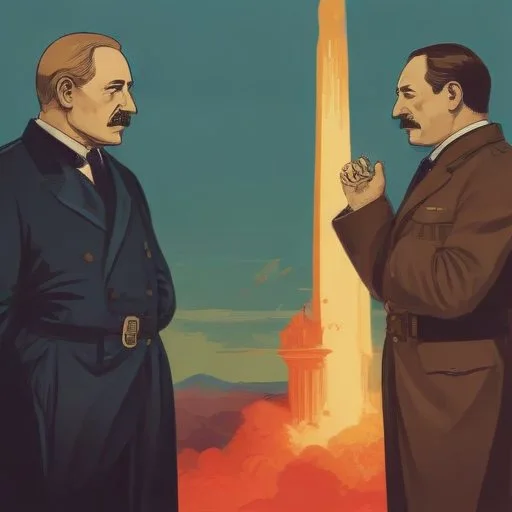
In the years leading up to the war, tensions had been simmering between the great powers of Europe. The complex system of alliances, including the Triple Entente and the Triple Alliance, had created an atmosphere of mutual distrust and hostility. The assassination of Archduke Franz Ferdinand of Austria-Hungary in June 1914 had already set off a chain reaction of diplomatic crises, and Germany's declaration of war on Russia was the spark that ignited the flames of war.
July 28, 1914: Austria-Hungary declares war on Serbia.
July 31, 1914: Russia begins mobilizing its military in response to Austria-Hungary's declaration of war.
August 1, 1914: Germany declares war on Russia.
August 3, 1914: Germany declares war on France.
The German declaration of war on Russia marked the beginning of the devastating conflict that would come to be known as World War I. The war would eventually involve more than 30 countries and result in the loss of millions of lives. The war also led to the downfall of several empires, including the German, Russian, and Austro-Hungarian empires.
The war had a profound impact on European society and culture. The conflict led to a rise in nationalism and militarism, and the introduction of new technologies, such as tanks and aircraft, changed the face of modern warfare. The war also had a profound impact on literature and art, with many artists and writers responding to the conflict through their work.
"We are not going to lose. If we do, the Germans will eat us alive."
- Kaiser Wilhelm II, in a letter to his cousin, Tsar Nicholas II of Russia, on the eve of the war.
The German declaration of war on Russia marked the beginning of a chain of events that would shape the course of world history. The war led to the rise of the United States and the Soviet Union as superpowers, and paved the way for the Second World War. The war also led to the formation of the League of Nations, precursor to the United Nations, in an effort to prevent future conflicts.
In conclusion, the German declaration of war on Russia on August 1, 1914, was a pivotal moment in world history, marking the beginning of a devastating conflict that would have far-reaching consequences for generations to come.
The declaration of war on Russia had a profound impact on Russian society, leading to a surge in patriotism and nationalism. The war effort was accompanied by a growing sense of militarism, with many Russians eager to defend their motherland against the German aggression.
The war also led to a significant shift in the Russian art world, with many artists and writers turning their attention to patriotic themes. The war-inspired works of artists like Kazimir Malevich and Natalia Goncharova are still celebrated today.
,
The German declaration of war on Russia was not an isolated event, but rather the culmination of a complex web of geopolitical tensions that had been building for decades. The war was fueled by the rivalry between the great powers of Europe, each vying for dominance and influence on the continent.
The war also marked a significant shift in the balance of power, with the decline of the Ottoman Empire and the rise of the United States and the Soviet Union as superpowers.
,Franz von Moltke, the German Chief of Staff, played a crucial role in planning and executing the war effort against Russia. A brilliant strategist and tactician, Moltke was instrumental in convincing Kaiser Wilhelm II to declare war on Russia.
Despite his key role in the war effort, Moltke's personal life was marked by tragedy, including the loss of his wife and daughter in a tragic accident.
,
The declaration of war on Russia had a devastating impact on the German economy, which was ill-prepared for the scale of the conflict. The war effort drained the country's resources, leading to widespread poverty, inflation, and shortages.
The war also disrupted global trade patterns, leading to economic instability and recession in many countries. The cost of the war was estimated to be in the trillions of dollars, a staggering sum that would take decades to recover from.
,The German declaration of war on Russia had significant political implications, leading to the downfall of the ruling dynasties of Europe. The war marked the end of the Romanov dynasty in Russia, while the German monarchy was also eventually toppled.
The war also led to a significant shift in the political landscape of Europe, with the rise of new ideologies like communism and fascism.
,