


In a move that would forever change the course of history, Germany declared war on France on August 3, 1914, citing France's supposed alliance with Russia as the catalyst. Meanwhile, Romania, determined to maintain its sovereignty, took a bold stance and declared its neutrality in the face of the escalating conflict.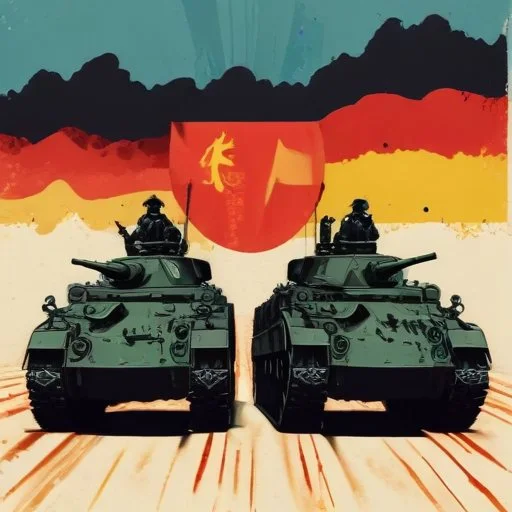
The roots of this conflict can be traced back to the complex system of alliances and rivalries that governed Europe in the early 20th century. The Triple Entente, comprising France, Russia, and Britain, faced off against the Central Powers, consisting of Germany, Austria-Hungary, and Italy. The assassination of Archduke Franz Ferdinand of Austria-Hungary on June 28, 1914, served as the spark that set off the powder keg of tensions.
Two individuals stood at the forefront of this fateful decision: Kaiser Wilhelm II of Germany and President Raymond Poincaré of France. Wilhelm, driven by his militaristic ambitions, had long been eager to assert Germany's dominance in Europe. Poincaré, on the other hand, was determined to defend France's honor and territorial integrity.
The declaration of war by Germany on France and Romania's declaration of neutrality marked the beginning of a global conflict that would last four years, claim millions of lives, and reshape the world order. The war would witness the introduction of new technologies, such as tanks, planes, and poison gas, and seesaw battles that would devastate entire nations.
Despite the devastation and chaos, the war also inspired some of the most iconic works of literature and art of the 20th century. Writers like Ernest Hemingway, F. Scott Fitzgerald, and T.S. Eliot drew inspiration from the conflict, while artists like Otto Dix and John Singer Sargent captured its horrors on canvas.
The outbreak of war was met with widespread enthusiasm in Germany, where many saw it as a necessary step to assert the nation's dominance. In France, however, the mood was more somber, with many fearing the worst. The war would eventually become a deeply divisive issue, with anti-war voices like Bertrand Russell and Jean Jaures speaking out against the conflict.
The war marked a significant departure from the traditional rules of warfare, with modern technologies and tactics leading to unprecedented levels of destruction. The conflict also led to a re-evaluation of the role of the state and the nature of modern warfare, paving the way for the rise of totalitarian regimes in the 1920s and 1930s.
One of the most poignant accounts of the war comes from the diaries of French soldier, René Naegelen, who documented the horrors of trench warfare in vivid detail. His writings provide a glimpse into the psychological toll of the conflict on those who fought it.
The war's impact on the 20th century cannot be overstated. The Treaty of Versailles, which ended the war, sowed the seeds of discontent that would eventually lead to World War II. The war also paved the way for the rise of the United States and the Soviet Union as global superpowers.
Kaiser Wilhelm II was the German Emperor and King of Prussia who played a crucial role in the outbreak of World War I. Born on January 27, 1859, Wilhelm was known for his aggressive and impulsive nature, which often led to conflicts with other European powers.
He was particularly resentful of the British Empire's dominance and sought to challenge its status as a global power. Wilhelm's militaristic ambitions and nationalist rhetoric created an atmosphere of tension in Europe, making war almost inevitable.
Despite his aggressive nature, Wilhelm was also known for his mercurial personality, often making contradictory statements and changing his stance on important issues. This unpredictability made it difficult for European leaders to gauge his intentions, further exacerbating the crisis.
The outbreak of World War I had a profound impact on art and literature, as many artists and writers were drawn into the conflict. The war's destructive nature and the unprecedented scale of human suffering inspired some of the most iconic works of the 20th century.
Writers like Ernest Hemingway, who served as an ambulance driver in Italy, drew inspiration from the war's brutality and chaos. His novel A Farewell to Arms is a classic of modern literature, capturing the disillusionment and fragmentation of society in the aftermath of the war.
In the visual arts, the war had a similar impact, with artists like Otto Dix and John Singer Sargent creating powerful works that captured the conflict's horrors. The war also led to the development of new art movements, such as Vorticism and Futurism, which reflected the chaos and destruction of modern warfare.
The war efforts of France and Germany differed significantly, reflecting their distinct military strategies and cultural values. Germany, with its strong industrial base and modernized military, was well-prepared for a prolonged conflict. In contrast, France's military was still recovering from the French-Prussian War of 1870-1871.
The French army was heavily reliant on traditional tactics, such as cavalry charges and artillery bombardments, whereas the German army had adopted more modern approaches, including the use of machine guns and trench warfare. This difference in military strategy and tactics played a significant role in the early stages of the war, with Germany's modernized army gaining a strategic advantage.
Despite these differences, both France and Germany suffered heavy casualties and economic losses, highlighting the devastating impact of modern warfare on both soldiers and civilians.
The outbreak of World War I had a devastating impact on the global economy, with both sides suffering significant losses. The war disrupted trade and commerce, leading to shortages of food and raw materials.
The German economy, in particular, was heavily affected, with the British naval blockade severely limiting its access to imports. This led to widespread shortages and inflation, further exacerbating the humanitarian crisis.
In addition, the war led to a massive increase in government debt, as countries struggled to finance their military efforts. The war also marked a significant shift in the global balance of power, with the United States emerging as a major economic power.
The outbreak of World War I was shaped by a complex web of geopolitical alliances and rivalries that had developed in the decades preceding the conflict. The Triple Entente, comprising France, Russia, and Britain, faced off against the Central Powers, consisting of Germany, Austria-Hungary, and Italy.
The Balkans, with their complex mix of ethnic and national groups, were a powder keg waiting to be ignited. The assassination of Archduke Franz Ferdinand in Sarajevo, Bosnia, provided the spark that set off the wider conflict.
The war also reflected the struggle for colonial territories and resources, with European powers vying for control of Africa and Asia. This competition for influence and power created an atmosphere of tension and mistrust, making war almost inevitable.