


In the tumultuous landscape of World War I, a pivotal moment marked a drastic shift in the balance of power: Germany's declaration of war on Romania on August 28, 1916. This bold move would irrevocably entangle the fate of these two nations, unleashing a maelstrom of destruction and sacrifice that would reverberate for generations to come.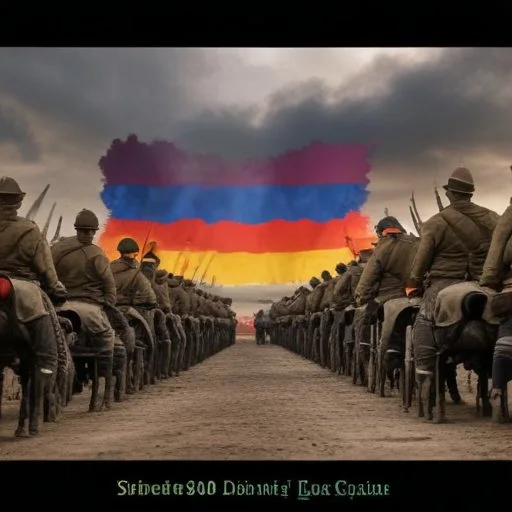
In the complex tapestry of World War I, alliances and rivalries had been woven together like the threads of a rich brocade. Romania, bound by a treaty with the Entente, stood poised to enter the fray, while Germany, driven by its unrelenting ambition, sought to crush any opposition and secure vital resources. The die was cast, and the stage was set for a conflict that would shake the very foundations of Europe.
Romania, ill-prepared for the onslaught, stumbled into the conflict like a novice boxer facing a seasoned champion. Its military, though valiant, was outnumbered and outgunned, and its people would soon be beset by the horrors of war. The once-peaceful landscape of Romania was about to be scarred by the boots of marching soldiers, the rumble of artillery, and the anguished cries of the fallen.
The war would unleash a torrent of suffering upon Romania, as its people endured the brutal occupation, forced labor, and the ravages of disease and hunger. The country's economy would be left in tatters, its infrastructure shattered, and its future shrouded in uncertainty. The war would ultimately claim the lives of over 335,000 Romanians, leaving countless families to mourn the loss of their loved ones.
Today, as we gaze upon the battle-scarred landscape of World War I, we remember the bravery and resilience of the Romanian people, who, in the face of overwhelming odds, refused to yield. We honor the memory of those who fought and fell, and we acknowledge the far-reaching consequences of Germany's fateful decision to declare war on Romania.
The complex web of alliances and rivalries that led to Germany's declaration of war on Romania was deeply rooted in the geopolitical context of the time. The Balkans, in particular, were a hotbed of tension, with Austria-Hungary, Bulgaria, and the Ottoman Empire vying for control. Romania's strategic location, bordering the Black Sea and the Danube River, made it a crucial player in the region. Germany's desire to secure access to these vital trade routes and resources further fueled its aggression towards Romania.
In this context, Germany's declaration of war on Romania was not only a response to Romania's mobilization, but also a calculated move to strengthen its position in the region. By defeating Romania, Germany aimed to gain control over the Balkans, secure its supply lines, and ultimately, strangle the Entente's ability to wage war.
Germany's ultimate goal was to become the dominant power in Europe, and its declaration of war on Romania was a critical step towards achieving that goal.
Ferdinand I, King of Romania, played a crucial role in the events leading up to Germany's declaration of war. A member of the Hohenzollern dynasty, Ferdinand was a cousin of Kaiser Wilhelm II, but his loyalty lay with the Entente. Despite his family ties to Germany, Ferdinand was determined to assert Romania's independence and sovereignty.
As Romania mobilized its troops, Ferdinand I worked tirelessly to secure alliances with the Entente powers, convinced that Romania's fate was inextricably linked to theirs. His diplomatic efforts were hampered by internal divisions and uncertainty, but he remained resolute in his commitment to the war effort.
Ferdinand I's leadership during this period has been the subject of much debate, with some critics accusing him of naivety and poor judgment.The economic consequences of Germany's declaration of war on Romania were devastating. Romania's economy, largely agrarian and dependent on foreign trade, was crippled by the war effort. The country's infrastructure, including its roads, bridges, and rail networks, was severely damaged, disrupting trade and commerce.
The occupation of Romania by German and Austro-Hungarian forces led to widespread looting, pillage, and destruction of property. The Romanian economy was forced to fuel the war machine, with food, livestock, and raw materials being requisitioned to support the German and Austro-Hungarian armies.
The war would ultimately cost Romania an estimated 20 billion lei, equivalent to approximately 1.5 billion US dollars in today's currency.
The historiographical perspectives on Germany's declaration of war on Romania are varied and often conflicting. Some historians view the event as a inevitable consequence of Romania's mobilization, while others argue that it was a deliberate provocation by Germany to secure its interests in the region.
Recent scholarship has sought to reevaluate the role of domestic politics in Romania, with some historians arguing that internal divisions and uncertainty contributed to the country's ill-preparedness for war.
The debate continues to this day, with new research and interpretations shedding light on this pivotal moment in world history.The cultural impact of Germany's declaration of war on Romania was profound and far-reaching. The war effort was accompanied by a surge in nationalist sentiment, with Romanians rallying behind the flag and their monarch.
However, the brutal occupation and subsequent devastation also led to a sense of disillusionment and trauma, which would linger long after the war ended. The war marked a turning point in Romanian cultural identity, as the country struggled to come to terms with its new reality.
The war would also inspire a new generation of Romanian writers, artists, and intellectuals, who would seek to make sense of the trauma and devastation in their work.