


The Cowra breakout, a daring escape attempt by over 1,100 Japanese prisoners of war (POWs) from a camp in New South Wales, Australia, remains one of the most audacious episodes of World War II. On a fateful night in August 1944, 545 prisoners briefly tasted freedom, only to be recaptured, killed, or driven to suicide in a tale of desperation, duty, and tragedy.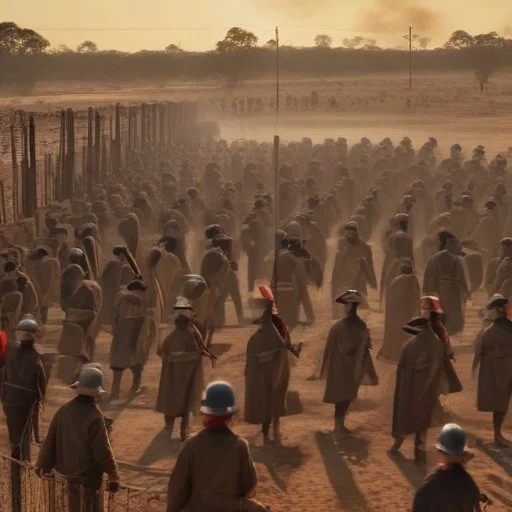
As World War II raged on, Australia found itself at the forefront of the Pacific War, with the country's remote outback regions serving as a hub for Allied operations. The small town of Cowra, nestled in the heart of New South Wales, was chosen as the site for a POW camp, designed to house Japanese prisoners captured in the Pacific Theater.
The camp, officially known as No. 12 POW Compound, was initially built to accommodate around 4,000 prisoners. However, by 1944, the camp was severely overcrowded, with over 7,000 Japanese POWs penned in behind barbed wires. Morale was low, and tensions were running high among the prisoners, who felt abandoned and forgotten by their homeland.
Under the cover of darkness on August 5, 1944, the prisoners, fueled by desperation and a sense of duty to their country, hatched a bold plan to escape. Led by a group of senior officers, the prisoners overpowered their guards, scaled the fences, and surged through the gates of the compound. Chaos erupted as 545 prisoners made a break for freedom, leaving behind the confines of the camp.
For a few fleeting hours, the escapees savored their newfound liberty, roaming the rolling hills and dusty plains of the outback. However, their joy was short-lived, as Australian authorities swiftly responded with a massive manhunt, deploying troops, police, and Aboriginal trackers to hunt down the fugitives.
As the sun rose over the outback, the would-be escapees were either recaptured, killed, or driven to take their own lives. Of the 545 prisoners who escaped, 231 were killed, 108 wounded, and 205 recaptured. In the aftermath, a somber mood settled over the camp, as the remaining prisoners struggled to come to terms with the failed breakout.
The Cowra breakout was a stark reminder of the psychological toll of war on both captors and captives. For the Japanese prisoners, the failure of the escape attempt was a crushing blow, leading to widespread depression and despair. For the Australians, the incident highlighted the complexities of maintaining order in a tense and uncertain world.
The Cowra breakout serves as a poignant reminder of the human cost of war, a testament to the bravery, desperation, and sacrifice of those who fought on both sides of the conflict. Today, the Cowra Japanese War Cemetery stands as a solemn tribute to the prisoners who lost their lives in the breakout, a symbol of reconciliation and peace in the heart of the Australian outback.
The Cowra breakout of 1944stands as a powerful testament to the human spirit, a poignant reminder of the complexities and contradictions of war. As we reflect on this chapter in history, we are reminded of the importance of compassion, understanding, and reconciliation in the face of conflict and tragedy.
The Cowra breakout occurred during a pivotal moment in the Pacific War, when the Allies were gaining momentum against the Japanese Empire. The war had been raging on for three years, and Australia had become a crucial hub for Allied operations in the Pacific. The country's remote outback regions, including Cowra, played a significant role in the war effort, hosting military bases, POW camps, and supply depots.
The geopolitical context of the war had a profound impact on the events leading up to the breakout. As the Japanese Empire continued to expand, Australia found itself on the front lines of the conflict, with the country's very existence threatened by the enemy's proximity.
Tomoji Ishii, a Japanese POW who participated in the Cowra breakout, was a 25-year-old soldier from rural Japan. Captured in New Guinea in 1942, Ishii was sent to Cowra, where he became disillusioned with the harsh conditions and mistreatment by the Australian guards. Ishii was part of the core group of prisoners who planned and executed the breakout, driven by a sense of duty to his country and a desire to escape the deplorable conditions of the camp.
Ishii's story is a testament to the human spirit, revealing the complexities and contradictions of war. His bravery and determination, despite the overwhelming odds against him, serve as a powerful reminder of the human cost of conflict.
The Cowra breakout shares striking similarities with other notable POW escapes during World War II, such as the Great Escape from Stalag Luft III in Poland. Both breakouts involved large numbers of prisoners, elaborate planning, and heroic acts of bravery. However, the Cowra breakout was unique in its scope, with over 1,100 prisoners participating, making it the largest POW escape in Australian history.
Comparing the Cowra breakout to other POW escapes during World War II highlights the resourcefulness, ingenuity, and desperation of prisoners of war. Despite the differences in context and circumstances, these events share a common thread – the unyielding human desire for freedom and the will to survive against all odds.
The Cowra breakout had a profound cultural impact on Australia, particularly in the small town of Cowra. The event brought the war to the doorstep of the local community, forcing residents to confront the harsh realities of conflict. The breakout also led to increased awareness and sympathy for the Japanese POWs, challenging prevailing attitudes towards the enemy.
The cultural significance of the Cowra breakout extends beyond the event itself, shaping the country's identity and influencing its relationships with Japan in the post-war period. Today, the Cowra Japanese War Cemetery stands as a symbol of reconciliation, a powerful reminder of the importance of compassion, understanding, and peace.
The Cowra breakout was meticulously planned and executed, with prisoners creating elaborate escape tunnels, disguises, and maps to aid their escape. A series of previously unknown documents, including hand-drawn maps and letters, provide a fascinating glimpse into the minds of the prisoners and their strategies.
One remarkable artifact is a hand-drawn map, created by a Japanese POW, detailing the escape route and hiding spots used by the prisoners. This document, now housed in the Australian War Memorial, serves as a powerful testament to the ingenuity and resourcefulness of the prisoners.