


The devastating event that unfolded in Demmin, Germany, in the final weeks of World War II, is a bleak reminder of the desperation and fear that gripped civilians as the Red Army advanced. It is estimated that between 1,000 to 2,500 people took their own lives in a mass suicide, making it one of the most tragic and desperate acts of the war.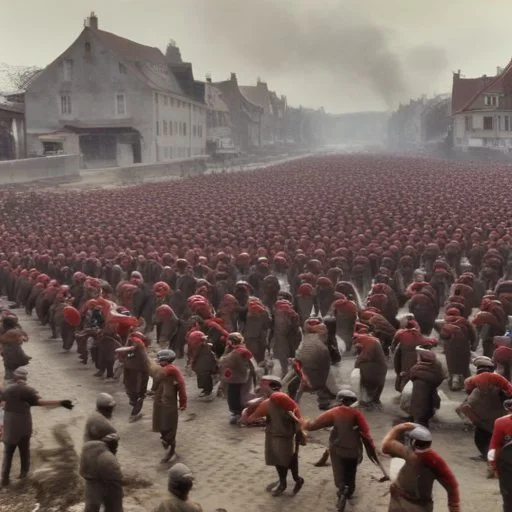
In the spring of 1945, the Soviet Union's Red Army was closing in on Berlin, and the Nazi regime was on the brink of collapse. As Allied forces pushed deeper into Germany, the civilians of Demmin, a small town in Mecklenburg-Vorpommern, were gripped by fear and uncertainty.
Nazi propaganda, which had long portrayed the Soviets as brutal occupiers, sparked mass hysteria among the population. Rumors of atrocities committed by the Red Army, exaggerated and distorted by Nazi officials, spread like wildfire, fueling the panic and desperation.
As the Soviet army approached, the townspeople of Demmin were faced with an impossible decision: flee or stay. Many, fearing the worst, chose to take their own lives, rather than risk falling into Soviet hands. The streets of Demmin were soon filled with the bodies of the dead, as the town descended into chaos.
The mass suicide in Demmin was a tragic consequence of the fear and desperation that gripped civilians during the final weeks of World War II. The event serves as a somber reminder of the devastating human cost of war and the importance of educating future generations about the horrors of conflict.
In the aftermath of the tragedy, eyewitnesses described the scenes of chaos and despair that gripped Demmin. One survivor, who wished to remain anonymous, recounted the desperation of those who took their own lives, saying, "They were convinced that the Russians would kill them all, and they preferred to die by their own hand."
In the face of unimaginable tragedy, the people of Demmin found solace in the courage and resilience of those who faced the horrors of war head-on. The story of Demmin serves as a poignant reminder of the importance of empathy, compassion, and understanding in the face of adversity.
The mass suicide in Demmin was a stark reminder of the devastating consequences of war and the importance of promoting peace and understanding. The event has had a lasting impact on the way we approach conflict resolution and has inspired generations to work towards a more peaceful and harmonious world.
In the years leading up to World War II, Demmin was a small but thriving town in Mecklenburg-Vorpommern. With a population of around 15,000, it was known for its picturesque surroundings and strong agricultural economy. However, beneath the surface, Demmin was also a hotbed of Nazi ideology, and the town's residents were deeply loyal to the party.
This loyalty was fueled by the town's history of economic hardship, which had left many residents feeling disillusioned with the Weimar Republic. As the Nazi party promised to restore German greatness and provide jobs, many in Demmin were drawn to its message of hope and change.
The seeds of fear and mistrust that would later contribute to the mass suicide were sown during this period, as the Nazi party began to use propaganda and manipulation to control the town's population.
Among the chaos and despair of Demmin's final days, one woman stood out as a beacon of hope. Anna Gottschalk, a local nurse, risked her life to care for the sick and injured, even as the Soviet army approached.
With her husband away fighting, Anna single-handedly tended to the wounded, comforting the dying, and providing a sense of calm in the face of unimaginable terror.
Her selfless actions inspired others to do the same, and for a brief moment, the people of Demmin came together to support one another in the face of disaster.
The mass suicide in Demmin was not an isolated incident. Throughout history, there have been numerous instances of mass suicides in the face of military defeat or occupation.
From the siege of Masada during the Jewish-Roman War to the mass suicides of Templar knights during the Crusades, the phenomenon is a complex and multifaceted one, driven by a mix of fear, ideology, and desperation.
By examining these parallel cases, we can gain a deeper understanding of the psychological and sociological factors that contributed to the tragedy in Demmin.
Demmin's location in the northeastern corner of Germany made it a strategic prize for the advancing Soviet army.
As the Red Army pushed deeper into Germany, the town found itself caught in a vice, squeezed between the Soviet forces to the east and the desperate remnants of the German army to the west.
The ensuing chaos and panic were exacerbated by the town's precarious position, making it a microcosm of the larger military and political struggles playing out across Europe.
The mass suicide in Demmin has had a lasting impact on German culture, serving as a powerful symbol of the devastating consequences of war.
In the years following the tragedy, the town became a place of pilgrimage for those seeking to come to terms with the trauma of the war.
Today, Demmin stands as a testament to the power of memory and the importance of learning from the past.