


In the final throes of World War II, the US 82nd Airborne Division stumbled upon a ghastly scene at Wöbbelin concentration camp, where they discovered the emaciated bodies of over 1,000 prisoners, most of whom had succumbed to starvation. This somber event, which took place on May 2, 1945, would forever be etched in the collective memory of humanity, serving as a stark reminder of the atrocities committed by the Nazi regime.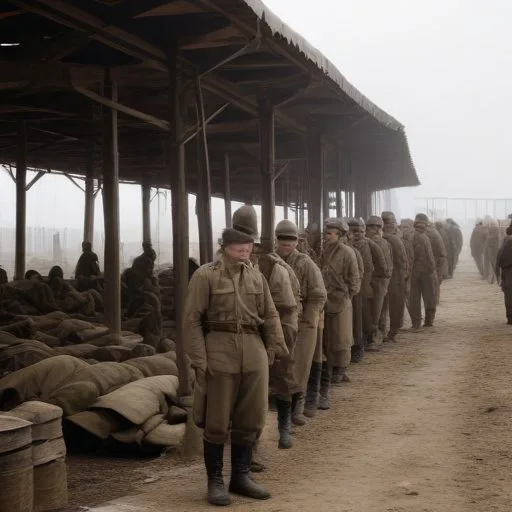
Wöbbelin concentration camp was established in February 1945, near the town of Ludwigslust, Germany. Initially intended as a subcamp of the larger Neuengamme concentration camp, Wöbbelin was designed to house approximately 5,000 prisoners, mostly from Poland, Russia, and other Eastern European countries. The camp was notorious for its brutal conditions, with prisoners subjected to forced labor, malnutrition, and merciless treatment by the Nazi guards.
The 82nd Airborne Division, under the command of Major General Matthew Ridgway, was tasked with liberating Wöbbelin concentration camp as part of the Allied forces' push into Germany. On May 2, 1945, the division's 3rd Battalion, 505th Parachute Infantry Regiment, arrived at the camp, only to be met with an eerie silence. The few surviving prisoners, barely clinging to life, greeted the American soldiers with a mixture of gratitude and desperation.
The scenes that unfolded before the eyes of the American soldiers were nothing short of apocalyptic. Over 1,000 emaciated bodies, most of whom had starved to death, lay strewn about the camp. The stench of death and decay hung heavy in the air, as the soldiers struggled to comprehend the magnitude of the atrocities that had taken place. The survivors, numbering around 200, were gaunt and hollow-eyed, their bodies ravaged by disease and malnutrition.
The liberation of Wöbbelin concentration camp marked a turning point in the Allied forces' campaign against the Nazi regime, serving as a stark reminder of the atrocities committed during World War II. The event galvanized public opinion, solidifying the resolve to bring those responsible to justice. The discovery also led to the capture and conviction of several high-ranking Nazi officials, including Obersturmbannführer Paul Werner Hoppe.
The liberation of Wöbbelin concentration camp has had a profound impact on our collective understanding of the horrors of war and the importance of human rights. The event has been commemorated in various forms of media, including films, literature, and art, ensuring that the memory of the victims lives on. The camp's liberation serves as a poignant reminder of the importance of vigilance and action in the face of oppression and injustice.
In conclusion, the liberation of Wöbbelin concentration camp by the US 82nd Airborne Division stands as a testament to the bravery and resilience of those who fought against the forces of tyranny. As we reflect on this somber event, we are reminded of the importance of promoting human dignity, justice, and compassion in the face of adversity.
The establishment of Wöbbelin concentration camp was a direct result of the Nazi regime's need for forced labor to support their war effort. As the Allies advanced on Germany, the Nazis scrambled to relocate prisoners from camps in the East to areas deeper within their territory. Wöbbelin was one of several subcamps built to accommodate this influx of prisoners. Initially, the camp was designed to house around 5,000 prisoners, but by the time of liberation, it held over 7,000 inmates, leading to severe overcrowding and a drastic decline in living conditions.
The camp's commandant, Obersturmbannführer Paul Werner Hoppe, was instrumental in enforcing the brutal regime that led to the deaths of thousands of prisoners. Hoppe was a seasoned SS officer who had previously served at other concentration camps, including Neuengamme and Ravensbrück. His experience in administering terror and keeping prisoners in line made him the perfect candidate to oversee Wöbbelin.
The camp's layout and design were deliberate attempts to dehumanize and break the prisoners' spirits. The barracks were cramped and filthy, with inadequate sanitation and ventilation. Prisoners were forced to sleep on wooden pallets without mattresses, and the lack of clothing and shoes left them vulnerable to the elements.
Lieutenant Colonel Francis A. Gottlieb, commander of the 3rd Battalion, 505th Parachute Infantry Regiment, was the first American officer to enter Wöbbelin concentration camp. Gottlieb's unit was tasked with securing the camp and providing aid to the surviving prisoners. As they entered the camp, Gottlieb was met with a scene that would haunt him for the rest of his life.
Gottlieb's leadership played a crucial role in the subsequent investigation and documentation of the atrocities committed at Wöbbelin. He ensured that the atrocities were thoroughly documented, and his unit's photographs and reports provided crucial evidence for the Nuremberg trials.
Gottlieb's actions serve as a testament to the bravery and compassion of the Allied forces during World War II.The liberation of Wöbbelin concentration camp shares striking parallels with the liberation of other camps, such as Dachau and Buchenwald. In each case, the Allies were met with scenes of unimaginable horror and brutality. However, Wöbbelin stands out due to its proximity to the end of the war, making it one of the last camps to be liberated.
The camp's location in northern Germany also makes it unique, as most other camps were located in Poland or other Eastern European countries. This proximity to the Allied forces' advance may have contributed to the camp's particularly brutal conditions, as the Nazis were desperate to conceal their atrocities.
The liberation of Wöbbelin serves as a poignant reminder that the atrocities committed during World War II were not limited to a single location or group of people.
The liberation of Wöbbelin concentration camp has had a lasting impact on our collective understanding of the horrors of war and the importance of human rights. The event has been commemorated in various forms of media, including films, literature, and art, ensuring that the memory of the victims lives on.
The camp's liberation has also influenced the way we approach war and conflict, highlighting the need for accountability and justice in the face of atrocities. The event serves as a powerful reminder of the importance of promoting human dignity, justice, and compassion in the face of adversity.
The liberation of Wöbbelin concentration camp stands as a testament to the power of humanity to overcome even the darkest of times.One of the most striking artifacts recovered from Wöbbelin concentration camp is the camp logbook, which details the daily events and atrocities committed at the camp. The logbook, penned by the camp's commandant, provides a chilling firsthand account of the brutal regime enforced at Wöbbelin.
The logbook has proven to be a crucial piece of evidence in understanding the atrocities committed at the camp and has been used in several war crimes trials, including the Nuremberg trials.
The camp logbook serves as a poignant reminder of the importance of documentation in understanding and preserving history.