


The Siege of Leningrad, one of the most prolonged and devastating episodes of World War II, finally came to an end on January 27, 1944, as Soviet forces breached the German blockade, liberating the city after an astonishing 900 days. This grueling ordeal, which lasted from September 8, 1941, to January 27, 1944, will forever be etched in the annals of history as a testament to the unyielding spirit of the Russian people.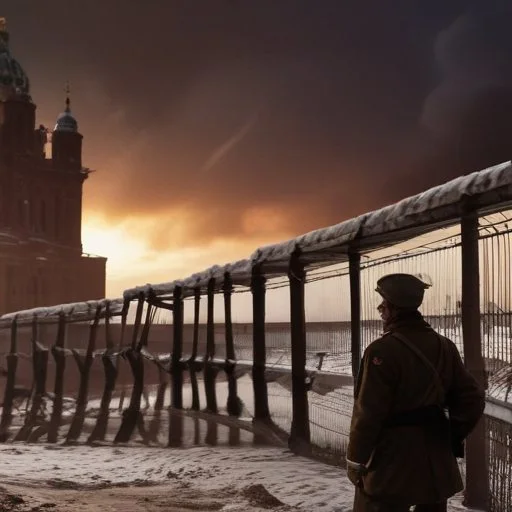
As Nazi Germany unleashed its Blitzkrieg on Eastern Europe, Leningrad (now St. Petersburg), a city of immense cultural and strategic significance, found itself caught in the crosshairs. The German army, led by Adolf Hitler, sought to capture the city, which housed vital industrial and military installations, as well as the important harbor of Kronstadt.
The 900-day siege was a masterclass in human suffering. With the city encircled by German forces, its 2.5 million inhabitants were forced to endure unimaginable hardships. Food and water were scarce, and the once-thriving metropolis was reduced to a state of perpetual darkness, with citizens forced to venture out only under the cover of night. The city's infrastructure was decimated, with buildings reduced to rubble, and the sounds of artillery fire and screams of the wounded filling the air.
The siege's devastating toll was staggering: over a million casualties, widespread destruction, and an irreparable scar on the city's psyche. The siege, however, also galvanized the Russian people, forging an unbreakable bond between the citizens and their city. The eventual liberation of Leningrad marked a significant turning point in the war, signaling the beginning of the end for the German army's grip on Eastern Europe.
The siege of Leningrad has inspired countless works of literature, art, and music, with the city's resilience serving as a beacon of hope for generations to come. The iconic poem "Leningrad" by Olga Berggolts, published in 1942, captured the city's determination to persevere, while Dmitri Shostakovich's Symphony No. 7, premiered during the siege, has become an anthem for the city's unyielding spirit.
In the face of unimaginable hardships, the people of Leningrad found ways to maintain their humanity. From the selfless acts of ordinary citizens, who risked their lives to rescue others, to the determination of the city's musicians, who continued to perform amidst the ruins, the siege of Leningrad is a testament to the power of human resilience.
As we reflect on this pivotal moment in history, we are reminded that even in the darkest of times, the human spirit can persevere, and that the bonds of community, courage, and determination can overcome even the most daunting of challenges.
In the words of Olga Berggolts, "We will not be destroyed, for our souls are unbreakable."
The Siege of Leningrad was not an isolated event, but rather a crucial part of the larger geopolitical context of World War II. The German invasion of the Soviet Union, codenamed Operation Barbarossa, aimed to capture the country's vast resources and strategic territories. Leningrad, as a key industrial and cultural center, was a vital prize in this campaign.
The siege was also influenced by the Finnish-Soviet Continuation War, which had begun in 1941. Finland, seeking to regain territories lost in the Winter War, allied itself with Nazi Germany and participated in the siege of Leningrad.
General Georgy Zhukov, the Soviet general who led the counteroffensive, was a complex and multifaceted figure. Born in 1896, Zhukov rose through the ranks of the Red Army, distinguishing himself in several key battles.
Zhukov's leadership during the siege of Leningrad was marked by his unwavering determination and tactical genius. He coordinated the Soviet forces with precision, slowly but surely pushing the German army back.
The siege of Leningrad had a profound impact on the city's cultural landscape. Theaters, museums, and concert halls were converted into makeshift hospitals, soup kitchens, and bomb shelters.
Despite the hardships, the city's artists, writers, and musicians continued to create, often in the face of unimaginable danger. The siege inspired some of the most iconic works of Soviet literature and art, including Olga Berggolts' poem "Leningrad" and Dmitri Shostakovich's Symphony No. 7.
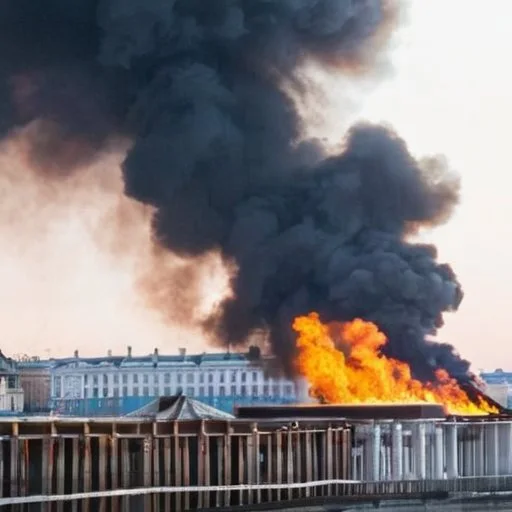
The siege of Leningrad exacted a devastating toll on the city's economy. Industrial production ground to a halt, and the city's infrastructure was severely damaged.
The blockade also disrupted the Soviet Union's food supply, leading to widespread famine and rationing. The city's economy would take years to recover, but the resilience of its people would ultimately prevail.
The historiography of the Siege of Leningrad is marked by a complex interplay of ideology, politics, and myth-making.
During the Soviet era, the siege was portrayed as a heroic testament to the Russian people's unwavering spirit and patriotism. In the post-Soviet era, historians have reevaluated the event, highlighting the human cost and the role of individual heroes.