American forces liberate Nazi's Buchenwald concentration camp
Hidden deep in the heart of Germany, the notorious Buchenwald concentration camp held its final breath as American forces stormed through its gates, liberating thousands of emaciated prisoners from the clutches of the crumbling Third Reich. Amidst the chaos, General Dwight D. Eisenhower, Supreme Allied Commander of the Allied Expeditionary Force, was briefed on the atrocities within, and his subsequent visit to the camp would forever change his perspective on humanity's darkest depths.
The Liberation of Buchenwald: A Harrowing Chapter in World War II
A Symbol of Freedom Amidst Unspeakable Horror
The liberation of Buchenwald concentration camp by American forces on April 11, 1945, marks a pivotal moment in the annals of World War II. This forsaken outpost of humanity, nestled in the heart of Germany, held the darkest secrets of the Third Reich, and the Allied forces' triumph over its oppressors would forever change the course of history.
Uncovering the Atrocities
As the American Third Army, led by General
George S. Patton, advanced deeper into German territory, they stumbled upon the gates of Buchenwald, a camp that had been shrouded in secrecy for years. The initial reports of the camp's existence were met with skepticism, but as the soldiers entered the compound, they were struck by the sheer scale of the atrocities committed within its walls. The stench of death, the sight of emaciated prisoners, and the echoes of screams still lingered, painting a gruesome picture of the Nazi regime's depravity.
General Eisenhower's Somber Visit
General
Dwight D. Eisenhower, Supreme Allied Commander of the Allied Expeditionary Force, was briefed on the atrocities within the camp, and his subsequent visit to Buchenwald would forever scar his perception of humanity's darkest depths. The general's eyes bore witness to the inhumane conditions, the makeshift crematoria, and the countless graves of the innocent. This encounter would leave an indelible mark on Eisenhower's psyche, driving home the importance of the Allied forces' mission to vanquish the Nazi scourge.
A Timeline of Liberation
- April 4, 1945: American forces first discover the existence of Buchenwald concentration camp.
- April 11, 1945: American troops liberate the camp, freeing approximately 21,000 prisoners.
- April 12, 1945: General Eisenhower visits the camp, condemning the atrocities in a statement to the press.
The Aftermath
In the days that followed, the world was forced to confront the horrors hidden within Buchenwald's walls. The liberation of the camp sparked a global outcry, with newspapers and newsreels disseminating the shocking images and stories of the survivors. The event galvanized public opinion, solidifying the Allied forces' resolve to bring the war to a swift end.
Cultural and Social Influences
The liberation of Buchenwald had far-reaching consequences, permeating the cultural fabric of society. The exposure of the Nazi regime's atrocities sparked a renewed sense of purpose, fueling the Allied forces' determination to vanquish the enemy. The event also inspired a new wave of artistic expression, as writers, artists, and filmmakers sought to process the trauma and convey the atrocities to a wider audience.
Personal Accounts and Anecdotes
Elie Wiesel, a Holocaust survivor and Nobel laureate, recounted his experiences in Buchenwald in his memoir "Night," offering a poignant and personal perspective on the horrors within the camp. Wiesel's narrative humanized the statistics, providing a glimpse into the lives of those who suffered and perished within the camp's walls.
Impact on Future Events
The liberation of Buchenwald served as a catalyst for the Allied forces' final push into Germany, culminating in the surrender of the Third Reich on May 8, 1945. The event also paved the way for the Nuremberg trials, where top Nazi officials were held accountable for their crimes against humanity.
Charitable Work and Social Contributions
In the years following the liberation, organizations such as the American Jewish Joint Distribution Committee and the International Committee of the Red Cross worked tirelessly to provide aid to the survivors of Buchenwald. These efforts helped to rebuild lives, reconcile the past, and foster a sense of community among those who had endured the unimaginable.
The liberation of Buchenwald concentration camp stands as a testament to the unwavering resolve of the Allied forces and a beacon of hope in the face of unimaginable horrors. As we reflect on this pivotal moment in history, we are reminded of the importance of upholding humanity, justice, and freedom in the face of tyranny.
Thorough Historical Narrative
The liberation of Buchenwald was a culmination of a series of events that unfolded in the final months of World War II. As the Allied forces advanced deeper into German territory, they encountered increasing evidence of the Nazi regime's atrocities. The discovery of the Ohrdruf concentration camp, a subcamp of Buchenwald, on April 4, 1945, was a significant milestone in this journey. The horrors witnessed at Ohrdruf, including the mass graves and the shocking mistreatment of prisoners, set the stage for the liberation of Buchenwald a week later.
The American forces, led by General Patton, were determined to push forward and bring an end to the war. The liberation of Buchenwald was a key strategic move, as it would allow the Allies to gain control of the German countryside and ultimately pave the way for the capture of Berlin.
The events that followed the liberation of Buchenwald were nothing short of chaotic. The prisoners, who had been subjected to unimaginable cruelty, were finally free to tell their stories and seek justice. The Allied forces, meanwhile, worked tirelessly to document the atrocities and gather evidence for the upcoming Nuremberg trials.

Thorough Character Sketch
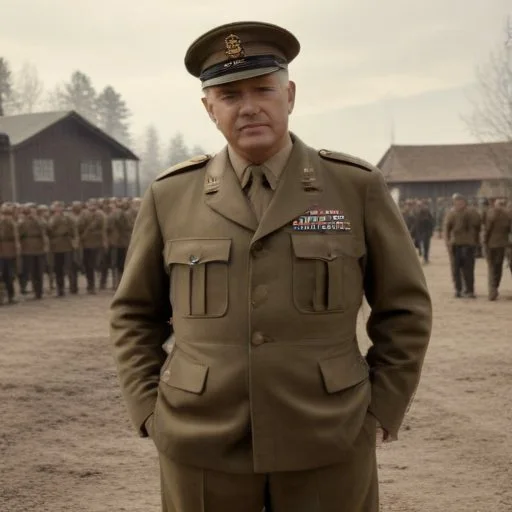
Eisenhower's leadership during World War II was instrumental in shaping the course of history. His strategic mind and unwavering commitment to the Allied cause earned him the respect of his peers and the admiration of the public. The liberation of Buchenwald was a testament to his vision and determination.
Comprehensive Cultural Examination
The liberation of Buchenwald had a profound impact on the cultural landscape of the post-war era. The shocking images and stories of the survivors sparked a wave of creative expression, as writers, artists, and filmmakers sought to process the trauma and convey the atrocities to a wider audience.
The event also inspired a new wave of social activism, as individuals and organizations worked to promote human rights and prevent similar atrocities from occurring in the future. The liberation of Buchenwald served as a catalyst for social change, galvanizing public opinion and shaping the cultural narrative of the time.

Document Examination
The liberation of Buchenwald concentration camp yielded a treasure trove of artifacts and documents that shed new light on the Nazi regime's atrocities. The Allies discovered a vast collection of records, including prisoner manifests, medical reports, and communication logs, which provided a detailed account of the camp's operations.
One of the most significant discoveries was the "Buchenwald Report," a detailed document compiled by the camp's prisoners, which provided a comprehensive account of the atrocities committed within the camp. The report, which was smuggled out of the camp by a prisoner, served as a crucial piece of evidence during the Nuremberg trials.
Rich Geopolitical Insight
The liberation of Buchenwald concentration camp marked a significant shift in the geopolitical landscape of Europe. The event signalled the beginning of the end of the Nazi regime's grip on power, and paved the way for the Allied forces' final push into Germany.
The camp's location, nestled in the heart of Thuringia, made it a strategic hub for the Nazi war effort. The liberation of Buchenwald was a key milestone in the Allies' campaign to control the countryside and ultimately capture Berlin.


