


The Axis occupation of Athens, which lasted from 1941 to 1944, was a dark period in the city's history, marked by scarcity, fear, and brutality. But on October 12, 1944, the city's residents rejoiced as British troops marched in, marking the triumphant end to a four-year reign of terror.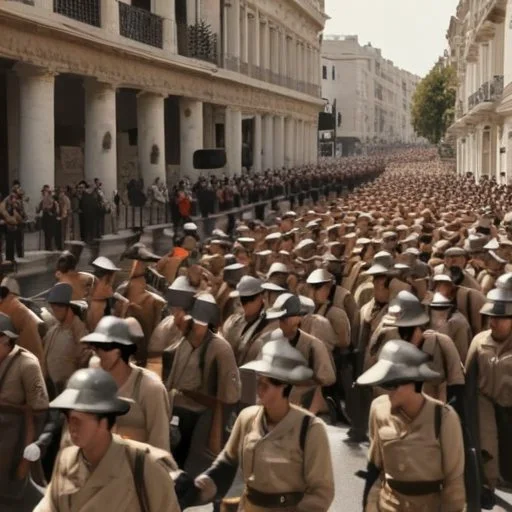
In April 1941, German forces invaded Greece, quickly overpowering the Greek army and pushing the British Expeditionary Force out of the country. The Axis powers, led by Germany and Italy, then divided Greece into zones of occupation, with Athens falling under German control.
Under German occupation, Athens faced severe food shortages, with many residents struggling to survive. The city's infrastructure was also devastated, with buildings destroyed and streets littered with debris. The once-vibrant city was worn down, its residents living in constant fear of arrest, torture, and execution.
Despite the oppressive regime, a brave group of Greeks formed the Greek Resistance, determined to fight back against their occupiers. Notable figures included Manolis Glezos, who famously tore down the Nazi flag from the Acropolis, and Alexandros Svolos, a prominent politician who played a key role in organizing the resistance.
As Allied forces advanced, the Germans began to withdraw from Athens. On October 12, 1944, British troops, led by General Ronald Scobie, marched into the city, bringing with them food, medicine, and hope. The atmosphere was electric, with Athenians of all ages flooding the streets, cheering and weeping with joy.
The liberation of Athens marked a major turning point in the war, paving the way for the Allied victory in Europe. For Athens, it marked the beginning of a new era of freedom and rebirth. The city would go on to rebuild and flourish, its residents determined to restore their city to its former glory.
The liberation of Athens is a testament to the bravery and resilience of its people. From the heroes of the Greek Resistance to the ordinary citizens who risked their lives to support them, the stories of this period are a powerful reminder of the human spirit's capacity for hope and defiance in the face of adversity.
"To the people of Athens, I bring a message of hope and liberation. We have come to free you from the yoke of tyranny and to restore your city to its rightful place among the free nations of the world."
— General Ronald Scobie, British commander, October 12, 1944
The liberation of Athens is a powerful reminder of the importance of freedom and the human spirit's capacity for resilience and hope. Today, the city of Athens stands as a testament to the bravery and determination of its people, a shining example of the power of liberation and rebirth.
The German occupation of Athens was marked by a series of brutal acts, including the execution of Greek patriots and the systematic destruction of the city's cultural heritage. One of the most notable examples of this was the razing of the Greek National Library, which was burned to the ground in 1944. The library, which housed over 500,000 volumes, was a treasured institution in Athens, and its destruction was seen as a deliberate attempt to erase Greek culture and identity.
The occupation also saw the rise of a thriving black market, as Athenians struggled to survive under the harsh conditions imposed by the Germans. The black market, which was largely controlled by the Greek Resistance, became a vital source of food, medicine, and other essential goods for the city's residents.
Despite the brutal conditions, the Athenians found ways to resist their occupiers, often through acts of subtle defiance. For example, the city's tram conductors would often play traditional Greek folk songs over the tram's loudspeakers, a small but significant act of rebellion against the German authorities.

Manolis Glezos: A True Greek Hero
Manolis Glezos was a true hero of the Greek Resistance, known for his bravery and cunning. Born in 1922, Glezos was just 19 years old when he joined the resistance, and quickly became one of its most prominent figures. His most famous act was the theft of the Nazi flag from the Acropolis, a daring raid that became a symbol of Greek defiance against the occupiers.
Glezos' bravery came at a great personal cost, however. He was arrested and tortured by the Germans, and later sentenced to death. However, he managed to escape and continue fighting with the resistance, eventually becoming one of the leaders of the movement.
The occupation of Athens had a profound impact on the city's cultural landscape. The Germans' systematic destruction of cultural institutions, such as the Greek National Library, was a deliberate attempt to erase Greek identity and replace it with a Nazi ideology. However, the Athenians responded by creating their own underground cultural movement, which included secret concerts, plays, and art exhibitions.
This movement was known as the "Cultural Resistance," and it played a vital role in preserving Greek culture and identity during the occupation. Despite the risks, Greek artists, writers, and musicians continued to create, often using their work as a form of subtle resistance against the occupiers.
The Axis occupation of Athens was part of a broader geopolitical strategy to dominate the Mediterranean region. The Germans and Italians saw Greece as a strategic location, controlling access to the Middle East and North Africa. The occupation was also motivated by a desire to exploit Greece's natural resources, including its rich mineral deposits and agricultural land.
The Allies, however, saw Greece as a vital ally in the fight against Nazi Germany. The country's strategic location made it an important base for Allied operations, and the liberation of Athens was a crucial step in the Allied campaign to push the Germans out of Europe.
The Axis occupation of Athens had a devastating impact on the city's economy. The Germans' exploitation of Greece's natural resources, combined with their brutal suppression of the black market, led to widespread poverty and scarcity. The city's infrastructure was also severely damaged, with many buildings destroyed or heavily damaged.
However, the liberation of Athens marked the beginning of a new era of economic growth and development. The Allies provided significant financial and material aid to the city, which helped to rebuild its infrastructure and restore its economy. The city's port, which was a vital hub for trade and commerce, was rapidly rebuilt, and the city's industrial sector began to flourish once again.