


In the midst of World War II, a battle took place that would send shockwaves throughout the British Navy and change the course of the war. On May 24, 1941, the German battleship Bismarck, pride of the Kriegsmarine, faced off against the HMS Hood, the iconic battlecruiser of the Royal Navy, in the Denmark Strait.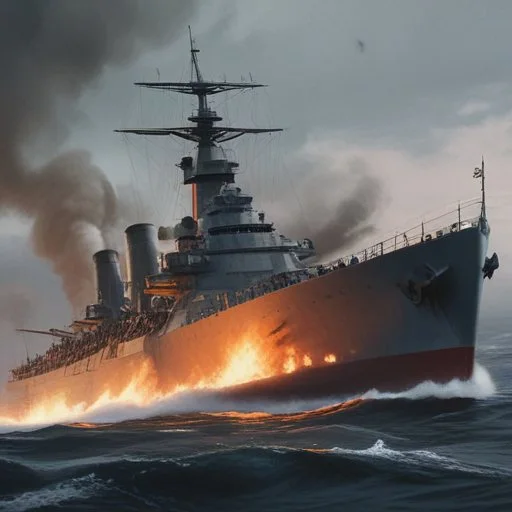
The HMS Hood, known for its impressive speed and firepower, was considered the epitome of British naval power. Meanwhile, the Bismarck, with its state-of-the-art technology and imposing size, was the symbol of German naval might. The stage was set for a battle that would test the mettle of both vessels.
At 05:52 on May 24, the Bismarck and its escort, the heavy cruiser Prinz Eugen, were spotted by the Hood and its escort, the battleship Prince of Wales. As the two forces closed in, the Hood opened fire, but its initial salvo fell short. The Bismarck responded with a devastating barrage, striking the Hood with several direct hits. The Hood's magazine exploded, and it sank in mere minutes, taking 1,416 crew members with it. Only three survivors were pulled from the icy waters.
The sinking of the HMS Hood sent ripples throughout the British Navy and the nation as a whole. The loss was met with widespread shock and outrage, and it marked a turning point in the Battle of the Atlantic. The British government and naval command were forced to re-evaluate their strategies and tactics, as the Bismarck's superior firepower had exposed the vulnerability of the Royal Navy's vessels.
The Bismarck's victory highlighted the importance of air power and radar in naval warfare. The German battleship's ability to combine its gunfire with aerial support from the Luftwaffe proved decisive in the battle. In response, the British Navy accelerated its development of radar and air support capabilities, which would play a crucial role in the ultimate defeat of the German U-boat fleet.
Despite its tragic fate, the HMS Hood left an indelible mark on naval history. Its sacrifice served as a catalyst for the British Navy's transformation and adaptation to the changing nature of warfare. The Hood's legacy continues to inspire and educate, serving as a reminder of the bravery and sacrifice of those who served on board.
Ted Briggs, one of the three survivors of the HMS Hood, recounted the horror of the battle: "I was on the bridge when the first salvo hit us. It was like a gigantic hammer blow. I saw the ship start to list, and then it was all over."
The Battle of the Denmark Strait shares parallels with other historic naval battles, such as the Battle of Midway and the Battle of Jutland. Each of these engagements showcased the importance of new technologies and tactics in shaping the outcome of naval warfare.
In conclusion, the sinking of the HMS Hood by the German battleship Bismarck was a pivotal moment in World War II, one that would have far-reaching consequences for naval warfare and the course of the war. As we reflect on this historic event, we honor the bravery and sacrifice of those who served on both sides of the battle.
The Denmark Strait, where the fateful battle took place, was a critical location for naval warfare in the North Atlantic. The strait, situated between Iceland and Greenland, connected the Norwegian Sea to the Atlantic Ocean, making it a vital passage for Allied convoys. The German Kriegsmarine, aware of its strategic importance, sought to disrupt Allied supply lines and assert its dominance in the region.
The geography of the Denmark Strait played a significant role in the battle. The narrow waters and harsh weather conditions made it an ideal location for an ambush. The Bismarck, with its superior firepower and radar capabilities, capitalized on these advantages to devastating effect.
Admiral Günther Lütjens, the commander of the Bismarck, was a seasoned naval officer with a reputation for boldness and tactical brilliance. Born in 1889, Lütjens had served in the German Navy since 1907 and had risen through the ranks to become one of the Kriegsmarine's most respected leaders.
Lütjens' tactical decisions during the battle have been subject to debate among historians. While some have criticized his decision to engage the Hood, others argue that it was a necessary move to protect the Bismarck's mission to break out into the Atlantic.
The sinking of the HMS Hood marked a significant turning point in the development of naval warfare technology. The Bismarck's superior firepower and radar capabilities highlighted the importance of these technologies in modern naval warfare.
In response to the loss, the British Navy accelerated its development of radar and air support capabilities, which would play a crucial role in the ultimate defeat of the German U-boat fleet. The battle also spurred the development of more advanced warship designs, including the introduction of aircraft carriers and escort carriers.
The HMS Hood's ship log, recovered after the battle, provides a harrowing account of the ship's final moments. The log details the ship's movements, gun firing patterns, and damage reports, offering a unique insight into the battle.
The Bismarck's own log, however, remains lost, likely destroyed when the ship sank on May 27, 1941. Despite this, German records and eyewitness accounts have helped reconstruct the battle from the German perspective.
The loss of the HMS Hood had significant economic implications for the British Navy and the nation as a whole. The ship's construction had cost the British government £6 million, a staggering sum for the time.
The subsequent rebuilding and modernization of the Royal Navy's fleet placed a considerable burden on the British economy, diverting resources away from other wartime efforts. The economic consequences of the battle were felt long after the war had ended.