


The pivotal moment when the Allies regained momentum on the Western Front, the Battle of the Bulge, came to a close on January 25, 1945, as German forces surrendered, marking a crucial turning point in World War II. This brutal and decisive battle will forever be etched in history as the largest and bloodiest fight fought by the United States during the war, claiming over 100,000 casualties on both sides.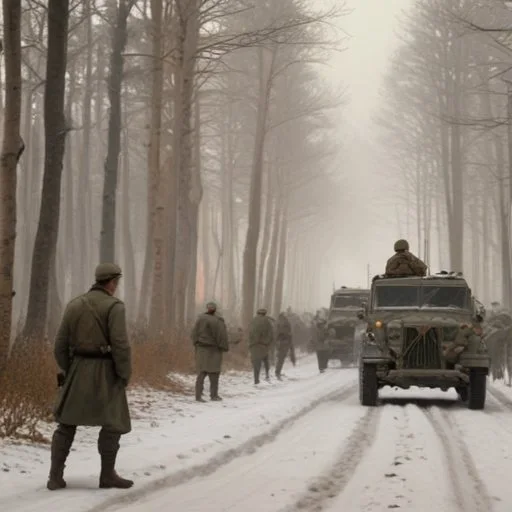
In the frozen winter of 1944, Adolf Hitler concocted a daring plan to split the Allied forces and reclaim the initiative on the Western Front. Under the guise of a routine troop rotation, the German high command secretly amassed a formidable force of 500,000 soldiers, 1,500 tanks, and 2,000 aircraft in the densely forested Ardennes region. On December 16, 1944, the Germans launched a surprise counterattack, Operation Wacht am Rhein, catching the Allies off guard and sending shockwaves throughout the Western Front.
As American troops fought back against the German onslaught, the battle raged on for over a month, with both sides suffering tremendous losses. The U.S. Army's 101st Airborne Division, stationed in Bastogne, found itself encircled by German forces, prompting the famous plea from Brigadier General Anthony McAuliffe: "NUTS!" - a defiant rejection of the German demand for surrender. The besieged Americans held out against overwhelming odds, awaiting relief from General George S. Patton's Third Army.
As the initial German momentum waned, the Allies regrouped and launched a series of counterattacks to encircle and crush the remaining German forces. General Dwight D. Eisenhower, Supreme Allied Commander of the Allied Expeditionary Force, coordinated a massive effort to resupply and reinforce the battered American divisions. By mid-January 1945, the Allies had regained the initiative, and the German army was on the brink of collapse.
On January 25, 1945, the last pockets of German resistance crumbled, and the Battle of the Bulge came to a close. The exhausted German army, driven back by the relentless Allied onslaught, had suffered catastrophic losses, including over 100,000 casualties and the destruction of vital equipment. The Allies, though battered, had secured a crucial victory, paving the way for the final push into Germany and the ultimate defeat of the Nazi regime.
The Battle of the Bulge will eternally be remembered as a testament to the bravery and sacrifice of the soldiers who fought and died on both sides. The Allied victory marked a significant turning point in the war, demonstrating the unyielding resolve and determination of the Western powers to defeat the forces of tyranny. As the war drew to a close, the Battle of the Bulge stood as a beacon of hope, illuminating the path to ultimate victory and the dawn of a new era.
The Battle of the Bulge was a masterclass in deception and misdirection. The Germans' unexpected counterattack caught the Allies off guard, and their initial success was largely due to their ability to mask their troop movements and intentions. The Allies, on the other hand, were slow to respond, partly due to poor intelligence and overconfidence. As the battle raged on, however, the Allies adapted and adjusted, ultimately gaining the upper hand through a combination of superior logistics, air power, and grit.
The battle was also marked by brutal weather conditions, with temperatures often dropping below freezing and snowdrifts reaching several feet. The harsh conditions took a toll on both sides, with thousands of soldiers succumbing to hypothermia, frostbite, and trench foot.
Despite the challenges, the Allies persevered, employing innovative tactics and strategies to outmaneuver the Germans. The battle was a testament to the adaptability and resilience of the Allied forces, and its outcome would have far-reaching implications for the outcome of the war.

Anthony McAuliffe: The Defiant General
When the Germans demanded his surrender, Brigadier General Anthony McAuliffe responded with a single word: "NUTS!" This defiant rejection of the German ultimatum became a symbol of American resolve and determination.McAuliffe's leadership during the Battle of the Bulge was instrumental in holding off the German army. Despite being vastly outnumbered and outgunned, he refused to yield, inspiring his troops to fight on against overwhelming odds.
The "NUTS!" reply was not merely a gesture of defiance; it was a calculated move to buy time for reinforcements to arrive. McAuliffe's courage and ingenuity played a crucial role in the eventual Allied victory, and his legendary response has become an iconic moment in American military history.
The Battle of the Bulge was a clash of vastly different military doctrines. The Germans, wedded to the concept of Blitzkrieg, emphasized speed and maneuverability. In contrast, the Allies relied on a more methodical approach, focusing on firepower, logistics, and attrition.
The two approaches led to starkly different outcomes. The Germans' initial success was based on their ability to rapidly deploy troops and exploit weak points in the Allied lines. However, as the battle dragged on, the Allies' superior resources and supply lines began to tell, grinding down the German army through sheer weight of numbers and firepower.
The contrast in tactics is exemplified in the contrasting careers of two prominent generals: Erwin Rommel, the Desert Fox, and George S. Patton. Rommel's lightning-fast advances in North Africa were a hallmark of Blitzkrieg, while Patton's more measured approach in Europe reflected the Allies' emphasis on methodical progress.
The Battle of the Bulge serves as a cautionary tale about the dangers of overreliance on a single military doctrine, and the importance of adaptability in the face of changing circumstances.

The economic burden of the Battle of the Bulge was staggering. The Allies suffered over 100,000 casualties, with many more wounded or missing. The financial cost of treating and rehabilitating these soldiers was immense, with estimates suggesting that the total bill exceeded $10 billion (approximately $150 billion in today's terms).
The destruction of infrastructure and property was also severe. The battle ravaged large swaths of the Belgian and Luxembourg countryside, leaving entire towns and villages in ruins. The cost of rebuilding and reconstruction would be a significant drain on the economies of these countries for years to come.
The war effort also led to a significant shift in the global economic balance. The massive Allied mobilization effort drew heavily on American industry, cementing the United States' position as the world's leading economic power.
The Battle of the Bulge had far-reaching economic implications, shaping the course of post-war reconstruction and globalization.
The Battle of the Bulge raises profound questions about the nature of courage, duty, and sacrifice. The soldiers who fought on both sides were driven by complex motivations, ranging from patriotism and loyalty to a desire for survival and personal glory.
The battle also highlights the tension between individual autonomy and collective responsibility. The soldiers who fought at Bastogne, for example, were faced with an impossible choice: surrender and risk being labeled cowards, or fight on against overwhelming odds and risk annihilation.
The outcome of the battle was influenced by the ideological beliefs of the leaders involved. Hitler's fanatical adherence to the Nazi ideology drove him to launch the disastrous Ardennes offensive, while the Allies' commitment to democracy and freedom inspired their troops to fight on against the odds.
The Battle of the Bulge serves as a powerful reminder of the human cost of ideological conflict, and the enduring importance of moral courage in the face of overwhelming adversity.