


The Battle of the Coral Sea, fought from May 4 to 8, 1942, is remembered as a pivotal moment in World War II, marking the first time that opposing aircraft carriers engaged in combat, and the USS Lexington, pride of the US Navy, meeting its untimely demise.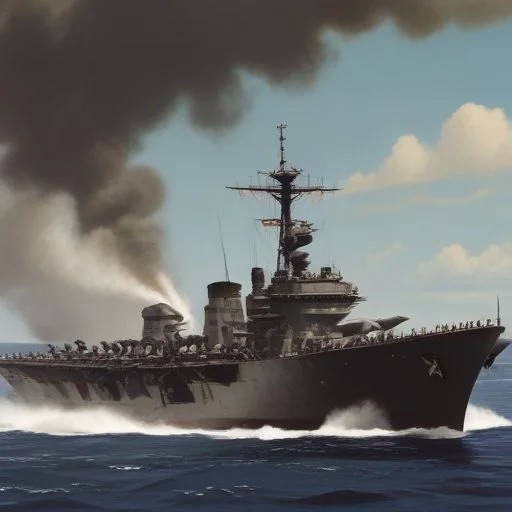
The Imperial Japanese Navy, under the command of Admiral Isoroku Yamamoto, had long recognized the importance of aircraft carriers in modern naval warfare. By exploiting the range and striking power of their carrier-based aircraft, the Japanese sought to gain a decisive advantage over their American counterparts.
In the weeks leading up to the Coral Sea engagement, Japanese forces had been pushing deep into the Pacific, capturing strategic territories and threatening Australia's eastern coast. In response, the US Navy's Task Force 17, led by Rear Admiral Frank J. Fletcher, set out to intercept the Japanese armada and challenge their dominance.
The Japanese strike force, composed of 69 aircraft from the carriers Shōkaku and Zuikaku, launched a coordinated attack on the USS Lexington and its escorting ships on May 8, 1942. Despite being outnumbered, the Japanese pilots demonstrated exceptional skill and bravery, dodging anti-aircraft fire to deliver precise bomb and torpedo strikes on the Lexington's deck.
As the Lexington's crew valiantly fought to save their ship, it became clear that the damage was too extensive. With fires raging out of control and the vessel listing severely, the order was given to abandon ship. The USS Lexington, a symbol of American naval power, slipped beneath the waves, taking 216 of its crew members with it.
The Battle of the Coral Sea marked a significant shift in the balance of power in the Pacific Theater. Although the Japanese had sunk the USS Lexington, they suffered heavy losses themselves, including the sinking of the light carrier Shōhō and damage to the Shōkaku. This costly victory forced the Japanese to reassess their strategy and ultimately withdraw from their planned invasion of Port Moresby, New Guinea.
The sinking of the USS Lexington sent shockwaves throughout the American public, serving as a harsh reminder of the human cost of war. The bravery and sacrifice of the Lexington's crew, as well as the ingenuity and skill of their Japanese adversaries, would be immortalized in the annals of naval history.
"The Battle of the Coral Sea was a tactical defeat, but a strategic victory." - Rear Admiral Frank J. Fletcher
Lieutenant Commander Edward "Butch" O'Hare, a fighter pilot from the USS Lexington, would go on to earn the Medal of Honor for his heroic actions during the battle, downing multiple Japanese aircraft before being forced to ditch his plane in the ocean.
The Battle of the Coral Sea set the stage for the pivotal Battle of Midway, fought just a month later. The lessons learned from the Coral Sea engagement would inform US naval strategy for the remainder of the war, as the Allies worked to counter the Japanese advantage in carrier-based warfare.
The Battle of the Coral Sea serves as a testament to the bravery and sacrifice of those who fought on both sides, and a reminder of the devastating consequences of war.
Admiral Isoroku Yamamoto is often regarded as one of the most brilliant and innovative naval strategists of World War II. Born in 1884, Yamamoto graduated from the Imperial Japanese Naval Academy and went on to study at Harvard University. He served as the commander-in-chief of the Imperial Japanese Navy from 1939 until his death in 1943.
Yamamoto's vision for the Japanese Navy was centered around the concept of "fleet aviation," where aircraft carriers would serve as the primary striking force. He believed that a decisive naval battle would be won by the side that could project air power the farthest.
Yamamoto's bold strategy and tactical genius were instrumental in the Japanese Navy's early successes, including the surprise attack on Pearl Harbor.Despite his pivotal role in the war, Yamamoto remained an enigmatic figure, known for his introspective nature and poetic inclinations. His legacy continues to be felt in the annals of naval warfare.
In the months leading up to the Battle of the Coral Sea, the Japanese Navy had been making steady gains in the Pacific, capturing key territories and threatening Australia's eastern coast. Meanwhile, the US Navy was struggling to respond effectively, hampered by inadequate intelligence and outdated tactics.
The Japanese advance was further aided by a series of Allied missteps, including the failure to reinforce the naval base at Pearl Harbor and the hesitation to engage the Japanese fleet in a decisive battle.
It was against this backdrop of uncertainty and strategic miscalculation that the Battle of the Coral Sea unfolded, pitting the opposing forces in a desperate struggle for dominance.The Coral Sea engagement would ultimately serve as a turning point in the war, forcing both sides to reevaluate their strategies and adapt to the new realities of carrier-based warfare.
The Battle of the Coral Sea marked a significant milestone in the history of naval warfare, as it showcased the emergence of aircraft carriers as the primary striking force.
The Japanese Navy's use of radar-equipped aircraft and sophisticated communications systems allowed them to coordinate their attack with unprecedented precision. Similarly, the US Navy's development of radar-guided anti-aircraft fire and improved carrier defense systems enabled them to respond more effectively to the Japanese assault.
The Coral Sea battle highlighted the critical role that technological innovation would play in shaping the outcome of modern naval conflicts.The lessons learned from this engagement would inform the development of naval strategies and tactics for decades to come, as nations continued to invest in cutting-edge technologies to gain a decisive edge.
The sinking of the USS Lexington sent shockwaves throughout the American public, serving as a harsh reminder of the human cost of war. The bravery and sacrifice of the Lexington's crew, as well as the ingenuity and skill of their Japanese adversaries, would be immortalized in the annals of naval history.
The Coral Sea engagement also had a profound impact on American popular culture, inspiring numerous films, books, and documentaries that would cement its place in the national consciousness.
The bravery and sacrifice of the Lexington's crew would become an enduring symbol of American resolve and determination in the face of adversity.The Coral Sea's cultural significance extends beyond the realm of war, serving as a testament to the power of human resilience and the importance of honoring our shared history.
The Battle of the Coral Sea was fought against the backdrop of a broader struggle for dominance in the Pacific Theater. The Japanese Navy's aggressive expansionism had been countered by the US Navy's determination to protect its interests and maintain the status quo.
The Coral Sea engagement marked a critical juncture in this struggle, as the opposing forces clashed in a bid to secure control of the strategic sea lanes and resource-rich territories of the Pacific.
The outcome of the battle would have far-reaching implications for the balance of power in the region, influencing the course of the war and shaping the post-war order.The Coral Sea's significance extends beyond the realm of military history, serving as a testament to the enduring importance of the Pacific Theater in global geopolitics.