British and Canadian forces surrender to Japan in Hong Kong
The Christmas Day surrender of British and Canadian forces in Hong Kong marked a somber end to the brutal 17-day battle, as Japan's imperial army tightened its grip on the island. Governor Sir Mark Young and General Christopher Maltby led the gallant defense, but vastly outnumbered, they were forced to raise the white flag. As Japanese troops poured in, a dark chapter of occupation began, casting a long shadow over Hong Kong's people.
The Fallen Fortress: The 1941 Battle of Hong Kong
A Dark Christmas: The Brute Force of Occupation
On December 25, 1941, the British and Canadian forces in Hong Kong surrendered to the Imperial Japanese Army, marking the end of a brutal 17-day battle. The once-resistant territory was now under Japanese control, casting a long shadow over the people of Hong Kong.
Fading Light of Resistance
The battle, which began on December 8, 1941, was a brutal and relentless assault on the island. Despite being vastly outnumbered, the British and Canadian forces, led by Governor Sir Mark Young and General Christopher Maltby, put up a gallant defense. However, against the sheer might of the Japanese army, they were eventually forced to raise the white flag.
A City in Chains
The surrender marked the beginning of a dark chapter in Hong Kong's history. The Japanese occupation would last for three years and eight months, during which the people of Hong Kong faced severe hardship, repression, and brutality.
An Era of Fear and Repression
The Japanese occupation was characterized by strict martial law, forced labor, and brutal suppression of dissent. The people of Hong Kong lived in constant fear of arrest, torture, and execution. Many were forced to flee to mainland China, while others were interned in prison camps.
Rays of Hope Amidst the Darkness
Despite the bleak circumstances, there were moments of courage and resilience that defined the spirit of the people of Hong Kong.
The Brave Few
A small group of resistance fighters, including the Hong Kong Volunteer Defence Corps, continued to operate in secret, carrying out guerrilla attacks and sabotage against the Japanese occupation forces. These brave men and women risked everything to keep the flame of hope alive.
A Lasting Legacy
The Battle of Hong Kong may have ended in defeat, but it left an indelible mark on the people and the city.
A City Reborn
In the aftermath of the war, Hong Kong rose from the ashes, its people determined to rebuild and forge a new future. The experience of occupation had forged a strong sense of community and resilience, which would shape the city's identity for generations to come.
"In the face of overwhelming force, the people of Hong Kong showed that even in the darkest of times, there is always a glimmer of hope."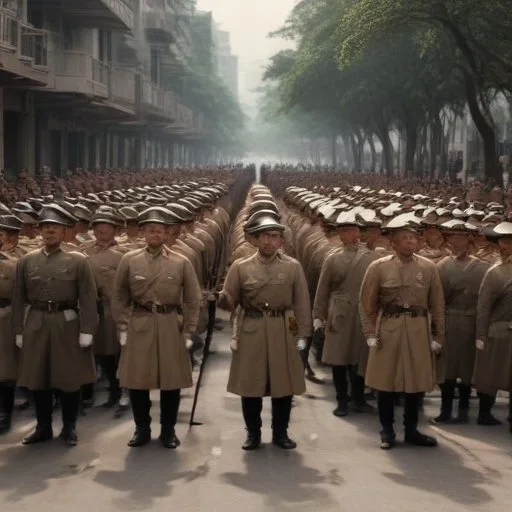
Timeline of the Battle of Hong Kong
- December 8, 1941: The Japanese invasion of Hong Kong begins.
- December 18, 1941: The British forces withdraw to the Hong Kong Island.
- December 25, 1941: The British and Canadian forces surrender to the Japanese.
Key Figures Involved
- Governor Sir Mark Young: The Governor of Hong Kong during the battle.
- General Christopher Maltby: The commander of the British forces in Hong Kong.
- General Takashi Sakai: The commander of the Japanese invasion force.
Major Outcomes and Impacts
- The Japanese occupation of Hong Kong lasted for three years and eight months.
- The battle resulted in the deaths of over 4,000 Allied soldiers and civilians.
- The occupation had a profound impact on the city and its people, shaping their identity and sense of community.
Deep Historical Exploration
The Japanese Plan of Attack
The Japanese invasion of Hong Kong was meticulously planned and executed. The attack was led by General Takashi Sakai, who had previously led successful campaigns in Shanghai and Guangdong. The Japanese army was composed of seasoned veterans, well-equipped with modern weaponry and air support.
Their plan of attack involved a multi-pronged approach, with simultaneous assaults on the northern and southern borders of the New Territories. The Japanese army would then push south towards Kowloon, aiming to capture the strategic Kai Tak airfield and the Victoria Harbour.
The Japanese navy played a crucial role in the invasion, providing naval gunfire support and transporting troops and supplies to the battlefront. The Japanese air force, equipped with state-of-the-art fighter planes and bombers, dominated the skies, providing air cover for the advancing troops.

Character Analysis
Governor Sir Mark Young: A Leader in Crisis
Governor Sir Mark Young was the Governor of Hong Kong during the tumultuous period of the Japanese invasion. Despite being vastly outnumbered and outgunned, Young remained resolute and determined to defend the territory.
Born in 1886, Young was a seasoned diplomat and administrator who had previously served in various colonial postings. He was known for his bravery and leadership skills, which were put to the test during the battle.
Young played a crucial role in coordinating the defense of Hong Kong, working closely with General Christopher Maltby and other military leaders. Despite the eventual surrender, Young's leadership and resolve earned him the respect and admiration of his contemporaries.
In-Depth Contrastive Study
The Battle of Hong Kong in Comparative Perspective
The Battle of Hong Kong was one of the earliest confrontations between British and Japanese forces during World War II. Compared to other battles fought during this period, the Battle of Hong Kong was notable for its swiftness and brutality.
In contrast to the protracted sieges of Malta and Singapore, the Battle of Hong Kong lasted mere weeks. However, the intensity of the fighting and the scale of the destruction were comparable to these more famous battles.
The Japanese occupation of Hong Kong also shared similarities with their occupations of other territories, including Singapore and the Philippines. In each case, the Japanese military imposed harsh martial law, suppressed dissent, and exploited local resources.
Detailed Cultural Impact Report
The Cultural Legacy of the Battle of Hong Kong
The Battle of Hong Kong had a profound impact on the cultural identity of the city and its people. The experience of occupation and resistance forged a strong sense of community and resilience, which would shape the city's culture for generations to come.
The battle also led to a flourishing of patriotic and nationalistic sentiment, as Hong Kong's residents sought to reclaim their city and their identity. This cultural shift was reflected in the arts, literature, and music of the time, which celebrated themes of resistance and liberation.
Today, the Battle of Hong Kong is remembered through various cultural institutions and monuments, including the Hong Kong Museum of History and the Cenotaph in Victoria Park.
Geopolitical Dynamics Review
The Geopolitical Context of the Battle of Hong Kong
The Battle of Hong Kong was fought against the backdrop of a rapidly changing geopolitical landscape. The Japanese invasion of China in 1937 had created a power vacuum in East Asia, which the Japanese military sought to exploit.
The British Empire, already weakened by the demands of war in Europe, was struggling to maintain its colonial possessions in Asia. The fall of Hong Kong was a significant blow to British prestige and influence in the region.
The battle also marked a turning point in the relations between China and Hong Kong, as the Nationalist government in Chongqing sought to reclaim the territory as part of a unified Chinese state.


