


On June 22, 1945, the longest and bloodiest battle of the Pacific War finally came to a close as American forces raised the Stars and Stripes on the southernmost tip of Okinawa Island, marking a crucial milestone in the Allied campaign to defeat Japan. This 83-day struggle had witnessed some of the most ferocious combat of World War II, with both sides suffering heavy casualties.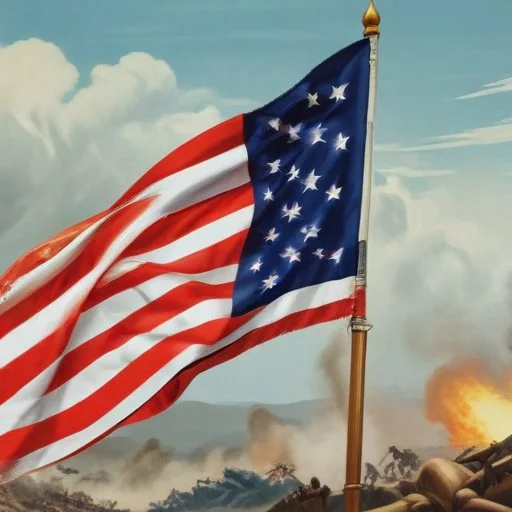
The Battle of Okinawa was a brutal and devastating campaign that saw the Allies pitted against the Imperial Japanese Army in a fight to the death. The battle was part of Operation Iceberg, a larger Allied operation aimed at capturing key islands in the Pacific and ultimately invading the Japanese mainland. Okinawa, a strategic location for both sides, was the largest and most bitterly contested battle of the Pacific War.
The battle raged on for 83 days, from April 1 to June 22, 1945, as American troops, supported by naval firepower and air support, slowly but surely pushed the Japanese forces back. The Japanese, determined to defend their homeland, employed kamikaze attacks, suicide bombers, and booby traps, inflicting heavy casualties on the Allies. In response, the Americans unleashed a torrent of artillery fire, napalm bombs, and flamethrower tanks to root out the Japanese defenders.
Despite being vastly outnumbered and outgunned, the Japanese defenders fought with unyielding ferocity, employing guerrilla tactics, ambushes, and banzai charges to harass and disrupt the American advance. The Americans, buoyed by their superior firepower and logistics, pushed forward with dogged determination, driven by their own desire to bring an end to the war.
The Battle of Okinawa exacted a heavy toll on both sides. American casualties totaled over 12,000 dead, 36,000 wounded, and 26,000 cases of combat fatigue. The Japanese suffered even more severely, with an estimated 110,000 soldiers killed, many by their own hands in the final days of the battle. The battle also claimed the lives of thousands of Okinawan civilians, trapped in the midst of the carnage.
As the last shots were fired, a somber American flag-raising ceremony marked the end of the battle. The Stars and Stripes, planted atop a scrubby hill overlooking the ravaged landscape, symbolized the triumph of American arms, but also served as a poignant reminder of the devastating cost of war.
The Battle of Okinawa paved the way for the subsequent invasion of the Japanese mainland, an operation that would ultimately prove unnecessary with the dropping of atomic bombs on Hiroshima and Nagasaki. The battle also served as a catalyst for the eventual Japanese surrender on August 15, 1945, bringing an end to World War II.
The Battle of Okinawa left an indelible mark on the psyche of both the Japanese and American people. The ferocity of the battle and the scale of the devastation served as a grim reminder of the horrors of war, while the bravery and sacrifice of the soldiers on both sides inspired a sense of awe and reverence.
In the aftermath of the battle, the American military established a series of cemeteries and memorials on Okinawa to honor the fallen. Today, these sacred sites serve as a poignant reminder of the ultimate sacrifice made by the soldiers who fought and died on this blood-soaked island.
As we reflect on the Battle of Okinawa, we are reminded that, despite the brutal ferocity of war, there exists a shared humanity that binds us all. It is a testament to the enduring power of courage, sacrifice, and the unyielding determination to bring peace to a wartorn world.
The planning and preparation for the Battle of Okinawa began several months prior to the invasion. The Allies knew that capturing Okinawa would provide a crucial airbase and staging area for the planned invasion of the Japanese mainland. In late 1944, General Douglas MacArthur, the Supreme Commander of the Allied Forces in the Pacific, and Admiral Chester Nimitz, the Commander-in-Chief of the Pacific Fleet, began planning Operation Iceberg, the codename for the invasion of Okinawa.
The Allies assembled a massive force for the invasion, consisting of over 1,300 ships, 1,500 aircraft, and more than 175,000 troops. The invasion force was led by the U.S. Tenth Army, under the command of General Simon Bolivar Buckner Jr. The Allies also established a network of supply depots and staging areas on nearby islands to support the invasion.
In the months leading up to the invasion, the Allies conducted extensive air and naval bombardments of Okinawa to weaken Japanese defenses. The U.S. Navy's Fast Carrier Task Force, led by Admiral Marc Mitscher, launched repeated airstrikes against Japanese airfields, ports, and military installations on Okinawa, while the U.S. Army Air Forces (USAAF) conducted long-range bomber missions against Japanese airfields and industrial targets.

Commander Minoru Ota, a seasoned Japanese officer, was tasked with defending Okinawa against the Allied invasion. Ota was a hard-liner who believed that the Japanese military could still win the war, and he was determined to inflict maximum casualties on the Allies.
Ota's tactics were brutal and unyielding, and he instructed his troops to fight to the death rather than surrender. He also employed guerrilla tactics, such as ambushes and booby traps, to harass and disrupt the American advance.
Ota's leadership during the Battle of Okinawa was marked by controversy and tragedy. He was accused of ordering the execution of Okinawan civilians who were suspected of collaborating with the Allies, and his tactics ultimately led to the deaths of thousands of Japanese soldiers and civilians.
The Battle of Okinawa had a profound impact on Japanese culture and society. The defeat at Okinawa marked a turning point in the war, and it led to a growing sense of desperation and despair among the Japanese people.
The battle also had a significant impact on the Japanese concept of honne, or the idea that one's true feelings or desires must be suppressed in favor of social propriety. As the war effort faltered, many Japanese citizens began to question the authority of the government and the military, leading to a growing sense of disillusionment and social change.
In the aftermath of the battle, the Allies introduced democratic reforms and promoted a more liberal and open society in Japan. This led to a flourishing of artistic and cultural expression, as Japanese artists, writers, and musicians began to explore new themes and ideas.
The Battle of Okinawa had a devastating impact on the environment of Okinawa Island. The intense fighting and bombing caused widespread destruction of forests, coral reefs, and wildlife habitats, leading to a significant decline in biodiversity.
The U.S. military's use of napalm and flamethrower tanks also contaminated the soil and water, causing long-term damage to the island's ecosystem. The construction of airbases, ports, and other military infrastructure further damaged the environment, leading to soil erosion and pollution.
In the aftermath of the battle, the U.S. military established a series of environmental cleanup programs to restore the island's ecosystem. However, the legacy of environmental damage continues to be felt today, and many Okinawans remain concerned about the ongoing impact of U.S. military bases on the island's environment.
The Battle of Okinawa was deeply intertwined with the broader geopolitical context of World War II. The battle was part of a larger strategy by the Allies to secure key islands in the Pacific and prepare for the eventual invasion of the Japanese mainland.
The battle also had significant implications for the post-war settlement in Asia. The defeat at Okinawa led to a growing sense of desperation among Japanese leaders, which ultimately contributed to their decision to surrender in August 1945.
The occupation of Okinawa by U.S. troops also had long-term geopolitical implications, as the island became a key strategic location for the United States in the Asia-Pacific region. Today, the presence of U.S. military bases on Okinawa remains a contentious issue in Japanese politics and a source of tension in the region.