


February 8, 1945, marked the beginning of Operation Veritable, a massive Allied offensive that would change the course of World War II. This ambitious campaign, involving over 200,000 British and Canadian troops, aimed to capture the strategic land between the Maas and Rhine rivers, paving the way for a final push into Germany and hastening the war's end.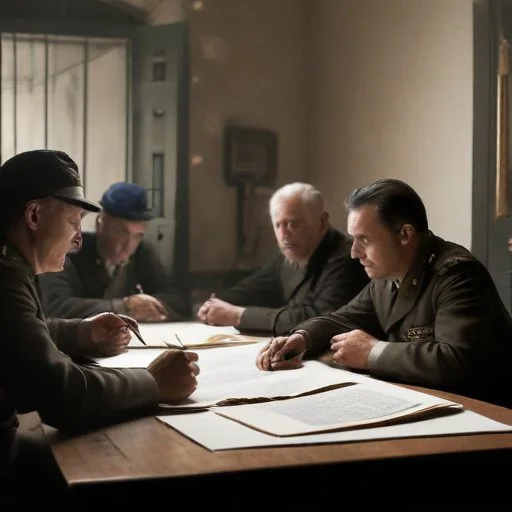
The Allied forces had been pushing through Europe since D-Day, but their advance had slowed significantly due to the fierce German resistance and treacherous terrain. The Allies needed a decisive blow to break through the German defenses and gain a foothold in the Rhineland. Operation Veritable was born out of this necessity, with the goal of clearing the area between the Maas and Rhine rivers and creating a solid foundation for further advances.
Field Marshal Bernard Montgomery, a seasoned commander and strategist, masterminded Operation Veritable. Montgomery's leadership and tactical genius played a crucial role in the operation's success, as he coordinated the efforts of the British and Canadian forces to achieve a unified goal.
Operation Veritable's success marked a significant turning point in the war, as it cleared the way for the Allies to push into Germany and ultimately led to the collapse of the German army. The operation demonstrated the Allies' ability to work together, overcoming cultural and linguistic barriers to achieve a common goal.
The camaraderie and cooperation between British and Canadian forces during Operation Veritable serve as a testament to the power of unity in the face of adversity. Despite cultural differences, the soldiers worked together seamlessly, forging bonds that would last a lifetime.
"We will not be beaten. We will not be defeated. We will win, and we will win together." - Field Marshal Bernard Montgomery
Sergeant James Wilson, a British soldier who participated in Operation Veritable, recalled the intense fighting: "The Germans were relentless, but we were determined to push forward. We fought for every inch of land, and in the end, we emerged victorious."
Operation Veritable's success paved the way for the Allies' final push into Germany, ultimately leading to the capture of Berlin and the end of World War II in Europe.
The bravery and sacrifice of the soldiers involved in Operation Veritable were recognized with numerous awards, including the Victoria Cross, the highest honor awarded for valor in the face of the enemy.
| Date | Event |
|---|---|
| February 8, 1945 | Operation Veritable begins |
| February 24, 1945 | Operation Veritable concludes |
The soldiers who fought in Operation Veritable showed unwavering courage and determination, inspiring generations to come. Their bravery in the face of overwhelming odds serves as a testament to the human spirit's ability to overcome even the most daunting challenges.
Operation Veritable was not only a military victory, but also a logistical masterpiece. The Allies had to navigate treacherous terrain, including flooded rivers and dense forests, to reach the strategic land between the Maas and Rhine rivers. The operation required careful planning and coordination, with thousands of tons of supplies and equipment transported to the front lines. The success of the operation was a testament to the Allies' ability to adapt to challenging circumstances and overcome seemingly insurmountable obstacles.
In the days leading up to the operation, the Allies conducted an extensive deception campaign to mislead the Germans about the timing and location of the attack. This involved fake radio transmissions, double agents, and other forms of disinformation. The Germans were caught off guard, and their defensive lines were quickly breached.

Field Marshal Bernard Montgomery was the mastermind behind Operation Veritable, but he was not the only key figure involved in the operation. Lieutenant General Brian Horrocks, the commander of the British XXX Corps, played a crucial role in planning and executing the operation. Horrocks' experience and tactical genius were instrumental in overcoming the German defenses and securing the strategic land between the Maas and Rhine rivers.
Montgomery's leadership style was characterized by caution and meticulous planning. He was known for his ability to balance risk and prudence, and his decision-making process was often slow and deliberate. This approach paid off in Operation Veritable, as the Allies achieved a decisive victory with minimal casualties.
Operation Veritable was part of a larger Allied strategy to encircle and capture the Ruhr region, a critical industrial hub in western Germany. The operation was coordinated with other Allied offensives, including Operation Grenade to the south and Operation Clarion to the north. This multi-pronged approach allowed the Allies to apply pressure on the German army from multiple directions, ultimately leading to its collapse.
In comparison to other Allied offensives, Operation Veritable was notable for its speed and decisiveness. The operation was launched on February 8, 1945, and the Allies had secured the strategic land between the Maas and Rhine rivers by February 24, 1945. This rapid progress was a testament to the Allies' growing military strength and coordination.

Operation Veritable had a profound impact on the local population in the Rhineland region. The operation involved extensive bombing and artillery bombardments, which caused significant damage to civilian infrastructure and displacement of local residents. Many towns and villages were reduced to rubble, leaving thousands of people without homes or livelihoods.
Despite the challenges, the local population showed remarkable resilience and adaptability. Many civilians worked alongside Allied forces to rebuild and restore essential services, such as healthcare and education. The operation also led to the establishment of refugee camps and humanitarian aid programs, which provided critical support to those in need.
Historians have long debated the significance of Operation Veritable in the broader context of World War II. Some argue that the operation was a crucial turning point, marking a shift in momentum in favor of the Allies. Others contend that the operation was merely one of several contributing factors to the ultimate defeat of Germany.
Recent scholarship has highlighted the importance of Operation Veritable in demonstrating the Allies' ability to adapt and innovate in response to changing circumstances. The operation showcased the Allies' growing military strength and coordination, as well as their ability to overcome cultural and linguistic barriers to achieve a common goal.