Allies invade Italy, Armistice signed in secrecy
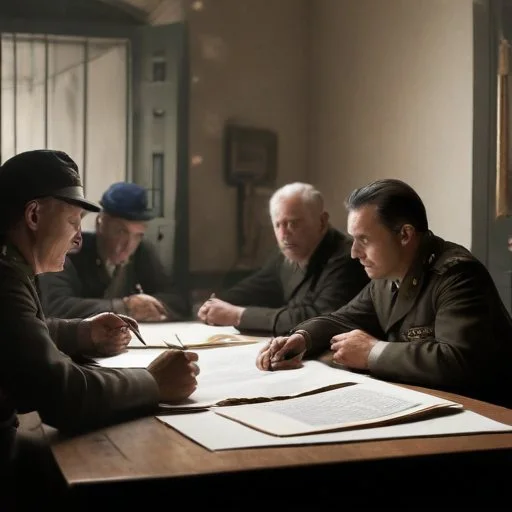
As British and Canadian forces storm the Italian shores, a clandestine meeting unfolds in the shadows. Behind closed doors, Walter Bedell Smith, Eisenhower's right-hand man, and Giuseppe Castellano, the Italian emissary, put pen to paper, signing the Armistice of Cassibile. The ink is still wet when they part ways, but the world remains none the wiser – the news is kept under wraps for five more days.
The Dawn of a New Era: The Italian Mainland Invasion and the Armistice of Cassibile
A Historic Turning Point in World War II
On September 3, 1943, two pivotal events converged to shape the fate of World War II. As British and Canadian troops stormed the Italian mainland, a clandestine meeting took place, culminating in the signing of the Armistice of Cassibile by Walter Bedell Smith and Giuseppe Castellano. This clandestine agreement, though not publicly announced for another five days, marked a significant milestone in the Allied campaign.
Historical Background
As the war raged on, the Allies sought to weaken the Axis powers by targeting Italy, Germany's vital ally. The Italian campaign, code-named Operation Avalanche, aimed to capture the Italian mainland, thereby crippling the Axis's southern flank. Meanwhile, secret negotiations between the Allies and Italy had been underway since July 1943, with the goal of securing Italy's surrender.
Key Figures Involved
- Walter Bedell Smith: General Dwight D. Eisenhower's chief of staff and a skilled diplomat, Smith played a crucial role in brokering the Armistice of Cassibile.
- Giuseppe Castellano: The Italian emissary, Castellano was authorized by King Victor Emmanuel III to negotiate Italy's surrender, marking a significant shift in Italy's allegiance.
Timeline of Events
- July 1943: Secret negotiations between the Allies and Italy begin, facilitated by the Vatican and the Italian government-in-exile.
- September 3, 1943: British and Canadian troops land on the Italian mainland, commencing Operation Avalanche.
- September 3, 1943: Walter Bedell Smith and Giuseppe Castellano sign the Armistice of Cassibile, pending its public announcement.
- September 8, 1943: The Armistice of Cassibile is publicly announced, formally ending Italy's participation in the war.
Major Outcomes and Impacts
The Italian mainland invasion and the Armistice of Cassibile yielded significant consequences:
- Italy's surrender led to the country's occupation by the Allies, paving the way for the eventual defeat of Germany.
- The Armistice of Cassibile cemented the Allies' strategic advantage, as Italy's military forces ceased to oppose them.
- The invasion marked a crucial shift in the war's balance of power, foreshadowing the eventual Allied victory.
Cultural and Social Influences
The Italian mainland invasion and the Armistice of Cassibile left an indelible mark on the cultural and social fabric of Italy and the world:
- The surrender of Italy marked a significant blow to the Axis powers, boosting Allied morale and solidifying their confidence in ultimate victory.
- The Armistice of Cassibile ushered in a new era of cooperation between the Allies and Italy, paving the way for post-war reconstruction and the country's reintegration into the international community.
Inspirational Stories and Motivations
The bravery and determination of the Allied forces, as well as the clandestine efforts of Smith and Castellano, serve as a testament to the power of cooperation and diplomacy in the face of adversity:
"The difficulties and sacrifices of the war will be greatly alleviated by the cessation of hostilities by Italy." - General Dwight D. Eisenhower
This fateful day in September 1943 will forever be etched in history as a testament to the unwavering commitment of those who fought for a common cause, and to the power of strategic diplomacy in shaping the course of world events.
Full Historical Discourse
The Secret Road to Cassibile
The signing of the Armistice of Cassibile was the culmination of months of secret negotiations between the Allies and Italy. As early as April 1943, British and American officials began making overtures to Italian diplomats, seeking to exploit the growing discontent among Italy's ruling elite with the Axis alliance.
One key figure in these early talks was the Italian diplomat, Alberto Berio, who would later play a crucial role in facilitating the armistice negotiations. Berio's discreet meetings with Allied officials in neutral Portugal laid the groundwork for the eventual surrender of Italy.
Meanwhile, the Vatican, too, played a vital behind-the-scenes role in brokering the armistice. Pope Pius XII, keenly aware of the devastating consequences of continued war, used his diplomatic channels to encourage Italian defection from the Axis.

Character Examination
Giuseppe Castellano: The Man Behind the Armistice
Giuseppe Castellano, the Italian emissary who signed the Armistice of Cassibile, was a prominent figure in Italy's military and political circles. A career officer, Castellano had served as a liaison between the Italian army and the government, earning the trust of King Victor Emmanuel III.
Castellano's role in the armistice negotiations was instrumental in securing Italy's surrender. His skillful diplomacy and ability to navigate the complexities of Italian politics enabled him to broker a deal that would have far-reaching consequences for the war.
In-Depth Cultural Influence Study
A Divided Nation: The Cultural Fallout of the Armistice
The Armistice of Cassibile marked a profound cultural shift in Italy, as the country struggled to come to terms with its sudden shift from Axis ally to Allied occupier. The armistice sparked widespread confusion, resentment, and even violence, as different factions vied for power and control.
In the aftermath of the armistice, Italian society was torn between those who saw the surrender as a necessary step towards liberation and those who viewed it as a shameful betrayal of the Axis. This cultural divide would persist long after the war, influencing Italy's post-war reconstruction and national identity.

Political Influence Analysis
The Diplomatic Dance: The Allies' Delicate Balancing Act
The Armistice of Cassibile was a masterclass in diplomatic maneuvering, as the Allies sought to balance competing interests and secure Italy's surrender. The negotiations required a delicate balancing act, as the Allies needed to convince Italy to defect from the Axis without alienating other European nations.
Meanwhile, the Allies had to navigate their own internal divisions, as different factions within the British and American governments held competing views on the terms of the armistice. The successful conclusion of the negotiations was a testament to the diplomatic skills of key Allied officials, including Walter Bedell Smith and Harold Macmillan.
Economic Impact Analysis
The Economic Ramifications of the Armistice
The Armistice of Cassibile had significant economic implications for Italy and the broader war effort. The surrender of Italy led to the occupation of the Italian mainland, which in turn enabled the Allies to exploit Italy's strategic ports and infrastructure.
The armistice also paved the way for the eventual surrender of German troops in Italy, resulting in reduced military expenditure and the diversion of resources to other theaters of war. For Italy, the armistice marked the beginning of a long and difficult process of economic reconstruction, as the country sought to rebuild its war-torn economy.


