


The Cairo Conference, held from November 22 to 26, 1943, was a historic meeting of the top Allied leaders, where U.S. President Franklin D. Roosevelt, British Prime Minister Winston Churchill, and Chinese Premier Chiang Kaishek converged on Cairo, Egypt, to devise a united strategy to defeat Japan and secure a victorious end to World War II.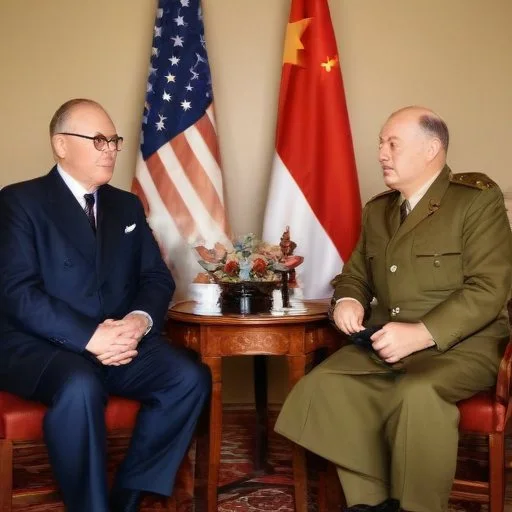
This unprecedented summit marked the first time the three champions of democracy and freedom sat down together, determined to vanquish the Japanese Empire and secure a new world order. The conference took place at the luxurious Villa Tasca, situated in the Egyptian capital, where the three leaders and their respective delegations tackled pressing issues, charting a course for victory.
The Cairo Conference was a direct response to the growing threat of Japan's expansionist policies in Asia. By 1943, Japan had occupied a significant portion of China, and its military campaigns in Southeast Asia and the Pacific had reached alarming proportions. The Allies recognized the need for a coordinated effort to counter Japan's aggression and halt its seemingly unrelenting march across the continent.
| Date | Event |
|---|---|
| November 22, 1943 | Roosevelt, Churchill, and Chiang Kaishek arrive in Cairo, Egypt |
| November 23, 1943 | The three leaders hold their first meeting, discussing post-war China and Japanese-occupied territories |
| November 24, 1943 | The conference focuses on the formation of a united front against the Axis powers |
| November 26, 1943 | The Cairo Declaration is issued, outlining the Allies' objectives for the war's outcome |
The Cairo Conference yielded several significant outcomes, including:
The Cairo Conference had far-reaching cultural and social implications, symbolizing the unity of the Allied nations in their quest for freedom and democracy. The conference also highlighted the growing importance of China as a major world power, marking a significant shift in the global balance of power.
Winston Churchill's words during the conference still resonate: "The Axis powers will be defeated, and the United Nations will emerge victorious. That is our united aim."
The Cairo Conference shares parallels with other pivotal Allied summits, such as the Tehran Conference and the Yalta Conference, which further solidified the alliance and shaped the post-war world order.
According to Chiang Kaishek's memoirs, Roosevelt and Churchill engaged in lively debates, often late into the night, as they sought to find common ground on the complex issues at hand. These informal exchanges helped foster a sense of camaraderie and trust among the leaders.
The Cairo Conference laid the groundwork for the eventual defeat of Japan and the shaping of the post-war world order. The conference's outcomes also influenced the formation of the United Nations, which was established in 1945 to promote international cooperation and prevent future wars.
The Cairo Conference remains a testament to the power of diplomacy and cooperation in the face of adversity, serving as a beacon of hope for future generations.
The Cairo Conference marked a significant shift in the Allies' strategy against Japan, as they began to focus on a more aggressive approach to defeat the Japanese Empire. This change in strategy was largely driven by the growing concerns about Japan's expansionist policies in Asia, which threatened to destabilize the entire region.
In the months leading up to the conference, the Allies had suffered a series of setbacks, including the failed Burma Campaign and the Japanese occupation of key territories in Southeast Asia. As a result, the Allies realized that a new approach was needed to counter Japan's aggression.
The conference itself was marked by intense negotiations between the three leaders, with Roosevelt, Churchill, and Chiang Kaishek engaging in heated debates over the best course of action. Despite their differences, the three leaders were united in their determination to defeat Japan and secure a victorious end to the war.

Winston Churchill: The Unwavering Leader
Winston Churchill was a dominant presence at the Cairo Conference, bringing his trademark wit and oratory skills to the negotiating table. Despite his advancing age, Churchill remained a force to be reckoned with, driving the discussions forward with his unwavering resolve to defeat the Axis powers.
Churchill's presence at the conference was also significant because of his close relationship with Roosevelt, with whom he had developed a strong bond during the war. This relationship was crucial in facilitating the cooperation and agreement between the two leaders, which ultimately led to the successful outcomes of the conference.
The Cairo Conference can be seen as a precursor to the Tehran Conference, which took place just a few weeks later. While both conferences shared similar goals, the Cairo Conference was more focused on the Pacific theater, whereas Tehran dealt with the European front.
Another notable similarity between the Cairo Conference and the Yalta Conference is the emphasis on post-war reorganization. Both conferences recognized the need for a new world order, with the Allies seeking to establish a more equitable and peaceful global system.

The Cairo Conference had a profound impact on the cultural landscape of the war, symbolizing the unity and cooperation of the Allied nations. The conference marked a turning point in the war, as the Allies began to shift their focus towards a more collaborative approach.
The conference also highlighted the growing importance of China as a major world power, marking a significant shift in the global balance of power. This newfound recognition of China's role in the international community had far-reaching implications, paving the way for China's emergence as a global leader in the post-war era.
The Cairo Conference had significant economic implications, as the Allies began to discuss the post-war reconstruction of Japan and the occupied territories. The conference recognized the need for a comprehensive plan to rebuild and stabilize the economies of these regions, paving the way for the Marshall Plan and other post-war initiatives.
The conference also addressed the issue of war reparations, with the Allies seeking to extract compensation from Japan for its aggression. This led to the eventual establishment of the Far Eastern Commission, which oversaw the distribution of reparations to countries affected by Japan's occupation.