


The surrender of German forces in Pozna on February 22, 1945, marked a crucial milestone in the Allied campaign to liberate Eastern Europe from Nazi tyranny. As Soviet and Polish forces advanced on the city, the German garrison, under the command of General Ernst Mattern, was shattered, paving the way for the liberation of this historic Polish metropolis.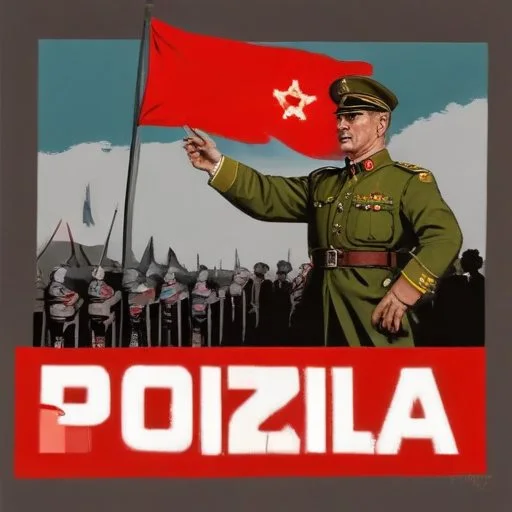
Pozna, situated in western Poland, had been a vital industrial and cultural hub since the Middle Ages. Following Germany's invasion of Poland in September 1939, the city fell under Nazi occupation, and its rich cultural heritage was suppressed. The city's strategic location made it a key stronghold for the German war machine, and its liberation was a top priority for the Allied forces.
In January 1945, as the Red Army advanced on the Eastern Front, Soviet and Polish forces launched a coordinated assault on Pozna. The German garrison, heavily fortified and entrenched, put up fierce resistance, but the Allies' superior firepower and maneuverability eventually told.
The liberation of Pozna had significant repercussions on the war effort and beyond. The fall of this major German stronghold dealt a severe blow to the Nazi war machine, weakening their grip on Eastern Europe. The city's liberation also marked a vital milestone in the campaign to restore Poland's sovereignty and territorial integrity.
The liberation of Pozna had profound cultural and social implications. The city's rich cultural heritage, suppressed under Nazi occupation, was finally revitalized. The re-establishment of Polish institutions, educational facilities, and artistic expression paved the way for a cultural renaissance in the years to come.
One Polish soldier, recalling the liberation, remembered the "tears of joy" that flowed as Soviet and Polish forces entered the city. Another eyewitness described the devastation, stating, "The city was a battleground, but amidst the ruin, there was a sense of hope, of renewal."
The fall of Pozna marked a significant turning point in the Allied campaign to defeat Nazi Germany. The liberation of this strategic city opened the door to further advances on the Eastern Front, ultimately contributing to the capture of Berlin and the eventual surrender of Germany on May 8, 1945.
The bravery and sacrifice of the Soviet and Polish forces who fought for Pozna's liberation serve as a testament to the indomitable spirit of those who resisted Nazi oppression. Their bravery continues to inspire generations, reminding us of the importance of standing against tyranny and fighting for freedom.
The liberation of Pozna has been the subject of varied historical interpretations. While some historians view the event as a crucial turning point in the Allied campaign to defeat Nazi Germany, others see it as a symbol of Soviet dominance in Eastern Europe.
Historian Janusz Kurtyka argues that the liberation of Pozna marked a significant shift in the balance of power in Eastern Europe, paving the way for the Soviet Union's emergence as a superpower.
In contrast, historian Timothy Snyder contends that the liberation of Pozna was a key moment in the struggle for Polish sovereignty, highlighting the important role of Polish forces in the fight against Nazi occupation.
The liberation of Pozna had a profound impact on Polish culture, as the city's rich cultural heritage was finally revitalized after years of Nazi suppression.
The re-establishment of Polish institutions, educational facilities, and artistic expression paved the way for a cultural renaissance in the years to come.
In the aftermath of the liberation, Poznan's renowned National Museum was reopened, showcasing the city's rich cultural heritage to the world.
General Ernst Mattern was a seasoned German commander who oversaw the defense of Pozna against the Soviet and Polish forces.
A decorated veteran of the Eastern Front, Mattern was known for his tactical prowess and unwavering loyalty to the Nazi regime.
In the final days of the battle, Mattern's resolve was tested as he faced the reality of defeat, ultimately leading to his surrender on February 22, 1945.
The liberation of Pozna had significant political implications, both in Poland and beyond.
The event marked a crucial turning point in the campaign to restore Polish sovereignty, as the Soviet Union's influence in Eastern Europe continued to grow.
In the aftermath of the liberation, the Polish government-in-exile began to reassert its authority, paving the way for the eventual establishment of a communist government in Poland.
The liberation of Pozna took place within the broader context of the Eastern Front, as the Soviet Union continued its advance on Nazi Germany.
The city's strategic location made it a vital stronghold for the German war machine, and its liberation was a key objective for the Allied forces.
In the months leading up to the liberation, tensions between the Soviet Union and Poland had been simmering, as the two nations vied for control over the region.