


On August 25, 1944, Charles de Gaulle, the leader of the Free French Forces, made a triumphant entrance into Paris, marking the end of four years of German occupation. This pivotal moment in World War II symbolized the resurgence of French resistance and the beginning of the end of Germany's grip on Western Europe.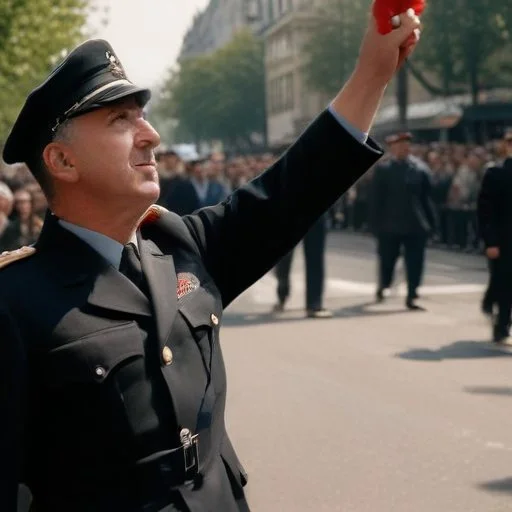
Paris, the City of Light, had been under German occupation since June 1940, when France surrendered to Nazi Germany. The French Resistance, led by de Gaulle, vowed to continue the fight against the occupying forces. The Allies, recognizing the importance of France in the war effort, supported the Resistance and planned a daring operation to liberate the city.
Charles de Gaulle, a French general and statesman, was the leader of the Free French Forces. He was determined to free France from German occupation and restore French honor. The Allies, including General Dwight D. Eisenhower, supported de Gaulle's efforts and provided crucial military backing for the liberation of Paris.
The liberation of Paris was a complex operation involving the French Resistance, the Allies, and the Free French Forces. Here's a brief timeline of the key events:
The liberation of Paris had significant consequences for France and the war effort:
Charles de Gaulle's defiant spirit and determination inspired a nation. His leadership and vision for a free France resonated with the French people, who saw him as a symbol of hope and resistance. The liberation of Paris has become an iconic moment in French history, symbolizing the power of resistance against oppression.
"Paris, Paris, so martyred, but Paris, Paris, liberated!" - Charles de Gaulle, upon entering liberated Paris.
This iconic quote captures the essence of de Gaulle's defiant spirit and his commitment to freeing France from German occupation.
As de Gaulle walked through the streets of liberated Paris, he was greeted as a hero by cheering crowds. One eyewitness account describes the scene:
"The streets were packed with people, waving flags and shouting 'Vive de Gaulle!' and 'Vive la France!' The general walked down the Champs-Élysées, his eyes shining with pride and emotion, as the crowd erupted in cheers and applause."
The liberation of Paris marked a new era of French leadership, with de Gaulle at the helm. He would go on to play a crucial role in shaping France's post-war reconstruction and its emergence as a major world power.
The triumphal march of Charles de Gaulle into liberated Paris remains an iconic moment in World War II history, symbolizing the power of resistance and the indomitable human spirit.
General Philippe Leclerc, a French army officer, played a crucial role in the liberation of Paris. As the commander of the French 2nd Armored Division, he led the charge into the city on August 24, 1944. Leclerc's bravery and military prowess earned him the respect of his troops and the gratitude of the French people. His partnership with De Gaulle was instrumental in the success of the operation, and his legacy as a hero of the French Resistance continues to be celebrated to this day.
Leclerc's relationship with De Gaulle was built on mutual respect and trust. Despite their differences, they shared a deep commitment to freeing France from German occupation. Leclerc's military expertise and De Gaulle's political influence made them a formidable team, and their collaboration paved the way for the liberation of Paris.

The liberation of Paris in 1944 had a profound impact on education in France. As the country began to rebuild, education became a key priority for the new government. De Gaulle recognized the importance of education in shaping the future of France and invested heavily in rebuilding the education system.
The emphasis on education led to a surge in enrollment rates, and by the 1950s, France had become a leader in education and research. The liberation of Paris marked a turning point in French education, as the country began to shift its focus from mere survival to long-term growth and development.
The liberation of Paris had a profound cultural impact on France and the world. It marked a return to French cultural identity, which had been suppressed during the Nazi occupation. The event inspired a new wave of artistic and literary expression, as French creatives sought to redefine their nation's identity.
The liberation of Paris also had a significant impact on the world's cultural landscape. It marked a turning point in the war, as the Allies gained momentum and the Nazi regime began to crumble. The event inspired a sense of hope and renewal, as people around the world looked to France as a symbol of resistance and liberation.
Historians have long debated the significance of the liberation of Paris in World War II. Some argue that it was a pivotal moment in the war, marking a turning point in the Allied campaign. Others see it as a largely symbolic event, overshadowed by the larger military campaigns in Europe.
Despite these differing perspectives, most historians agree that the liberation of Paris was a crucial moment in French history. It marked a return to French sovereignty and paved the way for France's re-emergence as a major world power. The event continues to be studied and debated by historians, who seek to understand its significance in the broader context of World War II.
The liberation of Paris was closely tied to the broader geopolitical context of World War II. As the Allies pushed deeper into Europe, they recognized the strategic importance of liberating Paris. The city was a key hub for German military operations, and its capture would deal a significant blow to the Nazi regime.
The event was also closely tied to the Cold War, which was already beginning to take shape. The Soviet Union, which had been pushing into Eastern Europe, was increasingly concerned about Western influence in the region. The liberation of Paris marked a key moment in the struggle for European dominance, as the United States, Great Britain, and France sought to counterbalance Soviet power.