


The Battle of Tali-Ihantala, fought between June 25 and July 9, 1944, is etched in the annals of history as the largest battle ever fought in northern Europe during World War II. This pivotal clash between Finnish forces and the Soviet Red Army marked a turning point in the Continuation War, cementing Finland's determination to protect its sovereignty.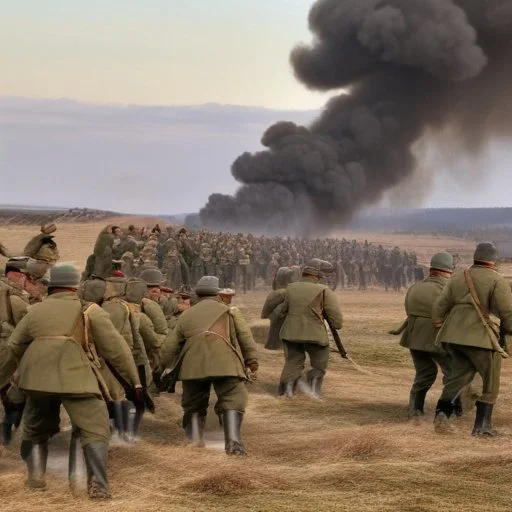
In the face of overwhelming odds, the Finnish people stood united against the Soviet Union's invasion, driven by a deep sense of patriotism and a fierce determination to defend their homeland. The battle was a testament to the bravery and resilience of the Finnish military, who, despite being outnumbered, held their ground against the mighty Red Army.
The battle took place in the Ihantala region of southeastern Finland, near the city of Vyborg. The Soviet forces, led by General Dmitri Gusev, outnumbered the Finnish troops by a staggering three to one. However, the Finns, under the command of General Ruben Lagus, employed innovative tactics and leveraged their intimate knowledge of the terrain to counter the Soviet assault.
The Finnish military's clever use of delaying tactics, combined with the skilful deployment of artillery and anti-tank units, gradually whittled down the Soviet forces' numerical advantage. As the battle raged on, the Finns' resolve stiffened, and they began to push back against the Soviet forces, eventually forcing them to retreat.
The Battle of Tali-Ihantala marked a decisive shift in the Continuation War's momentum. The Red Army's withdrawal from Ihantala and their subsequent dig-in to a defensive position signaled the end of the Vyborg-Petrozavodsk Offensive. This unexpected defeat dealt a significant blow to the Soviet Union's military prestige, while simultaneously bolstering Finnish morale and giving them a much-needed respite from the relentless Soviet onslaught.
The Battle of Tali-Ihantala reverberated far beyond the battlefield, resonating deeply within Finnish culture and society. This pivotal victory served as a beacon of hope, galvanizing the Finnish people and reinforcing their determination to resist Soviet occupation. The battle has since become an integral part of Finnish identity, symbolizing the nation's unwavering commitment to independence and self-determination.
The Battle of Tali-Ihantala's impact on the Continuation War was profound, as it thwarted the Soviet Union's plans to capture southern Finland and forced them to reassess their military strategy. The battle also underscored the importance of innovative tactics, terrain advantage, and morale in the face of overwhelming odds. As a testament to the bravery and resilience of the Finnish people, the Battle of Tali-Ihantala remains an enduring symbol of Finnish defiance and determination.
General Ruben Lagus, the commander of the Finnish forces during the Battle of Tali-Ihantala, was a highly decorated and respected military leader. Born on October 12, 1896, in Vyborg, Finland, Lagus rose through the ranks of the Finnish army, earning a reputation for his tactical genius and bravery in the face of overwhelming odds.
Lagus's leadership during the Battle of Tali-Ihantala was instrumental in the Finnish victory. His innovative tactics, which included the clever use of delaying maneuvers and the effective deployment of artillery and anti-tank units, allowed the Finnish forces to hold their ground against the superior Soviet army.
After the war, Lagus continued to serve as a prominent figure in Finnish military circles, eventually rising to the rank of lieutenant general. He passed away on December 26, 1959, leaving behind a legacy as one of Finland's most heroic and revered military leaders.

In the summer of 1944, the Soviet Union launched a massive offensive against southern Finland, codenamed the Vyborg-Petrozavodsk Offensive. The operation, which aimed to capture the strategically important city of Vyborg and eventually push deep into Finnish territory, was the largest military operation on the Finnish front during World War II.
The Soviet forces, led by General Dmitri Gusev, were confident of a swift victory, given their significant numerical superiority over the Finnish army. However, they underestimated the Finns' determination to defend their homeland, as well as their clever use of terrain and innovative tactics.
As the battle raged on, the Soviet forces began to falter, and their casualties mounted. The Finnish forces, sensing victory, pushed back against their opponents, eventually forcing them to retreat. The failure of the Vyborg-Petrozavodsk Offensive marked a significant turning point in the Continuation War, as the Soviet Union's military prestige suffered a severe blow.
The Battle of Tali-Ihantala has left an indelible mark on Finnish culture and society. The battle is celebrated as a symbol of Finnish resilience and determination, and its significance extends far beyond the realm of military history.
In Finnish literature and art, the battle has inspired countless works, from poetry and novels to paintings and sculptures. The battle has also been the subject of numerous documentaries, films, and television productions, ensuring its place in the collective consciousness of the Finnish people.
Today, the Battle of Tali-Ihantala remains an integral part of Finnish identity, serving as a powerful reminder of the nation's unwavering commitment to independence and self-determination. As such, it continues to inspire generations of Finns, fostering a sense of national pride and unity.

The Battle of Tali-Ihantala was a clash of two vastly different military strategies. The Finnish forces, severely outnumbered and outgunned, relied on innovative tactics and clever use of terrain to counter the Soviet Union's brute force.
In contrast, the Soviet forces, led by General Dmitri Gusev, adopted a more traditional approach, relying on their numerical superiority to overwhelm the Finnish defenses. However, this approach proved ineffective against the Finns' guerrilla-style warfare and clever use of delaying tactics.
This contrast in military strategies highlights the significance of adaptability and flexibility in modern warfare. The Finnish forces' ability to adapt to the situation and exploit the weaknesses of their opponents proved decisive in their ultimate victory.
The Battle of Tali-Ihantala was more than just a military conflict – it was an ideological struggle between two fundamentally different worldviews. The Finnish forces, driven by a fierce determination to defend their homeland and maintain their independence, embodied the spirit of liberal democracy.
In contrast, the Soviet Union, led by Joseph Stalin, represented a totalitarian regime that sought to expand its dominance over Eastern Europe. The battle was, in essence, a clash between the values of freedom and autonomy, on the one hand, and the oppressive ideology of communism, on the other.
The Finnish victory at Tali-Ihantala served as a powerful rebuke to the Soviet Union's expansionist ambitions, demonstrating the power of democratic values and the determination of a small nation to resist the might of a superpower.