


In the early hours of April 18, 1942, the skies above Japan witnessed a daring act of defiance as 16 B-25 bombers, led by Lieutenant Colonel James H. Doolittle, unleashed a surprise attack on Tokyo, Yokohama, Kobe, and Nagoya, leaving a trail of destruction and shock in its wake. This audacious raid, mere months after the devastating Pearl Harbor attack, sent a powerful message to the Japanese people and government: the enemy was no longer immune to attack.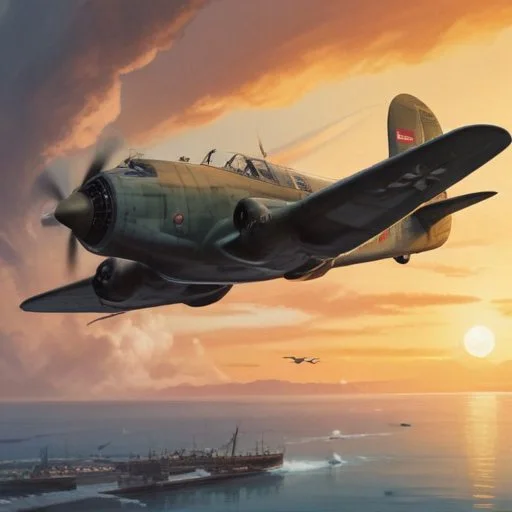
The United States, still reeling from the surprise attack on Pearl Harbor, sought to exact revenge and boost morale. President Franklin D. Roosevelt demanded a retaliatory strike on the Japanese mainland, and Lieutenant Colonel James H. Doolittle, a decorated pilot and aviation pioneer, was chosen to lead the mission.
The Doolittle Raid, although resulting in moderate physical damage, had a profound psychological impact on the Japanese people and government. It demonstrated the reach and determination of the United States military, forcing Japan to reassess its defenses and reconsider its regional military strategy.
The raid inspired a wave of patriotic fervor in the United States, boosting morale and galvanizing public support for the war effort. It also marked a significant shift in the war's narrative, as the Allies began to take the fight to Japanese soil.
Lieutenant Colonel Doolittle later recalled the raid's sense of uncertainty, saying, "We didn't know whether we'd be able to get in, or whether we'd be able to get out." The bravery and sacrifice of the Doolittle Raid's crew members, many of whom faced capture, torture, and execution, would become legendary in the annals of American military history.
The Doolittle Raid set a crucial precedent for future Allied bombing campaigns, including the firebombing of Tokyo and the atomic bombings of Hiroshima and Nagasaki. It also led to a renewed focus on airpower and long-range bombing capabilities, shaping the development of modern air warfare.
The Doolittle Raid's message of defiance and determination continues to inspire generations of military personnel, historians, and civilians alike. It serves as a testament to the power of innovation, courage, and strategic thinking in the face of overwhelming adversity.
Lieutenant Colonel James H. Doolittle was a decorated pilot and aviation pioneer who led the daring raid on Japan. Born on December 14, 1896, in Alameda, California, Doolittle graduated from the University of California, Berkeley, and later earned his M.Sc. and D.Sc. degrees in aeronautics from the Massachusetts Institute of Technology.
Doolittle's aviation career spanned over three decades, during which he set numerous records for flying speed and distance. He was also a strong advocate for the development of airpower, recognizing its potential to transform modern warfare.
In 1942, Doolittle was chosen to lead the retaliatory strike on Japan, and his strategic plan and leadership played a crucial role in the raid's success. Doolittle's bravery and innovative thinking earned him the Medal of Honor, and he went on to have a distinguished military career, eventually rising to the rank of lieutenant general.

The Doolittle Raid was a testament to the bravery and sacrifice of the 80 crew members who participated in the mission. While Lieutenant Colonel Doolittle receives much of the credit, the contributions of the other crew members cannot be overstated.
Men like Lieutenant Richard E. Cole, Lieutenant Henry A. Potter, and Lieutenant Donald G. Smith, who flew the B-25 bombers, navigated treacherous skies, and faced unimaginable risks to complete the mission.
Their stories, often overlooked in the annals of history, provide a poignant reminder of the human cost of war and the debt of gratitude we owe to those who serve.
The Doolittle Raid was a testament to the power of technological innovation in modern warfare. The B-25 bombers, modified to carry additional fuel tanks and heavier bomb loads, pushed the limits of aircraft design and performance.
The raid also demonstrated the importance of radar evasion techniques, as the bombers flew at extremely low altitudes to avoid detection.
The success of the Doolittle Raid paved the way for future Allied bombing campaigns, including the development of long-range bombers and precision-guided munitions.

The Doolittle Raid has had a lasting impact on popular culture, inspiring numerous films, books, and documentaries.
In 1944, the film Thirty Seconds Over Tokyo, starring Spencer Tracy and Van Johnson, dramatized the events of the raid, further cementing its place in the American psyche.
The raid's inspirational message of defiance and determination continues to resonate with audiences today, making it a timeless symbol of American resolve and determination.
The Doolittle Raid took place against the backdrop of a rapidly shifting global landscape. In the aftermath of Pearl Harbor, the United States was forced to reevaluate its role in the war and seek new strategies to counter the Japanese threat.
The raid marked a significant shift in the war's narrative, as the Allies began to take the fight to Japanese soil.
In the broader context of World War II, the Doolittle Raid was a crucial demonstration of American capabilities and a precursor to the island-hopping campaign that would eventually lead to Japan's defeat.