


In May 1940, the world witnessed a heroic feat of evacuation, as the British Armed Forces successfully rescued 338,000 troops from the beaches of Dunkirk, France. This daring operation, code-named "Operation Dynamo," was a remarkable display of logistical prowess, bravery, and national unity, which sparked a surge of national defiance and paved the way for Winston Churchill's iconic "We shall fight on the beaches" speech.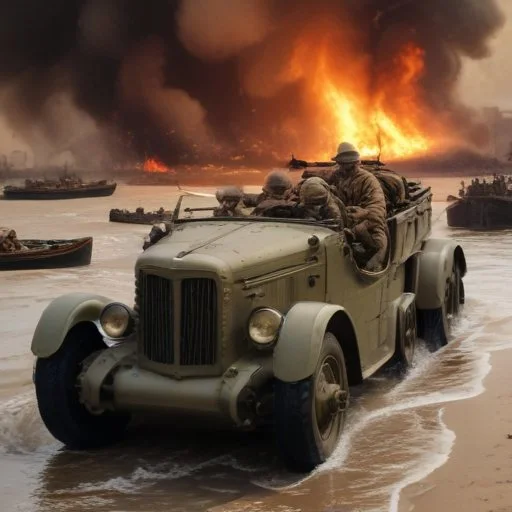
The Dunkirk evacuation was a desperate attempt to rescue the British Expeditionary Force (BEF), which had been deployed to France in 1939 to support the French military against the Nazi invasion. As the German army advanced, the BEF found itself surrounded and outgunned, with its back against the English Channel. The British government, realizing the gravity of the situation, launched Operation Dynamo to evacuate as many troops as possible.
The evacuation began on May 26, 1940, and lasted for nine days. A flotilla of naval vessels, fishing boats, and even pleasure craft was hastily assembled to ferry the troops from the beaches of Dunkirk to the safety of England. The operation was a logistical nightmare, with soldiers waiting in long queues, often under heavy bombardment, for their turn to board the ships. Despite the chaos and danger, the evacuation was a remarkable success, with over 338,000 troops rescued.
On June 4, 1940, Winston Churchill, the newly appointed Prime Minister of the United Kingdom, delivered a rousing speech to the House of Commons, rallying the nation to continue the fight against Nazi Germany. His famous words, "We shall fight on the beaches, we shall fight on the landing grounds, we shall fight in the fields and in the streets, we shall fight in the hills; we shall never surrender," became a beacon of hope and defiance for the British people.
The Dunkirk evacuation and Churchill's speech had a profound impact on British morale and national identity. The successful rescue of the BEF boosted national pride and confidence, and Churchill's speech galvanized the nation to continue fighting against the Nazi threat. The Dunkirk evacuation also marked a turning point in British military strategy, as the country shifted its focus from continental Europe to the air and sea battles that would ultimately decide the outcome of the war.
The Dunkirk evacuation has had a lasting impact on British culture and society. The event has been immortalized in literature, film, and art, and continues to inspire national pride and a sense of resilience. The "Dunkirk spirit" has become a symbol of British defiance and determination in the face of adversity.
"We shall fight on the beaches, we shall fight on the landing grounds, we shall fight in the fields and in the streets, we shall fight in the hills; we shall never surrender." - Winston Churchill
This article has explored the remarkable story of the Dunkirk evacuation, a testament to British resilience and determination. The heroic feats of the British Armed Forces, coupled with Churchill's iconic speech, have left an indelible mark on British history and culture.
The Dunkirk evacuation was a complex and multifaceted operation that involved not only the British military but also civilians and foreigners. One often-overlooked aspect of the evacuation was the role of the French military, who fought valiantly to hold off the German army and allow the BEF to escape. The French 1st Army, led by General René Prioux, played a crucial role in defending the perimeter around Dunkirk, suffering heavy casualties in the process. Without the bravery and sacrifice of the French military, the evacuation may not have been possible.
Another key factor in the success of the evacuation was the role of the Royal Navy, which provided the majority of the ships and sailors involved in the operation. The Navy's ability to rapidly assemble a large fleet of vessels, including naval warships, merchant ships, and even private yachts, was a testament to its logistical prowess. The bravery of the sailors and soldiers involved in the operation cannot be overstated, as they faced heavy bombardment and treacherous sea conditions to rescue their comrades.
The evacuation was also aided by the German army's decision to halt its advance on Dunkirk, a decision that has been the subject of much debate and speculation among historians.
Winston Churchill's iconic "We shall fight on the beaches" speech was more than just a rousing call to arms - it was a carefully crafted message designed to galvanize the British people and inspire them to continue fighting against Nazi Germany. Churchill, who had only recently become Prime Minister, was well aware of the need to boost British morale and confidence, and his speech was a masterful example of leadership and oratory skill.
But Churchill was not the only key figure involved in the Dunkirk evacuation. Vice-Admiral Bertram Ramsay, the Naval Commander-in-Chief of the operation, played a crucial role in planning and executing the evacuation. Ramsay's experience and expertise were instrumental in overcoming the many logistical challenges facing the operation, and his leadership helped to ensure the successful rescue of over 338,000 troops.
Another important figure involved in the evacuation was Lord Gort, the Commander-in-Chief of the BEF. Gort's decision to withdraw the BEF from the continent and focus on evacuation was a difficult and controversial one, but it ultimately proved to be the correct one, allowing the majority of the BEF to escape and fight another day.
The Dunkirk evacuation has had a profound and lasting impact on British culture and society. The event has been immortalized in literature, film, and art, and continues to inspire national pride and a sense of resilience. The "Dunkirk spirit" has become a symbol of British defiance and determination in the face of adversity, and has been invoked in times of crisis and hardship.
The evacuation has also had an impact on British folklore, with stories of heroism and bravery during the operation becoming an integral part of the national narrative. The event has been commemorated in songs, poems, and literature, and continues to be celebrated and remembered each year on May 26th, the anniversary of the start of the evacuation.
The Dunkirk evacuation has also inspired numerous works of art, including films, plays, and novels, which have helped to keep the memory of the event alive and relevant.
The Dunkirk evacuation took place against the backdrop of a rapidly changing geopolitical landscape. The German invasion of France and the Low Countries had brought Nazi forces to the borders of Britain, and the threat of invasion was very real. The evacuation was a crucial moment in the war, as it allowed Britain to maintain its independence and continue fighting against Nazi Germany.
The evacuation also had significant implications for the balance of power in Europe. The failure of the BEF to hold back the German army led to a re-evaluation of British military strategy, with a shift towards air and sea power and a greater focus on defending the homeland.
The evacuation also marked a turning point in the relationship between Britain and France, as the two countries began to move in different directions in their response to the Nazi threat.The Dunkirk evacuation had significant economic implications for Britain. The loss of equipment and supplies during the evacuation was substantial, and the cost of replacing these losses was a major burden on the British treasury. The evacuation also disrupted trade and commerce, leading to shortages and rationing of essential goods.
However, the evacuation also had a positive impact on the British economy. The successful rescue of over 338,000 troops meant that Britain was able to maintain a large and experienced military force, which was crucial in the fight against Nazi Germany. The evacuation also stimulated the growth of the British war economy, as the government invested heavily in military production and infrastructure.
The evacuation also had a significant impact on the global economy, as the threat of Nazi invasion led to a surge in global trade and commerce.