


The Battle of Ortona is renowned for its unyielding intensity and gruesome street fighting, earning it the nickname "Little Stalingrad." This pivotal World War II battle saw the 1st Canadian Infantry Division emerge victorious over the German 1st Parachute Division, capturing the Italian town of Ortona after eight days of brutal house-to-house combat.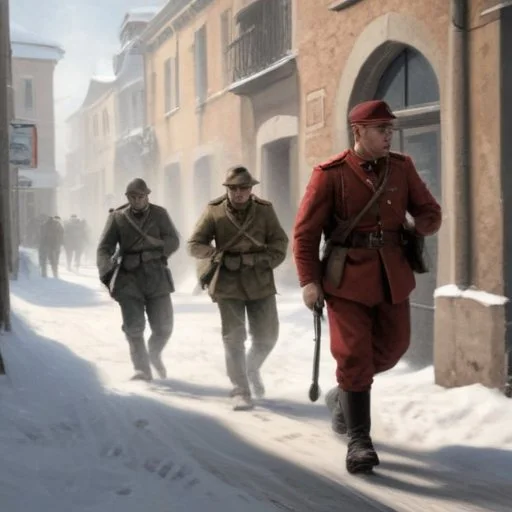
The Battle of Ortona was a crucial component of the Allied forces' Italian Campaign, which aimed to drive German forces out of Italy and pave the way for further advances into Europe. In December 1943, the 1st Canadian Infantry Division, part of the Eighth Army, was tasked with breaching the German defenses along the Adriatic coast and capturing the strategic port city of Ortona.
The Battle of Ortona was led by several notable figures, including:
The battle unfolded as follows:
The Battle of Ortona had significant repercussions on the war effort and beyond:
The Battle of Ortona has had a lasting impact on Canadian culture and identity:
The Battle of Ortona serves as a poignant reminder of the sacrifices made during World War II, and its legacy continues to inspire and educate generations to come.
The town of Ortona was a strategic location, situated on the Adriatic coast, and its capture was crucial for the Allies to establish a solid foothold in Italy. The German defenses were formidable, with heavily fortified buildings, narrow streets, and a labyrinth of alleys, making it an ideal location for urban warfare. The Canadians faced a daunting task, as they had to navigate through the treacherous terrain, avoiding snipers, mines, and booby traps.
The battle was characterized by brutal house-to-house combat, with soldiers fighting from room to room, and street to street. The Germans employed unconventional tactics, such as using civilians as human shields, and deploying dummy soldiers to deceive the Canadians. The Canadians, however, persevered, using innovative tactics, like using PIAT guns to blast through walls, and employing Bangalore torpedoes to clear minefields.
The intensity of the battle was palpable, with both sides suffering heavy casualties. The Canadians lost over 1,300 men, while the Germans lost more than 1,000 soldiers. The town itself was left in ruins, with buildings reduced to rubble, and the once-quaint streets littered with debris and bodies.
Despite the grueling conditions, the Canadians pushed forward, driven by their determination to capture the town. On December 28, 1943, after eight days of relentless fighting, the Canadians finally secured the town, having defeated the German 1st Parachute Division.

Lieutenant General Richard McCreery played a pivotal role in the Battle of Ortona, as the Commander of the British X Corps. A seasoned veteran of World War I, McCreery was known for his tactical genius and leadership skills.
Major General Christopher Vokes, Commander of the 1st Canadian Infantry Division, was instrumental in planning and executing the battle. Vokes was a decorated war hero, having fought in World War I and the North African campaign. His experience and expertise were crucial in navigating the complexities of urban warfare.
Oberstleutnant Richard Heidrich, Commander of the German 1st Parachute Division, was a highly respected officer, known for his bravery and strategic thinking. Heidrich's division was one of the most elite units in the German army, and his soldiers fought valiantly, despite being outnumbered and outgunned.
The Battle of Ortona has had a profound impact on Canadian culture and identity. The bravery and sacrifice of Canadian soldiers have inspired numerous literary and artistic works, including books, poems, and films.
The battle has also become an integral part of Canadian folklore, with the town of Ortona being hailed as a symbol of Canadian resilience and determination. The annual commemoration of Ortona Day on December 28 is a testament to the enduring legacy of the battle.
The cultural significance of the battle extends beyond Canada, as it has become a powerful symbol of Allied solidarity and cooperation during World War II. The battle has been recognized as a shining example of international cooperation, with Canadians, Britons, and Italians fighting side by side to defeat the Nazi regime.

The Battle of Ortona had significant economic implications for the war effort. The capture of the port city of Ortona secured a vital supply route for the Allies, allowing them to receive much-needed supplies and equipment.
The battle also disrupted the German war economy, as the loss of Ortona denied them access to a crucial port and logistical hub. The economic impact of the battle was felt across the Mediterranean, as the Allies were able to redirect resources and supplies to other fronts.
The Battle of Ortona has left behind a rich legacy of artifacts and documents, providing valuable insights into the war. The Canadian War Museum has an extensive collection of artifacts, including uniforms, weapons, and personal belongings of soldiers who fought in the battle.
The National Archives of Canada houses a vast repository of documents, including war diaries, intelligence reports, and correspondence between military leaders. These archives offer a unique window into the planning and execution of the battle, as well as the experiences of individual soldiers.
Additionally, the town of Ortona itself has preserved many historical sites, including the Church of San Tomasso, which was a key battleground during the fight. Visitors can explore the shell-scarred walls and see the damage inflicted during the intense house-to-house combat.