


The Schweinfurt-Regensburg mission, also known as the "Black Thursday," is remembered as one of the most disastrous days in the history of the U.S. Eighth Air Force during World War II. On August 17, 1943, a staggering 60 B-17 Flying Fortresses failed to return from a massive bombing campaign against German industrial targets, resulting in the loss of hundreds of airmen.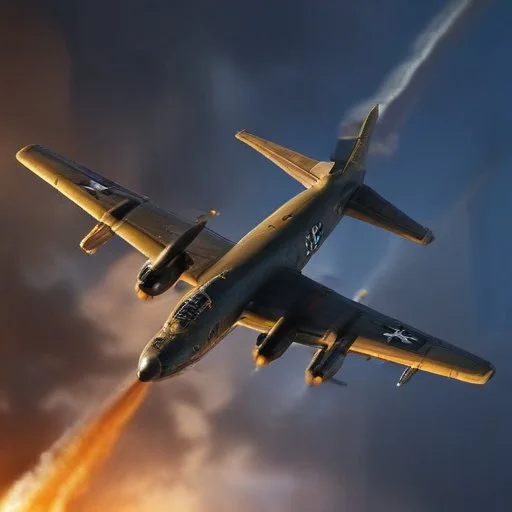
In the summer of 1943, the Allies were determined to cripple Germany's war machine by targeting its industrial heartland. The U.S. Eighth Air Force, operating from bases in England, was tasked with carrying out a series of daylight strategic bombing missions against key industrial centers. The Schweinfurt-Regensburg mission was intended to be a double-strike operation, with two separate formations of B-17s targeting the ball-bearing factories in Schweinfurt and the Messerschmitt aircraft factory in Regensburg.
August 17, 1943:
The Schweinfurt-Regensburg mission was a catastrophic failure, with 60 B-17s shot down, 17 damaged beyond repair, and over 600 airmen killed, wounded, or captured. The mission highlighted the perils of daylight strategic bombing and led to a reevaluation of tactics and aircraft design. The U.S. Eighth Air Force was forced to reassess its approach to combat, adopting new strategies and technologies to counter the Luftwaffe's defenses.
The Schweinfurt-Regensburg mission had a profound impact on the morale of the U.S. Eighth Air Force and the American public. The heavy losses suffered during the mission prompted a reexamination of the air war strategy and led to improvements in aircraft design, tactics, and crew training. The mission also galvanized public support for the war effort, as Americans rallied behind the brave airmen who had made the ultimate sacrifice.
"We were like sitting ducks, flying straight and level, with no fighter escort." - Colonel Beirne Lay Jr.
The Schweinfurt-Regensburg mission was immortalized in the book "Twelve O'Clock High" by Beirne Lay Jr. and Sy Bartlett, which tells the story of the 100th Bomb Group's experiences during the mission. The book was later adapted into a film, starring Gregory Peck as General Savage.
The lessons learned from the Schweinfurt-Regensburg mission influenced the development of long-range fighter escort aircraft, such as the P-51 Mustang, which played a critical role in protecting Allied bombers in later campaigns. The mission also led to improvements in bomber design, including the introduction of defensive armament and armor plating.
The airmen who flew on the Schweinfurt-Regensburg mission were awarded numerous decorations for their bravery, including the Medal of Honor, Distinguished Service Cross, and Air Medal.
The Schweinfurt-Regensburg mission remains an important chapter in the history of the U.S. Eighth Air Force, serving as a poignant reminder of the sacrifices made by American airmen during World War II. As a testament to their bravery and sacrifice, the mission continues to inspire and educate generations of historians, veterans, and enthusiasts alike.
The Schweinfurt-Regensburg mission was a culmination of the Allies' strategic bombing campaign against Germany's industrial heartland. The idea of targeting Germany's industrial centers dated back to 1941, when the British Air Ministry developed a plan to bomb German industrial cities. The plan, code-named Operation Douhet, aimed to destroy Germany's industrial capacity and Will to fight.
In the summer of 1943, the Allies refined their strategy, focusing on precision daylight bombing raids against specific industrial targets. This approach was in contrast to the British Royal Air Force's (RAF) nighttime area bombing campaign, which targeted entire cities. The Eighth Air Force's strategy was based on the idea that precise bombing could cripple Germany's war machine, while minimizing civilian casualties.The Schweinfurt-Regensburg mission was a critical test of this strategy, as it targeted two of Germany's most important industrial centers.
General Ira Eaker's leadership played a crucial role in the planning and execution of the Schweinfurt-Regensburg mission. As the commander of the U.S. Eighth Air Force, Eaker was a strong advocate for daylight strategic bombing. He believed that precision bombing could be an effective way to cripple Germany's industrial capacity, and he was determined to prove it.
Eaker's leadership was instrumental in developing the tactics and strategies employed during the mission. His decision to use a double-strike approach, targeting both Schweinfurt and Regensburg, was a key factor in the mission's outcome.
Despite the heavy losses suffered during the mission, Eaker remained committed to the concept of daylight strategic bombing.
The Schweinfurt-Regensburg mission marked a significant turning point in the development of bomber aircraft and their defensive capabilities. The mission highlighted the need for improved defensive armament and armor plating on B-17s.
The U.S. Army Air Forces (USAAF) responded by introducing new defensive measures, including the chin turret and waist gunner positions. These modifications significantly improved the B-17's defenses, making it a more formidable opponent for German fighters.The mission also spurred the development of long-range fighter escort aircraft, such as the P-51 Mustang, which would play a critical role in protecting Allied bombers in later campaigns.
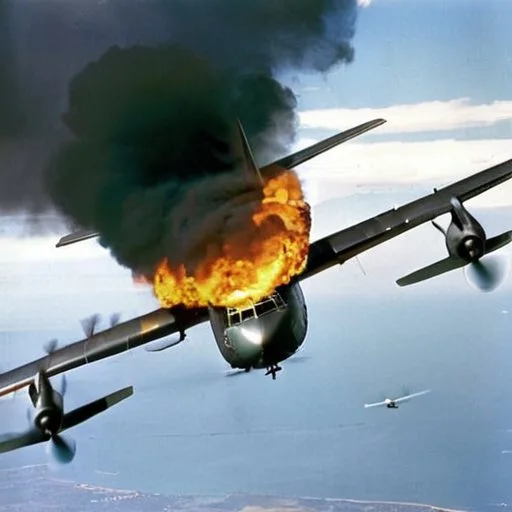
The Schweinfurt-Regensburg mission had a profound impact on American culture, particularly in the way it shaped the public's perception of the air war.
The heavy losses suffered during the mission shocked the American public, leading to a renewed sense of urgency and patriotic fervor.
The mission also inspired a wave of propaganda and recruitment efforts, as the U.S. government sought to capitalize on the public's emotional response to the tragedy.
Historians have debated the significance of the Schweinfurt-Regensburg mission, with some viewing it as a turning point in the development of the U.S. Eighth Air Force's strategies and tactics.
Others have argued that the mission marked a shift in the Allies' approach to bombing, moving away from precision daylight raids and toward nighttime area bombing.
Regardless, the mission remains an important chapter in the history of the U.S. Eighth Air Force, offering valuable insights into the challenges and risks faced by airmen during World War II.