


On June 10, 1940, Fascist Italy, led by the ambitious Benito Mussolini, made a shocking move that would change the course of World War II: declaring war on France and the United Kingdom, and launching a swift invasion of southern France. This daring strike came mere days after Germany's invasion of France, sending shockwaves throughout Europe and setting the stage for a prolonged and bloody conflict. 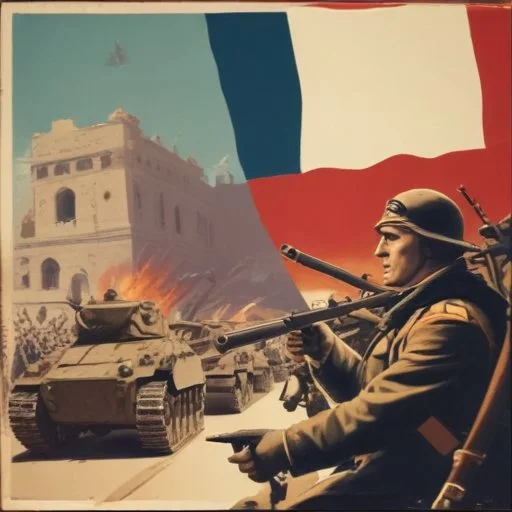
The roots of Italy's aggression stemmed from Mussolini's growing ambitions and a desire to assert Italy's dominance in Europe. Having formed the Axis alliance with Germany and Japan, Italy saw an opportunity to expand its territory and influence by capitalizing on the chaos of the war.
| Date | Event |
|---|---|
| May 10, 1940 | Germany invades France |
| June 10, 1940 | Italy declares war on France and the UK, invading southern France |
| June 1940 - November 1942 | Italian forces engage in a series of battles in southern France, North Africa, and the Mediterranean |
Italy's declaration of war had far-reaching consequences, including:
The war effort had a profound impact on Italian society, as the country mobilized for total war.
Italy's declaration of war remains a controversial topic, with many questioning the wisdom and motives behind Mussolini's decision.
As the war drew to a close, Italy's role would be reevaluated, and the country would begin the long process of rebuilding and redemption. But for now, the bold gamble had been made, and the fate of Europe hung in the balance.

Italian forces advancing into southern France, June 1940
Italy's bold declaration of war on France and the UK marked a pivotal moment in World War II, a conflict that would reshape the course of history. As we reflect on this event, we are reminded of the complexities of human nature, the dangers of unchecked ambition, and the enduring importance of diplomacy and cooperation in international relations.
Benito Mussolini, the fascist leader of Italy, was a complex figure with a multifaceted personality. He was a charismatic orator, able to rally the masses with his rhetoric, and a skilled politician, able to navigate the intricacies of Italian politics.
However, Mussolini was also a ruthless leader, willing to suppress dissent and opposition to maintain his grip on power. He was driven by a desire for power and prestige, and his aggressive expansionist policies were a testament to his ambitions.
Mussolini's decision to declare war on France and the UK was a calculated move, driven by his desire to assert Italy's dominance in Europe. He saw the chaos of World War II as an opportunity to expand Italy's territory and influence, and he was willing to take bold risks to achieve his goals.
The interwar period saw the rise of fascist regimes across Europe, with Mussolini's Italy, Hitler's Germany, and Franco's Spain leading the charge.
This fascist resurgence was driven by a combination of factors, including economic instability, political turmoil, and a sense of nationalist sentiment.
In Italy, Mussolini's fascist regime was able to tap into these sentiments, promising to restore Italian greatness and provide stability in a time of uncertainty.
The declaration of war on France and the UK was a natural extension of this ideology, as Mussolini sought to expand Italy's territory and influence in Europe.
Italian neorealism, a film movement that emerged in the 1940s, was heavily influenced by the war effort and the subsequent occupation of Italy.
Filmmakers such as Vittorio De Sica and Roberto Rossellini used their cameras to capture the harsh realities of war, producing films that were both critically acclaimed and deeply personal.
Films such as Rome, Open City and Paisan became powerful anti-war statements, highlighting the human cost of conflict and the struggles of everyday Italians during the war.
Italy's declaration of war on France and the UK had significant political implications, both domestically and internationally.
Domestically, the war effort became a rallying cry for the fascist regime, as Mussolini used the conflict to justify his authoritarian rule and suppress opposition.
Internationally, the declaration of war marked a significant escalation of the conflict, as the war spread beyond Europe and into North Africa and the Middle East.
The Italian declaration of war on France and the UK, issued on June 10, 1940, is a fascinating artifact of the war.
The document, signed by Mussolini and other high-ranking officials, is a testament to the fascist regime's aggressive expansionist policies.
An analysis of the document reveals the careful language and rhetoric used by the regime to justify the war effort, as well as the strategic calculations behind the decision to declare war.