


The Bismarck, the pride of Germany's naval fleet, met its demise in the North Atlantic on May 27, 1941, after a three-day pursuit by British warships. The sinking of the battleship resulted in the loss of almost 2,100 lives, marking a significant shift in the balance of power during World War II.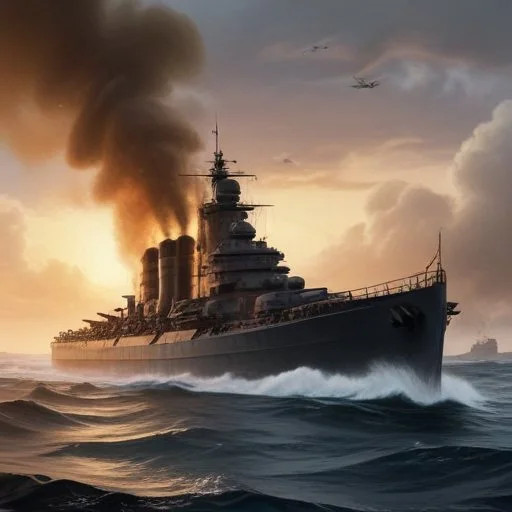
In the early stages of World War II, the German Navy, or Kriegsmarine, sought to disrupt Allied supply chains by deploying its most advanced warships to the North Atlantic. The Bismarck, accompanied by the heavy cruiser Prinz Eugen, was tasked with sinking Allied convoys and breaking the British blockade. However, British intelligence had intercepted German communications, and a fleet of warships was dispatched to intercept the Bismarck.
The British pursuit of the Bismarck was a textbook example of naval warfare strategy. A combination of British warships, including the HMS Hood, HMS King George V, and HMS Rodney, along with torpedo bombers from the HMS Victorious, engaged the Bismarck in a relentless pursuit. On May 26, 1941, the Bismarck was crippled by a torpedo bomber attack, which damaged its rudder and propulsion system. The following day, the British warships closed in, firing thousands of shells and delivering the final blow to the stricken battleship.
The sinking of the Bismarck sent shockwaves throughout Germany and marked a significant turning point in the Battle of the Atlantic. The loss of the battleship and its experienced crew dealt a severe blow to the German Navy's morale and capabilities. The British, on the other hand, celebrated a major victory, which bolstered their confidence in their naval superiority.
The sinking of the Bismarck had far-reaching consequences, both militarily and psychologically. The loss of the battleship forced Germany to reassess its naval strategy, ultimately leading to a shift towards U-boat warfare. The British, meanwhile, gained a critical advantage in the Battle of the Atlantic, which enabled them to maintain a steady flow of supplies and equipment to Britain.
The Bismarck was not the only powerful capital ship of its time. The HMS Hood, its British counterpart, was also a formidable force. While the Bismarck boasted eight 380mm guns, the Hood had eight 356mm guns. Both ships had similar top speeds, with the Bismarck reaching 30.8 knots and the Hood reaching 29.5 knots.
However, the Bismarck had a thicker armor belt, with a maximum thickness of 320mm compared to the Hood's 305mm. This made the Bismarck more resistant to enemy fire. Additionally, the Bismarck had a more advanced radar system, which gave it a significant advantage in detecting and tracking enemy ships.

Admiral Günther Lütjens was the commander of the Bismarck during its ill-fated voyage. Born in 1889, Lütjens was a seasoned naval officer who had risen through the ranks of the German Navy.
Known for his tactical genius and bravery, Lütjens was respected by his peers and admired by his crew. He was also a strong believer in the German Navy's mission to disrupt Allied supply chains and was determined to succeed in his mission.
The Bismarck's mission was part of a larger German strategy to disrupt Allied supply chains and weaken Britain's economy. The German Navy, under the command of Grand Admiral Karl Dönitz, had been waging a successful campaign against British convoys, sinking numerous ships and disrupting supply lines.
The Bismarck's deployment was meant to further escalate this campaign, but it ultimately failed to achieve its objectives. The sinking of the Bismarck marked a significant turning point in the Battle of the Atlantic, as it forced Germany to reassess its naval strategy and shift its focus towards U-boat warfare.

Historians have long debated the circumstances surrounding the sinking of the Bismarck. One of the most contentious issues is the role of the British Navy's codebreakers, who intercepted German communications and helped track the Bismarck's movements.
Some historians argue that the British Navy's codebreakers were instrumental in the sinking of the Bismarck, while others believe that the ship's fate was sealed due to a combination of factors, including bad weather, poor German communication, and British naval superiority.
The sinking of the Bismarck had a significant environmental impact, as it released large amounts of oil and other pollutants into the North Atlantic. The wreck itself has become an artificial reef, attracting a diverse range of marine life.
However, the wreck has also been the subject of controversy, with concerns raised about the potential environmental risks posed by the ship's remaining fuel and ordnance. Efforts have been made to preserve the wreck and prevent further damage to the surrounding ecosystem.