


On September 29-30, 1941, one of the most heinous atrocities of World War II took place in the Ukrainian city of Kiev. Over the course of two days, German forces, aided by local Ukrainian collaborators, brutally massacred nearly 34,000 Jewish men, women, and children in the Babi Yar ravine, leaving an indelible mark on the annals of human history.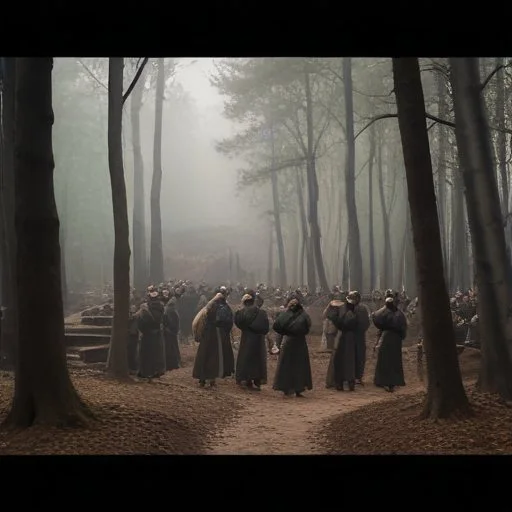
In the summer of 1941, German forces launched Operation Barbarossa, a massive invasion of the Soviet Union. As the Wehrmacht advanced, they were accompanied by Einsatzgruppen, mobile killing units tasked with eliminating perceived threats to the Nazi regime, including Jews, communists, and Romani people. Meanwhile, Ukraine, with its complex history of anti-Semitism and nationalist sentiment, proved a fertile ground for collaboration with the Nazi occupiers.
In the weeks leading up to the massacre, German authorities, led by SS-Standartenführer Paul Blobel, orchestrated a campaign of terror and intimidation against Kiev's Jewish population. Posters and leaflets were circulated, urging Jews to report for "resettlement" in the suburbs. Unbeknownst to the victims, this was a ruse, and the unsuspecting evacuees were marched to the Babi Yar ravine, where a gruesome fate awaited them.
On September 29, the first group of victims, mainly Jewish men, were led to the ravine, where they were forced to undress and hand over their valuables. The Nazis then systematically executed them by firing squad, with Ukrainian collaborators providing additional "security." The next day, women and children were rounded up and subjected to the same brutal treatment. The sheer scale of the massacre was staggering, with estimates suggesting that up to 100,000 Jews were murdered in Babi Yar between 1941 and 1943.
The Babi Yar massacre sent shockwaves throughout the world, prompting widespread condemnation and galvanizing international efforts to support the Jewish community. In the years that followed, the site of the massacre became a symbol of the Holocaust, with monuments and museums erected to honor the victims. Today, Babi Yar serves as a poignant reminder of the dangers of hatred, intolerance, and unchecked power.
Babi Yar has inspired countless works of literature, art, and music, including Soviet poet Yevgeny Yevtushenko's iconic poem "Babi Yar," which denounced the Soviet Union's own silence on the tragedy. The massacre has also been the subject of numerous films, documentaries, and exhibitions, ensuring that the world never forgets the lessons of this dark chapter in human history.
Rising anti-Semitism in Ukraine during the 1930s created an environment conducive to the massacre. The Ukrainian nationalist movement, which sought independence from Soviet rule, often espoused anti-Jewish rhetoric, fueling the flames of hatred. Additionally, the Molotov-Ribbentrop Pact, a non-aggression treaty between Germany and the Soviet Union, further destabilized the region, creating an atmosphere of uncertainty and fear.
In the months leading up to the invasion, Ukrainian nationalists and local authorities began to secretly collaborate with Nazi forces, paving the way for the horrors that would unfold. This toxic mix of nationalist sentiment, anti-Semitism, and political opportunism laid the groundwork for the Babi Yar massacre.

Viktor Nakhimov, a Ukrainian nationalist and collaborator, played a pivotal role in facilitating the Babi Yar massacre. Born in 1918, Nakhimov was an ardent supporter of Ukrainian independence and saw the Nazi occupation as an opportunity to advance his cause. He became a key liaison between Ukrainian nationalists and Nazi forces, helping to coordinate the massacre.
Nakhimov's motivations were twofold: he sought to eliminate the Jewish population, which he saw as a threat to Ukrainian identity, and to gain favor with the Nazi regime. His actions, however, ultimately contributed to the deaths of tens of thousands of innocent people.
The Babi Yar massacre had a profound impact on Ukrainian and Soviet literature, inspiring works that confronted the horrors of the Holocaust. Yevgeny Yevtushenko's poem "Babi Yar," published in 1961, is a seminal work that denounced the Soviet Union's silence on the tragedy.
Other notable works include Anatoly Kuznetsov's novel "Babi Yar: A Document in the Form of a Novel," which provides a detailed account of the massacre, and D. M. Thomas's novel "The White Hotel," which explores the psychological trauma inflicted by the event.

The Babi Yar massacre occurred at a critical juncture in World War II, as German forces sought to expand their territorial control and secure access to Ukraine's natural resources. The invasion of Ukraine, code-named Operation Barbarossa, was a key component of Hitler's strategy to defeat the Soviet Union and secure Lebensraum (living space) for the German people.
The massacre was also influenced by the complex web of alliances and rivalries between Nazi Germany, the Soviet Union, and the Ukrainian nationalist movement. As the war raged on, the geopolitical landscape continued to shift, with Ukraine becoming a crucial battleground in the struggle for dominance.
The Babi Yar massacre was a tragic manifestation of the centuries-old hatred and intolerance that has plagued Jewish communities. Anti-Semitic rhetoric and violence, perpetuated by ideologies like Nazism and Ukrainian nationalism, created an environment in which such atrocities could occur.
The massacre serves as a stark reminder of the dangers of unchecked nationalism, xenophobia, and racism, highlighting the importance of promoting tolerance, understanding, and human rights in the face of such hatred.