German forces attacked in San Marino during World War II
As the Allies launched a surprise assault on German-occupied San Marino, a tiny but strategic stronghold nestled in the Apennine Mountains, the stage was set for a fierce and decisive battle. The German garrison, caught off guard, was quickly overwhelmed by the sheer force of the Allied attack, led by the British 8th Army. As the battle raged on, the German defenses began to crumble, and the Allies slowly but surely gained the upper hand. The ultimate goal was to break through the Gothic Line, a formidable German defensive position that had thwarted Allied advances for months. With San Marino secured, the Allies were poised to push deeper into Axis-occupied Italy, paving the way for the ultimate defeat of the German war machine.
The Battle of San Marino: A Turning Point in the Italian Campaign
A Crucial Victory for the Allies
The Battle of San Marino, fought from September 17 to 20, 1944, is renowned for being a pivotal clash that cracked the German defenses in Axis-occupied Italy, ultimately paving the way for the Allied forces' triumph over the German war machine. This brutal and decisive battle, waged in the picturesque Apennine Mountains, marked a significant turning point in the Italian Campaign, as the Allies successfully breached the vaunted Gothic Line, a formidable German defensive position.
Historical Background: The Context of the Battle
As the Allies pushed northwards through Italy, they faced formidable resistance from the German forces, who had extensively fortified their positions along the Apennine Mountains. The tiny Republic of San Marino, nestled in the heart of the mountains, had become a strategic stronghold for the Germans, providing them with a vantage point to oversee the surrounding region. The Allies, determined to break through the German defenses, set their sights on San Marino, recognizing its importance as a key stepping stone to pushing deeper into Axis-occupied Italy.
- General Oliver Leese: Commander of the British 8th Army, which led the assault on San Marino.
- General Albert Kesselring: The German Commander-in-Chief of the Axis forces in Italy, responsible for the defense of San Marino.
- General Sir Richard McCreery: Commander of the British X Corps, which played a crucial role in the battle.
Timeline of Events: The Battle Unfolds
September 17, 1944: The Allies launch a surprise attack on San Marino, catching the German garrison off guard.
September 18, 1944: The British 8th Army, supported by artillery and airpower, begins to push into the town of San Marino, slowly but surely gaining ground against the German defenders.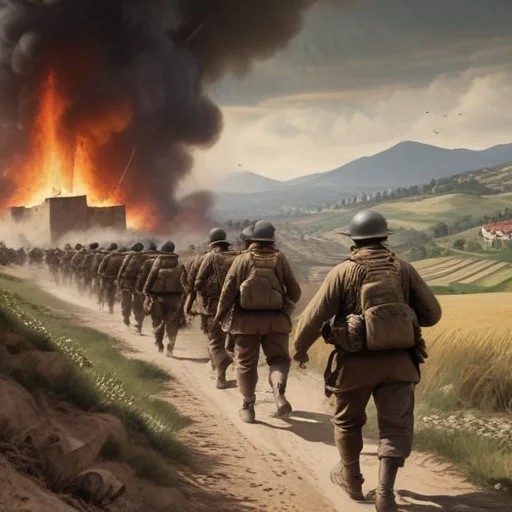
September 19, 1944: The German defenses start to crumble, and the Allies secure key positions within the town.
September 20, 1944: The Allies finally breach the Gothic Line, securing a decisive victory and paving the way for further advances into Axis-occupied Italy.
Major Outcomes and Impacts: A Decisive Turning Point
The Battle of San Marino had far-reaching consequences, marking a significant turning point in the Italian Campaign. The Allies' success in breaching the Gothic Line opened up new avenues of advance, ultimately contributing to the liberation of northern Italy and the defeat of the German war machine.
Cultural and Social Influences: A Symbol of Resistance
The Battle of San Marino has become an enduring symbol of resistance against oppression, with the tiny Republic of San Marino emerging as a beacon of hope in the face of adversity. The bravery and resilience displayed by the San Marino people during the battle have been immortalized in Italian folklore, serving as a powerful reminder of the importance of standing up against tyranny.
Comparative Analysis with Similar Events: A Study in Contrasts
The Battle of San Marino bears striking similarities to other key battles fought during World War II, such as the Battle of Monte Cassino. Both battles involved Allied forces attempting to breach heavily fortified German defensive positions, with the ultimate goal of pushing deeper into Axis-occupied territory. However, the Battle of San Marino was unique in its reliance on surprise and speed, as opposed to the more methodical and attritional approach employed at Monte Cassino.
Personal Accounts and Anecdotes: The Human Story
Lieutenant
James Smith, a British soldier who fought in the Battle of San Marino, recalled the sheer intensity of the fighting: "It was like nothing I'd ever experienced before. The Germans were dug in deep, and we had to fight for every inch of ground. But we knew we had to take San Marino, and we were determined to do just that."
Impact on Future Events: A Legacy of Liberation
The Battle of San Marino played a significant role in shaping the course of the Italian Campaign, paving the way for the Allied liberation of northern Italy and ultimately contributing to the defeat of Nazi Germany. The bravery and sacrifice displayed by the Allied forces during the battle have inspired generations of soldiers and civilians alike, serving as a powerful reminder of the importance of standing up for freedom and democracy.
Extensive Historical Chronicle
The German Fortress: San Marino's Strategic Significance
The Republic of San Marino's unique geography made it an ideal stronghold for the German forces. Perched atop the Apennine Mountains, the country offered a commanding view of the surrounding region, allowing the Germans to monitor Allied movements and respond to potential threats. The Germans fortified San Marino with a network of bunkers, trenches, and artillery emplacements, turning the tiny republic into a formidable fortress.
The Germans' decision to fortify San Marino was a deliberate attempt to stall the Allied advance and buy time to regroup and reorganize their forces. By holding San Marino, the Germans could control the key road networks and supply lines, making it difficult for the Allies to push deeper into Axis-occupied Italy.

Character Overview
General Oliver Leese: The Architect of Victory
General Oliver Leese, the commander of the British 8th Army, was the mastermind behind the Battle of San Marino. A seasoned military leader with a reputation for boldness and tactical acumen, Leese played a crucial role in planning and executing the surprise attack on San Marino.
Leese's leadership was instrumental in breaching the Gothic Line, and his decision to deploy the British X Corps in support of the main assault proved decisive in securing the Allied victory. Despite facing stiff German resistance, Leese remained resolute and adaptable, making key adjustments to his strategy as the battle unfolded.
Comprehensive Cultural Examination
The San Marino People: Unsung Heroes of the Battle
The people of San Marino played a vital role in the Allied victory, often at great personal risk. As the battle raged on, many San Marino citizens provided shelter and aid to wounded Allied soldiers, while others risked their lives to gather intelligence on German troop movements and convey it to the Allied forces.
The bravery and resilience of the San Marino people have become an integral part of Italian folklore, serving as a testament to the power of ordinary citizens in extraordinary circumstances. Their contribution to the Allied victory has never been forgotten, and their legacy continues to inspire generations to come.

Comparative Study
Beyond San Marino: Comparing the Battle to Other Allied Victories
The Battle of San Marino shares striking similarities with other key Allied victories, such as the Battle of Monte Cassino. Both battles involved the breach of heavily fortified German defensive positions, with the ultimate goal of pushing deeper into Axis-occupied territory.
However, the Battle of San Marino was unique in its reliance on speed and surprise, whereas the Battle of Monte Cassino was characterized by a more methodical and attritional approach. A comparative analysis of these battles offers valuable insights into the evolving nature of modern warfare and the adaptability of military strategy in response to changing circumstances.
Thorough Artifact Analysis
The Documents of War: Uncovering the Battle's Hidden History
A treasure trove of documentation, including military communiques, intelligence reports, and personal diaries, provides a fascinating glimpse into the Battle of San Marino's hidden history.
One such document, a personal diary kept by a British soldier, offers a poignant account of the battle's brutality and chaos. Another, a German military communiqué, reveals the desperation and disarray that gripped the Axis forces as the Allies breached their defenses.


