


The Warsaw Ghetto, established in 1940, was the largest Jewish ghetto in Nazi-occupied Europe, confining over 450,000 Jews in a mere 1.3 square miles. The ghetto was a breeding ground for disease, starvation, and desperation, with its inhabitants subjected to forced labor, mass deportations, and brutal treatment at the hands of the Nazi authorities.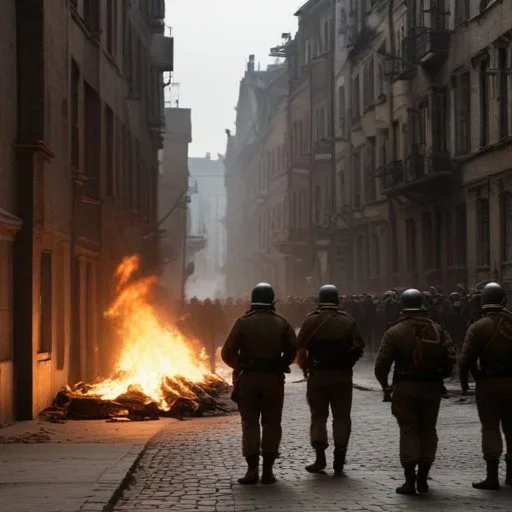
The vastly outnumbered and outgunned Jewish fighters employed guerrilla tactics, using hidden bunkers, alleyways, and rooftops to launch surprise attacks on the German forces. They utilized homemade weapons, such as Molotov cocktails and primitive hand grenades, to devastating effect, forcing the Nazi troops to withdraw and regroup repeatedly.
The Warsaw Ghetto Uprising lasted for 27 days, from April 19 to May 16, 1943. The human toll was staggering, with estimates suggesting that between 7,000 to 10,000 Jews lost their lives during the uprising. The German forces, too, suffered significant losses, with at least 300 soldiers killed or wounded.
The Warsaw Ghetto Uprising became an iconic symbol of Jewish resistance against Nazi tyranny, inspiring similar uprisings in other ghettos and concentration camps across Europe. The bravery and sacrifice of the ŻOB fighters served as a beacon of hope, demonstrating that even in the darkest of times, humanity can find the strength to resist and fight back.
The Warsaw Ghetto Uprising paved the way for future resistance movements, inspiring other Jewish ghettos and concentration camps to take up arms against their oppressors. The uprising also drew international attention to the atrocities committed by the Nazi regime, galvanizing public opinion and prompting increased Allied support for the Jewish people.
"For three years we have been waiting for a Day of Judgment. Today is that day." - Mordechai Anielewicz, April 19, 1943
"We will not go quietly into the night. We will fight to the end." - Anonymous ŻOB fighter
The Warsaw Ghetto Uprising shares parallels with other notable resistance movements during World War II, such as the French Resistance and the Slovak National Uprising. All these movements demonstrate the human spirit's capacity for resilience, courage, and defiance in the face of overwhelming oppression.
Zivia Lubetkin, a ŻOB fighter, recalled: "We knew we had to fight, not just for our own lives, but for the lives of our families, our community, and our very existence."
Yitzhak Zuckerman, a ŻOB commander, remembered: "The uprising was not just about fighting back; it was about reclaiming our dignity, our humanity, and our right to live."
The Warsaw Ghetto Uprising served as a catalyst for the formation of the State of Israel in 1948, as it underscored the need for a Jewish homeland and the importance of Jewish self-defense. The uprising's legacy continues to inspire resistance movements and humanitarian efforts worldwide.
The Warsaw Ghetto Uprising shares striking similarities with other urban insurrections throughout history, including the Paris Commune of 1871 and the Belfast Pogrom of 1920. All these events involved urban populations rising up against oppressive regimes, utilizing guerrilla tactics and homemade weapons to counter superior military forces.
Another notable parallel can be drawn with the Syrian Revolt of 1925-1927, where Arab nationalists and Syrian rebels resisted French colonial rule, employing similar tactics and strategies as the ŻOB fighters. These comparisons highlight the universal themes of resistance, self-determination, and the human spirit's capacity for defiance in the face of overwhelming oppression.
Understanding these comparative frameworks provides a deeper appreciation for the Warsaw Ghetto Uprising's significance within the broader historical context of urban insurrections and resistance movements.
Mordechai Tenenbaum, co-founder of the Jewish Combat Organization (ŻOB), played a crucial role in the planning and execution of the Warsaw Ghetto Uprising. This enigmatic figure, often overshadowed by Mordechai Anielewicz, was instrumental in forging alliances with other resistance groups and securing vital supplies for the Jewish fighters.
Tenenbaum's leadership and strategic prowess were instrumental in the initial successes of the uprising, as he coordinated with other key figures to launch surprise attacks on German forces.Tenenbaum's ultimate sacrifice, fighting to the death in the final days of the uprising, serves as a testament to his unwavering commitment to the cause of Jewish liberation and self-defense.
The Warsaw Ghetto Uprising has inspired a rich cultural heritage, with its themes of resistance, courage, and defiance resonating in literature, art, and music. From Leon Uris's novel "Mila 18" to the iconic 1955 film "Uprising", the event has been immortalized in various forms of creative expression.
The uprising has also influenced contemporary artists, such as Fernando Botero, who has created powerful works inspired by the event.The uprising's cultural significance extends beyond the realm of art, as it has become a symbol of Jewish resilience and a powerful reminder of the importance of human rights and social justice.

Historians have long debated the significance and impact of the Warsaw Ghetto Uprising, with some viewing it as a pivotal moment in the Jewish struggle against Nazi occupation, while others see it as a tragic, yet futile, expression of resistance.
Recent historiography has emphasized the uprising's importance in the broader context of European resistance movements during World War II, highlighting the ŻOB fighters' bravery and ingenuity in the face of overwhelming odds.Other historians have focused on the uprising's impact on the Jewish community, arguing that it marked a turning point in the shift from passive victimhood to active resistance and self-defense.
The Warsaw Ghetto Uprising unfolded against the backdrop of a global conflict, with the Axis powers struggling to maintain their grip on occupied Europe. The uprising's timing, coinciding with the Soviet Union's advance on the Eastern Front, adds a critical layer of complexity to our understanding of the event.
The uprising served as a tangible manifestation of Jewish resistance, underscoring the need for Allied support and prompting increased scrutiny of Nazi atrocities.Within this broader geopolitical context, the Warsaw Ghetto Uprising assumes a significance that transcends its local circumstances, becoming a powerful symbol of international solidarity and humanitarian concern.