


In the midst of World War II, on May 4, 1945, a pivotal moment marked the beginning of the end of Nazi Germany's grip on Europe. At Lüneburg Heath, a windswept region in northern Germany, high-ranking German officers gathered to sign the surrender of all Wehrmacht units in the Netherlands, Denmark, and northwest Germany, paving the way for Allied forces to restore order and freedom to the ravaged continent.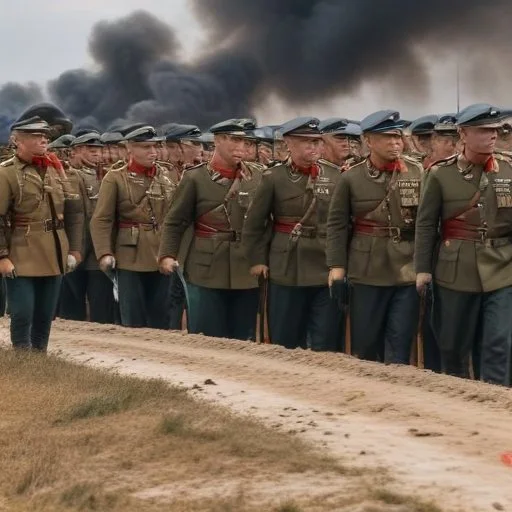
This monumental event signified a crucial step towards the ultimate defeat of Nazi Germany, freeing millions from tyranny and oppression. The surrender at Lüneburg Heath was a testament to the unwavering determination of the Allied forces and the unrelenting spirit of the people who fought for freedom.
The signing of the surrender was a culmination of efforts by influential figures, including:
The road to surrender was paved by a series of events, including:
The surrender at Lüneburg Heath had far-reaching consequences, including:
The surrender at Lüneburg Heath marked a turning point in the war, inspiring:
The bravery and perseverance of those involved in the surrender at Lüneburg Heath serve as a powerful reminder of the importance of standing against oppression and fighting for freedom.
As General Bernard Montgomery later reflected, "The surrender at Lüneburg Heath was a great triumph, not only for the British Army, but for the whole of the United Nations."
This momentous event will forever be etched in history as a testament to the unwavering spirit of those who fought for freedom and paved the way for a brighter future.
The surrender at Lüneburg Heath had a profound impact on European culture, marking a turning point in the war and inspiring a new era of creative expression. As the continent began to rebuild, artists, writers, and musicians responded to the changing landscape, producing works that reflected the trauma, hope, and resilience of the time.
From the somber tones of Benjamin Britten's War Requiem to the defiant spirit of French Resistance songs, the arts played a crucial role in processing the trauma of war and envisioning a brighter future. The liberation of Western Europe also paved the way for the flowering of modern art movements, as artists like Pablo Picasso and Henri Matisse responded to the new atmosphere of freedom and experimentation.
In literature, the likes of Albert Camus and Jean-Paul Sartre explored the moral and philosophical implications of the war, while journalists like Martha Gellhorn and Ernest Hemingway reported on the human cost of conflict. As the continent began to heal, cultural institutions and festivals sprang up, celebrating the diversity and creativity of European culture.

Generaladmiral Hans-Georg von Friedeburg, the German commander-in-chief in the Netherlands, was a complex figure, driven by a mix of duty, loyalty, and pragmatism. Born into a noble Prussian family, Friedeburg was educated at the German Naval Academy and rose through the ranks of the Kriegsmarine, serving in World War I and later as a staff officer in the interwar period.
Friedeburg's role in the surrender at Lüneburg Heath was crucial, as he navigated the treacherous waters of German politics and military strategy. Despite his loyalty to the Nazi regime, he recognized the futility of continued resistance and worked to negotiate a surrender that would spare German lives and minimize further destruction.
Though Friedeburg's legacy is marked by controversy, his actions at Lüneburg Heath demonstrate a commitment to ending the war and limiting its devastating consequences. His story serves as a fascinating case study in the complexities of human decision-making during times of crisis.
The surrender at Lüneburg Heath had significant economic implications, as the Allied forces moved to restore order and rebuild the devastated economies of Western Europe. The halt in hostilities allowed for the resumption of trade and commerce, as well as the flow of essential goods and services.
The surrender also facilitated the implementation of the Marshall Plan, a comprehensive program of economic aid and reconstruction launched by the United States in 1948. This initiative helped to stimulate economic growth, rebuild infrastructure, and promote European cooperation, ultimately laying the foundations for the post-war economic boom.
In addition, the liberation of Western Europe enabled the revival of key industries, such as coal mining, steel production, and manufacturing, which had been severely disrupted by the war. As economic activity rebounded, so too did employment and living standards, paving the way for a period of unprecedented growth and prosperity.

The surrender at Lüneburg Heath took place against a complex geopolitical backdrop, as the Allied forces sought to secure a strategic foothold in Western Europe. The region's proximity to the Soviet Union and the ongoing battle for Berlin made it a crucial prize in the final stages of the war.
The agreement reached at Lüneburg Heath was closely tied to the broader Allied strategy, which aimed to encircle and isolate the remaining German strongholds. The surrender of German forces in the Netherlands, Denmark, and northwest Germany paved the way for the ultimate capture of Berlin and the final defeat of Nazi Germany.
The event also had significant implications for the emerging Cold War, as the Western Allies sought to establish a stable and prosperous Western Europe as a bulwark against Soviet expansion. The surrender at Lüneburg Heath marked an important milestone in this process, setting the stage for the post-war reconstruction of Europe and the emergence of a new international order.
The surrender at Lüneburg Heath was a politically charged event, reflecting the complex dynamics of the war's final stages. The agreement reached between General Bernard Montgomery and Generaladmiral Hans-Georg von Friedeburg was facilitated by a series of high-level diplomatic contacts, including the involvement of Prime Minister Winston Churchill and the Soviet leadership.
The surrender had significant implications for the balance of power in Europe, as the Western Allies sought to limit Soviet influence and establish a stable Western European order. The event also underscored the importance of cooperation and diplomacy in ending the war, as the Allied powers worked together to negotiate a surrender that would minimize further bloodshed and destruction.
In the aftermath of the surrender, the Western Allies moved swiftly to establish new governments and administrations in the liberated territories, laying the foundations for the post-war reconstruction of Europe. The event marked an important milestone in this process, highlighting the critical role of political leadership and diplomacy in shaping the course of international relations.