


The German town of Pforzheim, nestled in the picturesque Black Forest region, was reduced to smoldering ruins on a single, dreadful night - February 23, 1945. This devastating event, orchestrated by 379 British bombers, would forever be etched in the annals of World War II, leaving an indelible mark on the town and its people.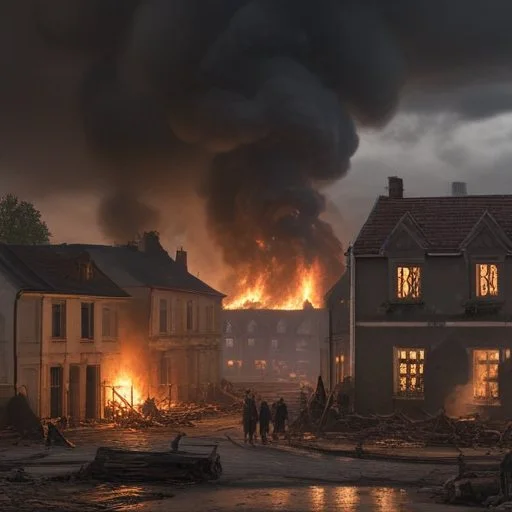
The Allies, determined to cripple Nazi Germany's war machine, launched a relentless campaign of strategic bombing. Pforzheim, a crucial hub for the German jewelry and watchmaking industry, was an attractive target. On that fateful evening, a fleet of 379 British bombers, comprising Lancasters, Halifaxes, and Stirlings, converged on the unsuspecting town.
The bombers unleashed their deadly payload, dropping over 4,000 tons of high-explosive bombs, incendiaries, and phosphorus bombs. The resulting inferno engulfed Pforzheim, consuming everything in its path. The town's narrow streets and historic buildings proved no match for the fury of the Allied aerial assault.
February 23, 1945:
The Pforzheim raid resulted in:
The Pforzheim raid had a profound impact on the town's cultural and social fabric:
"The bombers came, and with them, hell." - A Pforzheim resident, recalling the raid.
Erika Witte, a Pforzheim resident, recounts the terror of that fateful night:
"I remember the sound of the bombers, like a never-ending drumbeat. The ground shook beneath our feet as the bombs fell. We huddled together in the cellar, praying for it to end."
The Pforzheim raid served as a precursor to the Allied forces' ultimate victory in World War II:
Born on April 13, 1892, in Cheltenham, England, Air Chief Marshal Sir Arthur Harris was a British Royal Air Force (RAF) officer who played a pivotal role in planning and executing the bombing campaign against Nazi Germany during World War II.
Harris was a strong advocate for area bombing, believing it was the most effective way to cripple Germany's war effort. His leadership and strategy were instrumental in the development of the RAF Bomber Command, which carried out the devastating raid on Pforzheim.
Early Life and Military CareerHarris served in the British military during World War I, initially in the infantry and later in the Royal Flying Corps. After the war, he remained in the RAF, rising through the ranks and serving in various capacities, including as a squadron commander and air staff officer.

Pforzheim's rich cultural heritage was deeply intertwined with its jewelry and watchmaking industries. For centuries, the town was renowned for its exquisite timepieces and ornate jewelry, earning the nickname "Goldstadt" (Golden City).
The industries not only contributed to the town's economic prosperity but also shaped its cultural identity. The intricate craftsmanship and attention to detail required in jewelry and watchmaking instilled a sense of pride and tradition among the townspeople.
The Pforzheim School of Design, established in 1913, further solidified the town's reputation as a hub for innovative design and craftsmanship. The school's influence extended beyond Pforzheim, shaping the broader cultural landscape of Germany's jewelry and watchmaking industries.The Allied bombing campaign, including the Pforzheim raid, had a profound impact on Germany's economy. The destruction of Pforzheim's jewelry and watchmaking industries resulted in significant losses, both in terms of human capital and industrial infrastructure.
The raid led to a substantial decline in Germany's jewelry and watch exports, which had been a vital component of the country's economy. The loss of skilled labor and equipment further exacerbated the economic toll, making it challenging for the industries to recover in the post-war period.
The economic consequences of the Pforzheim raid were felt far beyond the town itself, contributing to the weakening of Germany's overall economy and paving the way for the eventual Allied victory.
The Pforzheim raid has been the subject of intense historiographical debate, with scholars grappling to understand the motivations and consequences of this pivotal event.
Some historians have framed the raid as a necessary evil, arguing that it was a crucial component of the Allied strategy to weaken Nazi Germany's war machine. Others have questioned the morality and effectiveness of the bombing campaign, highlighting the devastating impact on civilian populations.
The Pforzheim raid serves as a lens through which to examine the complex and often contentious nature of historical interpretation, underscoring the need for nuanced and multifaceted approaches to understanding the past.The Pforzheim raid showcased the advanced technological capabilities of the British RAF Bomber Command. The development of strategic bombing tactics, including the use of Pathfinder forces and electronic navigation aids, enabled the Allies to launch a precision attack on the town.
The raid also demonstrated the effectiveness of the RAF's heavy bombers, such as the Lancaster and Halifax, which were instrumental in delivering the massive payload of explosives and incendiaries.
The Pforzheim raid highlighted the importance of technological innovation in modern warfare, demonstrating the significant advantage conferred by advanced military capabilities.