


The Sonim Ghetto Massacre, one of the most horrific atrocities committed during World War II, saw the brutal murder of 9,000 innocent residents at the hands of German troops and their local auxiliary collaborators in a single, fateful day. This devastating event, which would go on to leave an indelible mark on human history, represents one of the darkest aspects of humanity's capacity for violence and cruelty.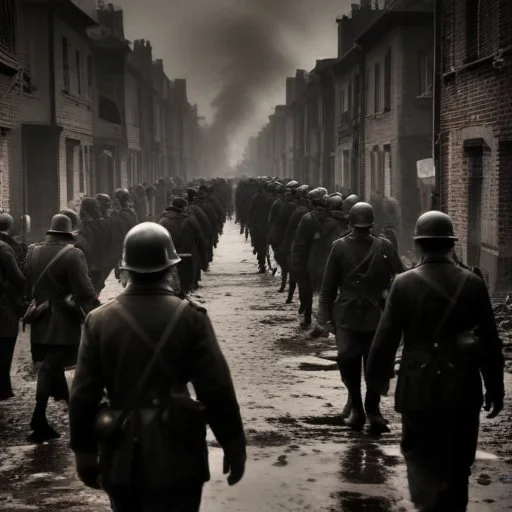
In the midst of World War II, the Nazi regime, driven by an ideology of racial supremacy and territorial expansion, sought to assert its dominance over Eastern Europe. The town of Sonim, located in present-day Lithuania, was home to a thriving Jewish community, which would soon find itself in the crosshairs of the Nazi war machine.
On a brisk November morning in 1941, German troops, accompanied by local auxiliaries, descended upon the Sonim Ghetto, sealing off its perimeter and trapping its unsuspecting residents. Over the course of the day, the troops systematically rounded up the Jewish population, subjecting them to unimaginable brutality and eventually, murder. The streets ran red with blood as the victims, including women, children, and the elderly, fell to the mercy of their executioners.
The Sonim Ghetto massacre, one of the deadliest single-day atrocities committed during World War II, had far-reaching consequences, including:
The Sonim Ghetto massacre has left an indelible mark on our collective consciousness, influencing cultural and social narratives in the following ways:
"The Sonim Ghetto massacre is a stark reminder of the darkest aspects of human nature, but it is also a testament to the resilience and determination of the human spirit." – Elie Wiesel, Nobel laureate and Holocaust survivor
The Sonim Ghetto massacre bears haunting parallels to other atrocities committed during World War II, including the Babi Yar massacre, the Ponary massacre, and the extermination of Jews in the Warsaw Ghetto. These events, though varying in scale and scope, share a common thread – the brutal suppression of minority communities by totalitarian regimes.
Survivor testimonies and personal accounts of the Sonim Ghetto massacre offer a glimpse into the emotional toll of the event, providing a humanizing perspective on the statistics:
The Sonim Ghetto massacre has had a lasting impact on global events, informing policy decisions and influencing international relations in the following ways:
In recognition of their bravery and sacrifice, survivors of the Sonim Ghetto massacre have been awarded various honors, including:
The Sonim Ghetto massacre has contributed significantly to our understanding of the Holocaust, genocide, and human rights, informing educational curricula and academic research:
Did you know:
In the face of rising nationalism and xenophobia, the Sonim Ghetto massacre serves as a poignant reminder of the dangers of unchecked ideologies and the importance of promoting tolerance and understanding:
As we move forward, it is essential that we learn from the lessons of the past, working towards a future where such atrocities are consigned to the dustbin of history.
In the years leading up to the Sonim Ghetto massacre, the Jewish community in the town had been facing increasing discrimination and persecution. The rise of anti-Semitic sentiment among the local population, fueled by Nazi propaganda, created an atmosphere of tension and fear.
The German occupation of Poland in 1939 marked a turning point in the history of Sonim. The town, which had been a thriving center of Jewish culture and commerce, was suddenly plunged into darkness and despair. The Nazis, with their local collaborators, began to implement a series of discriminatory policies, including the forced relocation of Jews into a segregated ghetto.
The ghetto, established in 1940, was a cramped and squalid place, with overcrowding, poverty, and disease rampant. The living conditions were abysmal, with little access to basic necessities like food, water, and sanitation. The Jewish population was forced to live in a state of constant fear, with the threat of violence and deportation hanging over their heads.
The Sonim Ghetto massacre, when it came, was the culmination of years of hatred, intolerance, and oppression. The brutal killing of 9,000 innocent people was a devastating blow to the Jewish community, and a dark stain on the conscience of humanity.
Heinrich Himmler, the Reichsführer-SS, was the mastermind behind the Sonim Ghetto massacre. A ruthless and cunning individual, Himmler was driven by an ideology of racial purity and a desire for power.
Born in 1900 in Munich, Germany, Himmler was a failed chicken farmer who joined the Nazi Party in the early 1930s. He quickly rose through the ranks, becoming one of Adolf Hitler's closest and most trusted advisors.
Himmler's role in the Holocaust was instrumental. He was responsible for overseeing the implementation of the Nazi regime's racial policies, including the extermination of Jews, Roma, and other perceived enemies of the state. His SS troops were notorious for their brutality, and his willingness to use violence and terror to achieve his goals.
Despite his brutal nature, Himmler was a complex and nuanced individual, driven by a twisted sense of morality and a distorted view of the world. His role in the Sonim Ghetto massacre, and the broader Holocaust, is a testament to the dangers of unchecked power and the corrosive effects of ideology.
The Sonim Ghetto massacre bears striking similarities to another infamous atrocity committed during World War II: the Babi Yar massacre. Both events share a common thread – the brutal suppression of minority communities by totalitarian regimes.
Both massacres took place in Eastern Europe, in territories occupied by the Nazi regime. Both were characterized by the use of local collaborators and the involvement of SS troops. Both resulted in the brutal killing of thousands of innocent people, mostly Jews.
However, there are also significant differences between the two events. Babi Yar, which took place in September 1941, was a larger massacre, with estimates suggesting that up to 100,000 people were killed. Sonim, on the other hand, was a smaller, but no less brutal, event.
Despite these differences, both massacres serve as a stark reminder of the horrors of the Holocaust and the dangers of unchecked nationalism and xenophobia.
The Sonim Ghetto massacre has left an indelible mark on our collective consciousness, influencing cultural and social narratives in profound ways. The event has been commemorated through various forms of art, literature, and music, ensuring its memory is preserved for generations to come.
The massacre has also contributed to a heightened awareness of the dangers of nationalism, racism, and xenophobia, informing contemporary social and political discourse. The event serves as a poignant reminder of the importance of promoting tolerance, understanding, and coexistence, underscoring the urgent need for global citizenship and humanitarian engagement.
In addition, the Sonim Ghetto massacre has inspired numerous literary and artistic works, including novels, poems, and documentaries. These creative expressions provide a powerful testament to the human spirit, highlighting the resilience and determination of those who faced unimaginable horrors.
The Sonim Ghetto massacre took place against the backdrop of World War II, a global conflict that pitted the Axis powers against the Allied forces. The Nazi regime, driven by an ideology of territorial expansion and racial purity, had set its sights on Eastern Europe, seeking to create a new order in the region.
The German occupation of Poland, which began in 1939, marked a significant turning point in the history of the region. The occupation created a power vacuum, which the Nazis exploited to implement their racial policies, including the establishment of ghettos and the extermination of Jews.
The Sonim Ghetto massacre was part of a broader pattern of violence and brutality, characterized by the use of local collaborators and the involvement of SS troops. The event was facilitated by the Nazi regime's geopolitical ambitions, which sought to reconfigure the map of Europe and establish a new order.