


On October 28, 1940, Greece made a bold statement to the world by rejecting Italy's ultimatum, a move that would change the course of history. Just hours later, Italian forces invaded Greece through Albania, sparking a fierce battle that would last for months.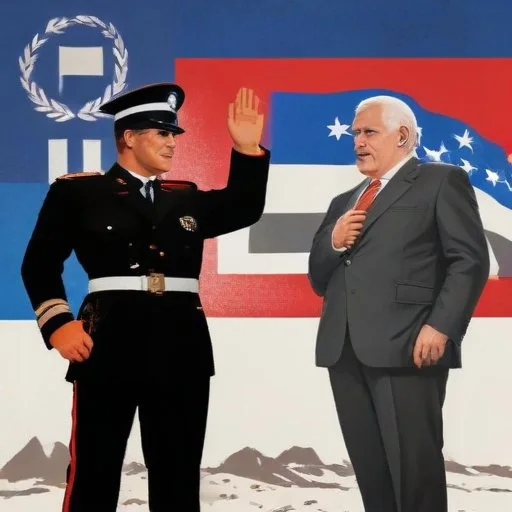
At the heart of this conflict was Greece's determination to maintain its sovereignty and independence. Led by Prime Minister Alexandros Papagos, the Greek government stood firm against Italy's bullying tactics, refusing to give in to their demands.
Italian dictator Benito Mussolini, driven by his ambition to expand Italy's territories, issued an ultimatum to Greece, demanding significant concessions, including the occupation of strategic locations and the establishment of Italian bases on Greek soil. When Greece refused, Italian forces poured into Greece through Albania, marking the beginning of a brutal and devastating conflict.
The Italian invasion sparked a surge of patriotism and courage among the Greek people. Men and women from all walks of life rallied behind their government, joining the military and taking up arms to defend their nation. The Greek resistance was characterized by its bravery, determination, and resilience in the face of overwhelming odds.
One of the most significant battles of the conflict was the Battle of Elaia-Kalamas, fought between October 29 and November 8, 1940. Greek forces, led by General Alexandros Papagos, inflicted heavy casualties on the Italian army, forcing them to retreat and regroup. This hard-won victory marked a turning point in the conflict, as it demonstrated the strength and resolve of the Greek military.
The Greek resistance against Italy's aggression sent shockwaves throughout the international community. The bravery and determination of the Greek people inspired admiration and support from around the world, with many countries, including Britain, coming to Greece's aid.
The conflict had far-reaching consequences, including the eventual involvement of Germany and the Axis powers in the region. The war effort also led to significant economic and social changes in Greece, as the country struggled to recover from the devastating effects of the conflict.
The story of Greece's brave resistance against Italy's aggression is one of courage, pride, and determination. It serves as a testament to the strength and resilience of the Greek people, who refused to bow to the demands of a powerful aggressor. Today, this legacy continues to inspire generations, reminding us of the importance of standing up for what is rightfully ours and defending our freedom and independence.
Historiographical debates surrounding the Greco-Italian War often center around the question of whether Greece's resistance was a manifestation of a broader nationalist sentiment or a desperate attempt to maintain sovereignty in the face of overwhelming odds.
Some historians argue that the war was a catalyst for the development of a modern Greek identity, while others contend that it was a futile effort to counter the inevitable spread of Fascist ideology.
Regardless, the conflict has left an indelible mark on the country's collective memory, serving as a powerful symbol of resistance against foreign occupation.
Alexandros Papagos, the Greek Prime Minister during the war, was a career military officer who played a crucial role in rallying the Greek people against the Italian invasion.
Born in 1883, Papagos graduated from the Greek Military Academy and went on to serve in the Balkan Wars and World War I.
His leadership during the Greco-Italian War earned him widespread acclaim, and he would later become the Commander-in-Chief of the Greek Armed Forces during World War II.
The geopolitical context of the Greco-Italian War was marked by a complex web of alliances and rivalries between European powers.
In the years leading up to the conflict, Italy's expansionist policies had already led to tensions with France, Britain, and Yugoslavia.
The invasion of Greece was seen as a bold move by Italy to expand its territorial claims, but it ultimately drew in other major powers, including Germany and the Soviet Union, into the wider conflict.
The Economic Impact of the Greco-Italian War was devastating for Greece, with widespread destruction of infrastructure, industry, and agriculture.
The country's economy, already weakened by the Great Depression, was dealt a severe blow by the war, with GDP declining by over 30% between 1940 and 1944.
The war effort also led to a significant increase in national debt, which would take decades to recover from.
The Cultural Impact of the Greco-Italian War was profound, with the conflict inspiring a wave of nationalist sentiment and cultural revival in Greece.
Artists, writers, and musicians responded to the war with works that celebrated Greek heritage and resistance, while the war itself became a symbol of Greek resilience and determination.
The war also marked a turning point in the country's cultural identity, as Greece began to reclaim its rich cultural heritage and forge a new sense of national identity.