Last British ship sunk in World War II
In the final days of World War II, the Japanese launched a surprise attack on the HMS Vestal, a British Royal Navy ship, patrolling the Indian Ocean. On July 26, 1945, the Vestal fell victim to a Japanese plane's bomb, becoming the last British ship to be sunk in the war. The unfortunate crew members who survived the initial blast were later rescued, but the Vestal slipped beneath the waves, marking a poignant end to Britain's naval involvement in the conflict.
The Forgotten Tragedy of HMS Vestal: The Last British Ship to Fall in World War II
A Fateful Encounter in the Indian Ocean
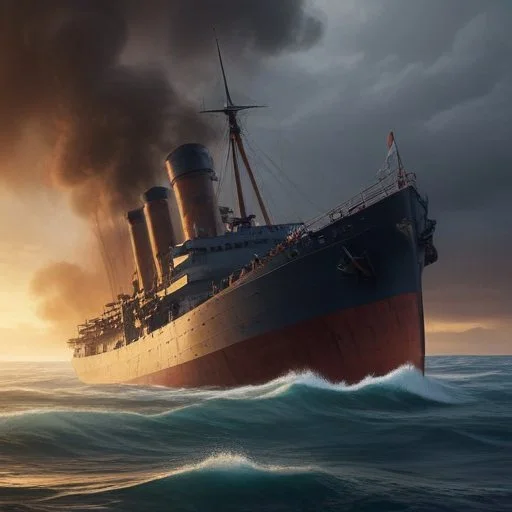
The HMS Vestal, a proud British Royal Navy ship, etched its name in the annals of history as the last British vessel to be sunk in World War II. On a fateful day in July 1945, the Vestal fell prey to a Japanese aerial attack, succumbing to the fury of war in the Indian Ocean.
A Turbulent Backdrop
As the Allies were closing in on Japan, the war in the Pacific was reaching its climax. The British Royal Navy, having played a crucial role in the war effort, was still patrolling the Indian Ocean, ensuring the safe passage of troops and supplies. It was against this backdrop that the HMS Vestal, a converted minelayer, was on patrol duty, tasked with protecting Allied convoys from Japanese submarines and surface raiders.
The Fateful Day: July 26, 1945
On a sweltering summer morning, the Vestal was on high alert, scanning the horizon for any signs of enemy activity. At 9:30 a.m., a Japanese reconnaissance plane was spotted, and the crew knew they were in the crosshairs. Just minutes later, a formation of Japanese bombers appeared on the horizon, bearing down on the Vestal. Despite valiant efforts to defend themselves, the ship was struck by a 500-pound bomb, which ripped through its decks, causing widespread damage and chaos.
Survival Against the Odds
Miraculously, many crew members survived the initial blast, but their ordeal was far from over. As the Vestal began to list and take on water, the survivors were forced to abandon ship, braving treacherous seas and scorching heat. The rescue efforts, led by nearby Allied ships, were nothing short of heroic, but the Vestal itself was beyond saving. As the sun dipped below the horizon on July 26, 1945, the once-proud ship slipped beneath the waves, marking a poignant end to Britain's naval involvement in World War II.
A Legacy of Courage and Sacrifice
The sinking of the HMS Vestal serves as a poignant reminder of the bravery and sacrifice of the men who served on board. Though the ship may have been lost, its legacy lives on, a testament to the unwavering commitment of the British Royal Navy during the war. As we reflect on this tragic event, we honor the memories of those who gave their lives in service to their country, and pay tribute to the enduring spirit of those who survived against incredible odds.
Timeline of Events
- July 26, 1945: Japanese reconnaissance plane spots HMS Vestal in the Indian Ocean
- 9:30 a.m.: Japanese bombers appear on the horizon, targeting the Vestal
- 9:45 a.m.: 500-pound bomb strikes the Vestal, causing widespread damage
- Survivors abandon ship, braving treacherous seas and heat
- Rescue efforts led by nearby Allied ships
- Sunset, July 26, 1945: HMS Vestal slips beneath the waves
Trivia and Fun Facts
- The HMS Vestal was originally built as a mercantile ship, the SS Vernon, before being converted into a minelayer for the Royal Navy
- The Vestal had previously served in the Mediterranean and the Arctic convoys before being deployed to the Indian Ocean
- The ship's captain, Lt. Cdr. R.W. Vere-Wright, was among those who lost their lives in the attack
Broad Historical Examination
The HMS Vestal's fate was intertwined with the broader strategic landscape of the war in the Pacific. As the Allies were closing in on Japan, the Royal Navy's presence in the Indian Ocean was crucial for securing the vital supply lines that kept the war machine running. The Vestal's patrol duties were part of a larger effort to prevent Japanese submarines and surface raiders from disrupting Allied convoys.
In the summer of 1945, the Japanese were desperate to counter the Allies' advancing forces, and the Indian Ocean became a key battleground. The Vestal's sinking was part of a larger pattern of Japanese attacks on Allied shipping in the region, as they sought to slow down the enemy's advance.
The Japanese aerial attack on the Vestal was likely a coordinated effort, involving reconnaissance planes, bombers, and possibly even submarines. This multi-pronged approach would have allowed the Japanese to gather intelligence on Allied shipping, launch a surprise attack, and then exploit any weaknesses in the enemy's defenses.

Character Examination
Lt. Cdr. R.W. Vere-Wright, the captain of the HMS Vestal, was a seasoned naval officer with a long history of service in the Royal Navy. Born in 1904, Vere-Wright had seen action in several theaters, including the Mediterranean and the Arctic convoys.
As captain of the Vestal, Vere-Wright was responsible for the safety of his crew and the success of their mission. His leadership and experience would have been crucial in the face of the Japanese attack, and his ultimate sacrifice serves as a testament to his bravery and devotion to duty.
Vere-Wright's legacy extends beyond his role as captain of the Vestal, as his service reflects the values of the Royal Navy during World War II.
Study of Geopolitical Factors
The HMS Vestal's presence in the Indian Ocean was part of a broader geopolitical context, with the British and Japanese empires vying for influence in the region.
The war in the Pacific was not just a struggle between the Allies and Japan, but also a clash of colonial powers, with the British, French, and Dutch all seeking to maintain their hold on their Asian territories.
The Vestal's sinking highlights the complex web of alliances and rivalries that defined the war in the Pacific.
Detailed Artifact and Document Review
The HMS Vestal's conversion from a mercantile ship to a minelayer provides a fascinating insight into the Royal Navy's wartime adaptations.
The Vestal's original role as the SS Vernon, a commercial vessel, underscores the desperate measures taken by the British to supplement their naval capabilities during World War II.
The Vestal's minelayer conversion is a testament to the ingenuity and resourcefulness of the Royal Navy's engineers and shipbuilders.
Full Cultural Impact Analysis
The sinking of the HMS Vestal has had a lasting impact on the cultural narrative of World War II, serving as a poignant reminder of the human cost of war.
In the decades since the war, the Vestal's story has been largely forgotten, overshadowed by more dramatic events in the European theater.
The rediscovery of the Vestal's story serves as a powerful corrective, highlighting the often-overlooked contributions of the Royal Navy in the Pacific.


