


In November 1941, a stern message from the United States would echo across the Pacific, a clarion call that would change the course of history. The Hull note, delivered to the Japanese ambassador, demanded Japan's withdrawal from China and French Indochina in exchange for the lifting of economic sanctions.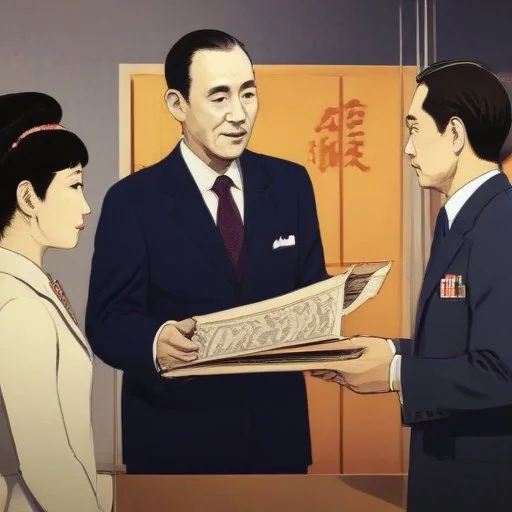
The Hull note, named after Secretary of State Cordell Hull, was a direct response to Japan's aggressive expansion in East Asia. The United States, determined to prevent further Japanese aggression, had been imposing economic sanctions on the country since 1940. The note, however, would prove to be a turning point in the deteriorating relationship between the two nations.
While the Hull note was being delivered, the Japanese 1st Air Fleet was secretly departing from Hitokappu Bay, hidden away from prying American eyes. The fleet, comprising six aircraft carriers, was preparing for a mission that would alter the trajectory of the war and drag the United States into the global conflict.
The events surrounding the Hull note and Japan's secret mission would have far-reaching cultural and social implications. The surprise attack on Pearl Harbor would galvanize American public opinion, propelling the nation into the war effort. In Japan, the attack would be celebrated as a heroic act, solidifying the country's commitment to its militaristic agenda.
The Hull note and Japan's subsequent attack on Pearl Harbor would have a profound impact on the war and its aftermath. The United States would enter World War II, contributing significantly to the Allied victory. The attack would also lead to a marked increase in anti-Japanese sentiment in the United States, resulting in the internment of Japanese Americans and the loss of civil liberties.
The Hull note and Japan's secret mission would remain shrouded in controversy long after the war's end. Debates would rage over the motivations behind the attack, with some arguing that it was a necessary evil to prevent further Japanese aggression, while others would condemn it as a brutal and unprovoked assault.
"Yesterday, December 7, 1941—a date which will live in infamy—the United States of America was suddenly and deliberately attacked by naval and air forces of the Empire of Japan." - Franklin D. Roosevelt, Address to Congress
The Hull note and Japan's surprise attack on Pearl Harbor would draw comparisons to other pivotal events in history, including the invasion of Poland by Nazi Germany in 1939 and the sinking of the USS Maine in 1898. Each of these events would serve as a catalyst for war, underscoring the devastating consequences of diplomatic failures.

The Hull note and Japan's secret mission would forever be etched in history as a cautionary tale of diplomatic failure and the devastating consequences of war. As the world continues to grapple with the complexities of international relations, the lessons of this fateful event would remain as relevant as ever.
The Hull note and Japan's surprise attack on Pearl Harbor bear striking similarities to the invasion of Poland by Nazi Germany in 1939. Both events were marked by a sense of urgency and a desire to expand territorial control. In both cases, the aggressor nation felt threatened by the existing global order and sought to challenge the status quo. Similarly, the sinking of the USS Maine in 1898, which led to the Spanish-American War, shares parallels with the Pearl Harbor attack in terms of its surprise nature and the devastating consequences that followed.
These events serve as a stark reminder of the devastating consequences of unchecked aggression and the importance of diplomacy in preventing conflict. They also highlight the need for nations to be vigilant in the face of rising tensions and to take proactive steps to prevent the escalation of conflict.

Cordell Hull: A Man of Principle
Cordell Hull, the Secretary of State behind the Hull note, was a seasoned diplomat with a long history of advocating for peaceful resolution to international conflicts. A strong believer in the power of diplomacy, Hull was determined to prevent further Japanese aggression in East Asia and saw the note as a last-ditch effort to avoid war.
Hull's efforts, however, were met with resistance from the Japanese government, which viewed the note as an ultimatum. Despite this, Hull remained committed to his principles, and his efforts ultimately helped to pave the way for the Allied victory in World War II.
The surprise attack on Pearl Harbor had a profound impact on American culture, leading to a surge in patriotism and a renewed sense of national unity. The attack also led to a marked increase in anti-Japanese sentiment, resulting in the internment of Japanese Americans and the loss of civil liberties.
In Japan, the attack was celebrated as a heroic act, solidifying the country's commitment to its militaristic agenda. The event also had a profound impact on the Japanese psyche, leading to a sense of national pride and a willingness to sacrifice for the sake of the nation.

The Hull note and Japan's subsequent attack on Pearl Harbor took place against the backdrop of a rapidly changing geopolitical landscape. The rise of fascist and nationalist ideologies in Europe and Asia had created an atmosphere of tension and uncertainty, and the Japanese government saw expansion as a means of securing its place in the world.
The event also highlighted the importance of the Pacific region as a key battleground in the global struggle for power. The Japanese attack on Pearl Harbor marked a turning point in the war, as the United States entered the conflict and began to shift its focus towards the Pacific theater.
The economic implications of the Hull note and Japan's attack on Pearl Harbor were far-reaching and devastating. The note, which demanded Japan's withdrawal from China and French Indochina, was seen as a threat to Japan's economic interests in the region. The subsequent attack on Pearl Harbor led to a complete breakdown in economic relations between the two nations, with the United States imposing severe economic sanctions on Japan.
The war that followed would have a profound impact on the global economy, leading to widespread destruction and disruption of trade. The United States would eventually emerge as a dominant economic power, while Japan would be forced to rebuild its economy from scratch.