


Deep in the heart of Borneo, a small island named Tarakan would witness one of the most pivotal battles of World War II, as Japanese forces, driven by their relentless campaign to dominate Southeast Asia, launched a surprise attack on the Dutch-held island in January 1942.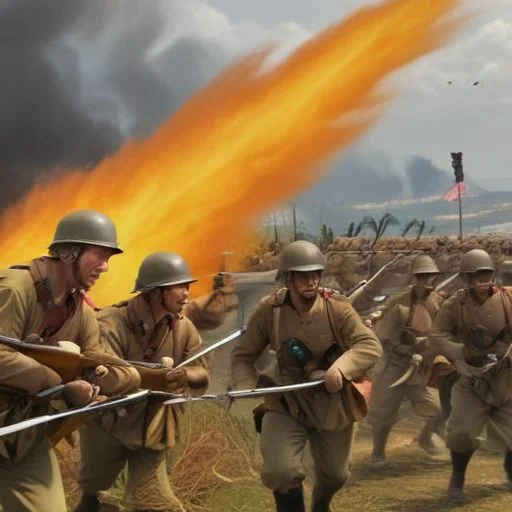
Tarakan, with its rich oil fields and strategic location, was a prize too great for the Japanese to pass up. The island's oil reserves were crucial to fuel the Japanese war machine, and its proximity to the Philippines and Indonesia made it an essential stepping stone for further conquest.
On January 11, 1942, Vice Admiral Shoji Nishimura led the Japanese forces in a surprise attack on Tarakan, catching the outnumbered Dutch garrison off guard. The battle was fierce but brief, with the Japanese Navy's superior firepower and air support quickly overwhelming the Dutch defenses. By the end of the day, the Dutch had surrendered, and the Japanese had secured control of the island.
January 11, 1942: Japanese forces, led by Vice Admiral Shoji Nishimura, launch a surprise attack on Tarakan.
January 12, 1942: The Dutch garrison surrenders, and the Japanese secure control of the island.
The fall of Tarakan marked a significant turning point in the war in Southeast Asia, as the Japanese gained control of the island's oil fields, solidifying their grip on the region. The battle also paved the way for further Japanese conquests in the Netherlands East Indies.
The occupation of Tarakan by Japanese forces had a profound impact on the local population, as they were forced to adapt to a new way of life under Japanese rule. The war also disrupted traditional trade and commerce, leading to widespread poverty and hardship.
A Dutch soldier, who survived the battle, recalled the futility of fighting against the Japanese onslaught: "It was like trying to hold back a tidal wave with a broken reed. We were vastly outnumbered, and our ammunition was running low. Surrender was the only option."
The fall of Tarakan set the stage for the Japanese conquest of the Netherlands East Indies, which would ultimately lead to the Allied liberation of the region in 1945.
Despite the overwhelming odds, the bravery and resilience of the Dutch garrison on Tarakan serve as a testament to the human spirit in the face of adversity. Their sacrifice will always be remembered as a beacon of hope in the darkest of times.
Tarakan's oil fields were a significant prize for the Japanese, but the island's oil infrastructure was also a testament to the Dutch colony's impressive engineering feats. The Dutch had invested heavily in developing the island's oil resources, building a sophisticated network of pipelines, refineries, and storage facilities.
The Japanese occupation of Tarakan would see the exploitation of these facilities to fuel their war machine, but the Dutch legacy would also leave a lasting impact on the island's economy and environment.

Vice Admiral Shoji Nishimura was a ruthless and cunning commander who played a crucial role in the Japanese conquest of Southeast Asia. Born in 1889, Nishimura was a career naval officer who rose through the ranks with a reputation for bravery and tactical brilliance.
Despite his impressive military record, Nishimura was also known for his brutal treatment of prisoners of war and civilians, earning him a reputation as one of the most feared commanders in the Japanese military.
The Tarakan Island War Diary, a recently discovered archival treasure, provides a unique insight into the daily lives of the Dutch garrison during the Japanese occupation. Written by an anonymous officer, the diary offers a candid and often poignant account of the garrison's struggles and hardships.
The diary also contains valuable information on the military tactics employed by both sides, making it a significant historical artifact for scholars of World War II.

Tarakan's strategic location in the Celebes Sea made it a crucial hub for trade and commerce in Southeast Asia. The island's proximity to the Philippines and Indonesia also made it a vital stepping stone for military operations in the region.
The Japanese occupation of Tarakan would have far-reaching implications for the balance of power in Southeast Asia, as the Allies would be forced to divert resources to recapture the island and restore stability to the region.
The Japanese occupation of Tarakan had a devastating impact on the island's environment, as oil spills, pollution, and deforestation ravaged the ecosystem. The war also disrupted traditional fishing practices, leading to the decline of local fisheries.
In the aftermath of the war, the Allies would face a daunting task in rehabilitating the island's environment and restoring its natural beauty.