


In the midst of World War II, as the Nazi grip on Italy tightened, the National Liberation Committee for Northern Italy (CLNAI) issued a courageous call to action: a general uprising against the German occupation and the Italian Social Republic. This bold move, known as the Liberation Day, marked a pivotal moment in the war, sparking a nationwide rebellion that would eventually lead to the liberation of Italy from German control.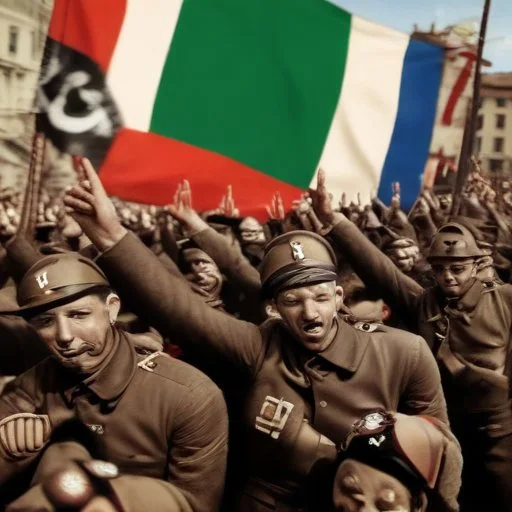
The CLNAI, a coalition of anti-fascist parties, played a crucial role in coordinating the resistance movement against the Nazi occupation. As the Allies advanced on the Italian peninsula, the CLNAI saw an opportunity to strike a decisive blow against the Axis powers. On April 19, 1944, the committee issued a manifesto, calling on the Italian people to rise up against their oppressors and take control of their own destiny.
Among the key figures involved in the Liberation Day were individuals like Ferruccio Parri, a political leader and founder of the Action Party, and Luigi Longo, a prominent communist leader. These individuals, along with many others, risked everything to defy the Nazi regime and bring freedom back to Italy.
The Liberation Day marked a turning point in the war, as it shifted the balance of power in favor of the Allies. The uprising also had significant cultural and social implications, as it brought together individuals from diverse backgrounds and political affiliations to fight against a common enemy.
The Liberation Day was not without its controversies, as some critics accused the CLNAI of being too closely tied to communist ideologies. However, the committee's actions were largely driven by a desire to free Italy from Nazi occupation, rather than any ideological agenda.
The Liberation Day paved the way for the eventual defeat of the Axis powers in Italy and had a profound impact on the country's post-war development. It also served as an inspiration to resistance movements across Europe, demonstrating the power of collective action against tyranny.
In the words of Ferruccio Parri, "The Liberation Day was not just a battle against the Germans, but a struggle for the very soul of Italy."
The Liberation Day serves as a powerful reminder of the human spirit's capacity for resistance and defiance in the face of overwhelming odds. It is a testament to the bravery and sacrifice of those who fought against tyranny, and an inspiration to future generations to stand up against injustice.
Ferruccio Parri, one of the key figures involved in the Liberation Day, was a political leader and founder of the Action Party. Born in 1890, Parri was a strong advocate for democracy and social justice, and his leadership played a crucial role in uniting the Italian people against the Nazi occupation. His bravery and strategic thinking inspired many to join the resistance movement.
Parri's involvement in the resistance began early on, when he joined the anti-fascist movement in the 1920s. He was arrested and imprisoned several times for his activism, but he continued to fight against the regime. During World War II, he became a key figure in the CLNAI, working closely with other leaders to coordinate the resistance movement.
After the war, Parri went on to become the Prime Minister of Italy, playing a crucial role in shaping the country's post-war development. His legacy continues to inspire Italians to this day.
The Liberation Day was not an isolated event, but rather part of a broader trend of resistance movements across Europe during World War II. One notable comparison can be drawn with the French Resistance, which also played a crucial role in liberating France from German occupation. Both movements shared similar goals and tactics, including guerrilla warfare and sabotage against German forces.
However, there were also significant differences between the two movements. The French Resistance was more decentralized and fragmented, with multiple groups operating independently. In contrast, the Italian resistance movement was more unified, with the CLNAI playing a central role in coordinating efforts.
Despite these differences, both movements demonstrate the power of collective action against tyranny, and serve as an inspiration to future generations.
The Liberation Day had a profound cultural impact on Italy, shaping the country's post-war identity and inspiring a new wave of artistic and literary creativity. The resistance movement's bravery and sacrifice inspired a generation of Italian artists, writers, and filmmakers.
The neorealist film movement, which emerged in the 1940s and 1950s, was deeply influenced by the Liberation Day. Filmmakers like Vittorio De Sica and Roberto Rossellini drew on their own experiences during the war to create powerful and poignant films that captured the spirit of the resistance movement.
The Liberation Day also had a profound impact on Italian literature, with many writers drawing on their experiences during the war to create powerful and moving works. Italy's cultural heritage was forever changed by the bravery and sacrifice of the resistance movement.

The Liberation Day was not just a national struggle, but also an integral part of the broader geopolitical context of World War II. As the Allies advanced on the Italian peninsula, the Nazi occupation became increasingly desperate and brutal.
The Italian Social Republic, established by Mussolini in 1943, was a puppet government heavily reliant on German support. As the Allies pushed northwards, the German occupation became increasingly weakened, creating an opportunity for the resistance movement to strike a decisive blow.
The Liberation Day marked a turning point in the war, as the Allies were able to capitalize on the weakening of German forces to push deeper into Europe. The event had far-reaching implications for the outcome of the war, and paved the way for the eventual defeat of the Axis powers.
The Liberation Day serves as a powerful teaching tool for educators, offering a unique opportunity to explore themes of resistance, courage, and social change. By examining the events leading up to the Liberation Day, students can gain a deeper understanding of the complexities of World War II and the human experience.
The event can be used to teach critical thinking skills, as students are encouraged to analyze the motivations and actions of the key figures involved. The Liberation Day also offers a unique opportunity to explore the importance of civic engagement and collective action in shaping social change.
By incorporating the Liberation Day into educational curricula, educators can inspire a new generation of students to stand up against injustice and fight for their rights.>