


January 18, 1945, marked a triumphant day in the history of World War II as the Red Army, led by Commander Ivan Konev, liberated the ancient city of Kraków, Poland from the clutches of Nazi occupation. After years of brutal subjugation, the city's residents rejoiced as Soviet forces stormed the city, shattering the chains of tyranny and reclaiming their freedom.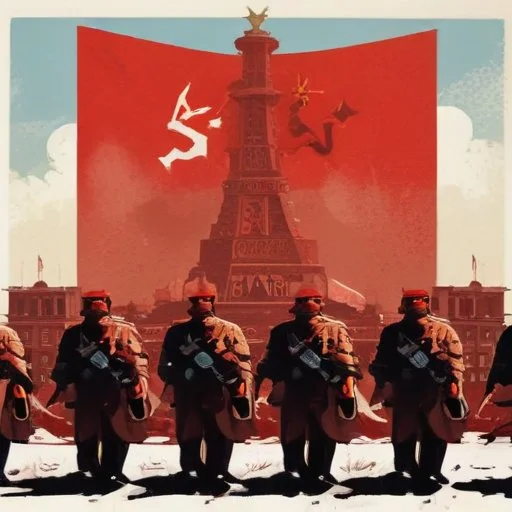
In 1939, Nazi Germany invaded Poland, and Kraków became a vital strategic location for the occupying forces. The city's rich cultural heritage, including its stunning architecture and historic landmarks, was no match for the brutal onslaught of the Nazi regime. As the war raged on, Kraków suffered immense devastation, with its Jewish population being particularly targeted. The city's once-vibrant streets were transformed into a scene of despair, with citizens living in constant fear of persecution and violence.
In early 1945, the Red Army launched a series of offensives aimed at driving the Nazi forces out of Eastern Europe. Commander Ivan Konev's 1st Ukrainian Front played a crucial role in the liberation of Kraków, pushing through the Carpathian Mountains and breaching the Nazi defenses. The Soviet forces fought valiantly, overcoming fierce resistance and ultimately breaking through to the city's outskirts.
On January 18, 1945, Soviet troops finally entered Kraków, setting the city free from its six-year-long nightmare of Nazi occupation. The residents, who had been living in constant fear, emerged from their homes and shelters, tears of joy streaming down their faces as they greeted their liberators. The city's historic main square, once a site of Nazi rallies and propaganda, was now filled with the sounds of laughter and celebration.
The liberation of Kraków marked a significant turning point in the war, as it opened up a vital route for the Soviet forces to advance deeper into Poland and eventually Germany. The city's liberation also allowed for the rescue of thousands of prisoners from the nearby Auschwitz-Birkenau concentration camp, providing a glimpse into the atrocities committed by the Nazi regime.
The liberation of Kraków had a profound impact on the city's cultural heritage. The Soviet forces, although often viewed as occupiers themselves, played a crucial role in preserving the city's historic landmarks and cultural institutions. In the aftermath of the war, Kraków became a symbol of resilience and hope, with its residents working tirelessly to rebuild and restore their beloved city.
Alicja, a Kraków resident who lived through the occupation, recalled the liberation: "It was like a miracle. We had given up hope, but then suddenly, the Soviets were there, smiling and laughing with us. It was a feeling I'll never forget."
These words, although simple, capture the essence of the liberation of Kraków – a testament to the human spirit's capacity to persevere and thrive in the face of adversity.
Remembering the bravery of those who fought for freedom and the resilience of those who endured the occupation, we honor the spirit of Kraków, a city that continues to inspire and captivate the world.
The Soviet forces, led by Commander Ivan Konev, devised a meticulous plan to liberate Kraków. They launched a series of massive artillery bombardments to weaken the Nazi defenses, followed by a rapid infantry advance to break through the enemy lines. The Soviet troops then encircled the city, cutting off the Nazi forces' lines of supply and communication. This strategic plan enabled the Soviet forces to overcome the Nazi resistance and ultimately liberate Kraków.
The Soviet plan was also influenced by the need to rescue prisoners from the nearby Auschwitz-Birkenau concentration camp. The Soviet forces made a conscious effort to prioritize the liberation of the camp, recognizing the atrocities committed by the Nazi regime.
Władysław Raczkiewicz, the President of the Polish Government-in-Exile, played a crucial role in coordinating the Allied efforts to liberate Poland. From his base in London, Raczkiewicz maintained close relationships with the British and Soviet governments, ensuring that the Polish interests were represented in the war effort.
Raczkiewicz was a strong advocate for the liberation of Kraków, recognizing the city's cultural and historical significance. He worked tirelessly to provide intelligence and logistical support to the Soviet forces, facilitating their advance into Poland.
The liberation of Kraków marked the beginning of a cultural renaissance in the city. The Soviet forces, although often viewed as occupiers, played a significant role in preserving Kraków's cultural heritage. The city's historic landmarks, including Wawel Castle and St. Mary's Basilica, were protected and restored, allowing the city to reclaim its rich cultural identity.
The liberation also facilitated the revival of Kraków's artistic and intellectual communities. Writers, poets, and artists, who had been forced into hiding or exile during the occupation, began to re-emerge, creating works that reflected the city's newfound freedom and hope.
The liberation of Kraków took place against the backdrop of a rapidly shifting geopolitical landscape. The Soviet Union, recognizing the strategic importance of Eastern Europe, had been pushing its forces deep into Poland, aiming to secure a post-war sphere of influence.
The Western Allies, while supporting the Soviet war effort, were also wary of Soviet expansionism. The liberation of Kraków, therefore, was not only a military victory but also a significant geopolitical development, marking the beginning of a new era of Soviet influence in Eastern Europe.
The liberation of Kraków was not an isolated event; it was part of a broader pattern of urban liberations across Europe. The Soviet forces had already liberated cities like Kiev and Minsk, while the Western Allies had freed cities like Paris and Brussels.
However, the liberation of Kraków holds a unique significance due to the city's cultural and historical importance. The liberation of Kraków was a beacon of hope for the Polish people, symbolizing the end of the Nazi occupation and the beginning of a new era of freedom and independence.