


On August 25, 1944, the City of Light erupted in jubilation as the French Resistance, backed by the Allied forces, reclaimed Paris from the grip of German occupation. This daring insurrection marked a pivotal moment in World War II, etching an indelible mark on the collective consciousness of the French people.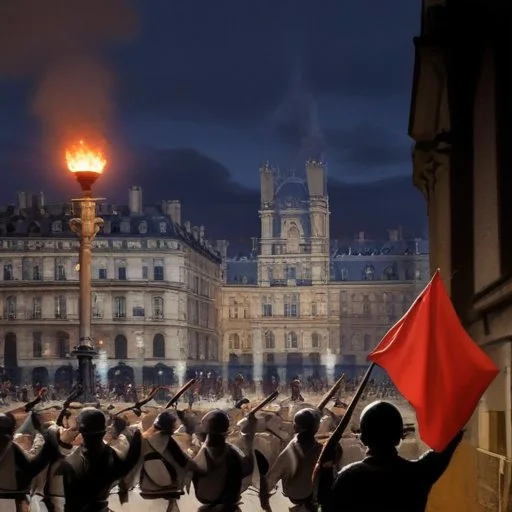
In 1940, Nazi Germany, under the command of Adolf Hitler, launched a surprise attack on France, precipitating a hasty surrender. The once-magnificent city of Paris, pride of France, was subsequently occupied by German forces. The French Resistance, a loose network of guerrilla fighters, intellectuals, and everyday citizens, began to organize against the occupiers, awaiting the opportune moment to strike back.
| Date | Event |
|---|---|
| August 15, 1944 | The French Resistance launches a series of coordinated attacks on German forces in Paris. |
| August 19, 1944 | General Leclerc's 2nd French Armored Division begins its advance on Paris. |
| August 24, 1944 | The German garrison in Paris begins to retreat, and the French Resistance takes control of key landmarks and infrastructure. |
| August 25, 1944 | General Leclerc's division liberates Paris, and the city erupts in celebration. |
The Liberation of Paris dealt a significant blow to German morale and signaled the beginning of the end of their occupation in Western Europe. The successful uprising also boosted the French Resistance's reputation, inspiring similar movements across the continent.
The Liberation of Paris not only freed the city from German rule but also revitalized French national identity. The event inspired a surge in artistic expression, with writers, artists, and musicians capturing the essence of the struggle and the triumph.
The Liberation of Paris came at a high cost, with estimates suggesting over 1,500 French civilians lost their lives in the fighting. The event also sparked debates about the role of the French Resistance and the Allied forces in the liberation, with some criticizing the delay in Allied intervention.
]"Paris, outragée, Paris, brisée, Paris, martyrisée, mais Paris, libérée!" (Paris, outraged, Paris, broken, Paris, martyred, but Paris, liberated!) - General Charles de Gaulle, August 25, 1944
The Liberation of Paris serves as a testament to the power of human resilience and the unwavering spirit of resistance. As the city continues to flourish, its people remain proud of their heritage, honoring the bravery and sacrifice that forged their freedom.
As the leader of the Free French Forces, General Charles de Gaulle played a pivotal role in rallying the French people against the German occupation. Born on November 22, 1890, in Lille, France, de Gaulle was a natural leader with a strong sense of patriotism and conviction. He famously declared, "France has lost a battle, but France has not lost the war," after the fall of France in 1940.
De Gaulle's unwavering commitment to French liberation earned him the respect and admiration of the French people. His iconic speech on August 25, 1944, celebrating the liberation of Paris, remains a testament to his oratory skills and leadership.
Throughout the war, de Gaulle worked closely with the French Resistance, coordinating efforts to disrupt German supply lines and communication networks. His leadership and strategic thinking proved instrumental in the ultimate defeat of the German occupation.
In the days leading up to the liberation, Paris was a city under immense pressure. German forces, aware of the impending Allied assault, tightened their grip on the city, imposing strict curfews and rationing food and supplies.
The French Resistance, meanwhile, was busy preparing for the final push. Guerrilla fighters, armed with whatever they could find, began to take potshots at German patrols, while civilians stockpiled food and supplies in anticipation of the liberation.
As the Allies closed in, the sounds of artillery fire and machine gun bursts grew louder, signaling the imminent arrival of General Leclerc's 2nd French Armored Division. The stage was set for a dramatic and bloody showdown.
In the midst of the chaos, ordinary Parisians risked their lives to aid the Resistance, providing shelter and supplies to the fighters. It was a testament to the resilience and bravery of the French people, who refused to give in to the occupying forces.
Despite the brutal occupation, Parisian culture continued to thrive, albeit in secret. Artists, writers, and musicians found ways to express themselves, often using their work as a form of subtle resistance.
The city's famous cabarets, once hubs of entertainment, became hotbeds of underground activity. Performers would subtly critique the German occupation, using satire and irony to poke fun at the enemy.
Writers like Jean-Paul Sartre and Albert Camus produced works that directly addressed the themes of freedom and resistance. Their writing inspired a generation of French intellectuals, who saw the struggle against the Germans as a fight for their very identity.
The Liberation of Paris marked a new era of creative expression, as artists and writers celebrated their newfound freedom. The city's cultural landscape was forever changed, with a renewed emphasis on artistic expression and intellectual freedom.
The Liberation of Paris was a delicate balancing act, with multiple factions vying for power and influence. General de Gaulle's Free French Forces, the French Resistance, and the Allied powers all had their own agendas, which often clashed.
The French Resistance, in particular, was a mosaic of different ideological groups, ranging from communists to nationalists. Their disparate goals and tactics often led to internal conflicts, which threatened to derail the entire operation.
De Gaulle's leadership played a crucial role in holding the factions together, as he navigated the treacherous landscape of wartime politics. His ability to forge alliances and make difficult decisions proved instrumental in securing the liberation of Paris.
In the aftermath of the liberation, the complex web of alliances and rivalries continued to shape French politics, as the country struggled to rebuild and redefine itself.
The Liberation of Paris did not occur in a vacuum. It was part of a broader geopolitical struggle, with the Allied powers seeking to defeat the Axis forces and secure a foothold in Western Europe.
The Soviet Union's advance on the Eastern Front had already weakened the German army, while the Allied forces were slowly pushing their way through Italy. The Liberation of Paris marked a pivotal moment in the war, as the Allies turned their attention to the heart of Europe.
The timing of the liberation was also influenced by the ongoing negotiations between the Allies and the Soviet Union. The impending Yalta Conference, where the post-war world order would be shaped, added an extra layer of complexity to the liberation effort.
In this complex web of alliances and rivalries, the Liberation of Paris was a symbol of French defiance and a testament to the power of collective action.