


The liberation of Marseille on August 28, 1944, marked a monumental victory for the Allied forces and a beacon of hope for the French people. After four long years of German occupation, the city's residents finally emerged from their homes to greet their liberators, waving tricolored flags and rejoicing in the streets.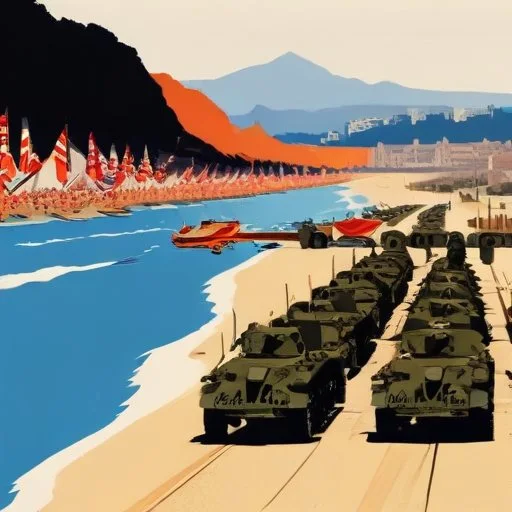
In 1940, Germany's invasion of France led to the occupation of Marseille, a strategic port city on the Mediterranean coast. The French Resistance, a grassroots movement of men and women fighting against the Nazi regime, began to organize, and by 1944, the Allies had launched a massive campaign to liberate Western Europe. Marseille, a crucial hub for the German war effort, was a key target in the Allied strategy.
General Jean de Lattre de Tassigny, a decorated French military leader, commanded the French Expeditionary Corps, which played a vital role in the liberation of Marseille. Alongside de Lattre, General Charles de Gaulle, the leader of the Free French Forces, played a crucial role in coordinating the Resistance efforts and planning the Allied campaign.
The liberation of Marseille marked a significant milestone in the Allied campaign, opening up the Mediterranean coast to Allied shipping and providing a crucial foothold for the final push into Germany. For the people of Marseille, the end of occupation brought a sense of freedom and relief, as they began to rebuild their city and their lives.
The liberation of Marseille had a profound impact on the city's cultural and social fabric. The French Resistance, which played a key role in the liberation, became a symbol of French pride and patriotism, inspiring a new generation of leaders and activists. The event also marked a turning point in the city's history, as Marseille began to rebuild and regenerate, emerging as a thriving commercial and cultural center in the post-war era.
One notable story of courage is that of Marceline Auffret, a young Resistance fighter who risked her life to provide vital intelligence to the Allies. Her bravery and selflessness embodied the spirit of the French people during this tumultuous period. Many more stories like Marceline's remain untold, a testament to the countless acts of heroism that took place during the liberation of Marseille.
The liberation of Marseille serves as a powerful reminder of the importance of perseverance, unity, and resistance in the face of oppression. As we look back on this pivotal moment in history, we are reminded of the enduring spirit of the French people and the bravery of the Allied forces who fought for their freedom.
Today, the liberation of Marseille is commemorated through various tributes and memorials, including the Marseille Memorial, which honors the soldiers and civilians who gave their lives during the battle. As we continue to learn from the past, we are inspired to build a brighter future, founded on the principles of freedom, unity, and human dignity.
The liberation of Marseille had a profound impact on the city's cultural landscape. The end of occupation marked a new era of artistic and literary expression, as writers, artists, and musicians began to explore themes of freedom, resistance, and national identity.
The city's famous Old Port, once a hub of Nazi activity, was transformed into a symbol of liberation, with street performers, cafe concerts, and impromptu celebrations erupting throughout the summer of 1944.
Le Corbusier, the renowned architect, played a key role in Marseille's post-war reconstruction, designing innovative housing projects and urban planning initiatives that revitalized the city.
In the days leading up to the liberation, Marseille's residents lived in a state of heightened tension, as the sound of artillery fire and explosions grew louder.
On the morning of August 28, 1944, German forces, realizing their position was untenable, began a hasty retreat, leaving behind a trail of destruction and abandonment.
The Allied troops, led by General de Lattre, entered the city to scenes of jubilation, as residents cheered, wept, and embraced their liberators.
General Charles de Gaulle, the leader of the Free French Forces, was a towering figure in the liberation of Marseille. His unwavering commitment to the Allied cause and his strategic genius played a crucial role in planning and executing the campaign.
De Gaulle's leadership style was marked by a unique blend of charisma, intelligence, and humility, earning him the respect and admiration of his troops and allies alike.
His famous speech, delivered on August 25, 1944, in which he declared, "La France a reconquis sa liberté!" (France has reconquered its freedom!), remains an iconic moment in French history.
The liberation of Marseille was a significant political milestone, marking a major turning point in the balance of power in Western Europe.
The event highlighted the growing strength and cooperation between the Allied forces, as well as the increasingly precarious position of the German army.
The liberation of Marseille also paved the way for the eventual surrender of Germany, as the Allies continued their march towards Berlin.
The liberation of Marseille had a profound impact on the city's economy, as the Allies worked to rebuild and revitalize the war-torn region.
The port of Marseille, once a key hub of German activity, was quickly restored to its former glory, becoming a vital artery of trade and commerce.
The influx of Allied aid and investment sparked a period of rapid economic growth, as Marseille emerged as a thriving commercial center in the post-war era.