


On October 13, 1943, World War II witnessed a pivotal moment as Marshal Pietro Badoglio, the newly appointed Prime Minister of Italy, dropped a bombshell by announcing that Italy had officially declared war on its former ally, Germany. This sudden and drastic turnaround marked a significant shift in the war's trajectory, as Italy, a former loyal companion to the Axis powers, now turned against the very nation that had propped it up.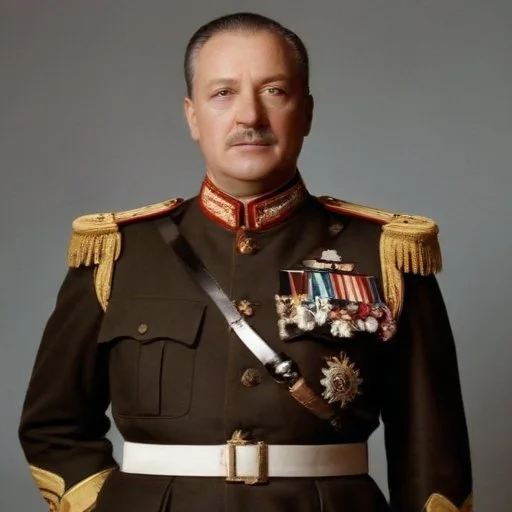
Italy's entry into World War II was a gradual one, with the country initially maintaining a policy of "non-belligerence" before eventually joining the Axis powers in 1940. The German-Italian alliance, sealed with the Pact of Steel, seemed unbreakable, with both nations fighting side by side in North Africa, the Balkans, and the Eastern Front. However, as the war turned in favor of the Allies, Italy's military fortunes began to wane, and the country found itself struggling to maintain its grip on its occupied territories.
By the summer of 1943, Italy's military situation was dire. The Allies had landed in Sicily, and the Italian military was on the brink of collapse. Faced with the prospect of defeat, Badoglio, who had recently replaced Benito Mussolini as Prime Minister, embarked on a high-stakes gamble. He secretly negotiated with the Allies, ultimately signing the Armistice of Cassibile on September 8, 1943, which effectively ended Italy's involvement in the war on the side of the Axis.
A little over a month later, on October 13, Badoglio made the stunning announcement that Italy had officially declared war on Germany. This move was a masterstroke of realpolitik, as Badoglio aimed to distance his country from the impending German defeat, salvage what was left of Italy's battered economy, and restore the nation's tattered international reputation.
"We have decided to fight alongside the Allies, not because we are convinced of their victory, but because we are convinced of our defeat." - Marshal Pietro Badoglio
The Italian declaration of war against Germany had far-reaching cultural and social implications. The move marked a significant shift in Italy's national identity, as the country began to distance itself from its fascist past and forge a new path towards democracy and reconstruction.
The Italian declaration of war against Germany set a crucial precedent for future events. It demonstrated that even in the darkest of times, nations could change course and realign their allegiances, paving the way for similar defections and rebellions in the years to come.
Marshal Pietro Badoglio's daring gamble serves as a testament to the power of courageous leadership and adaptability in the face of adversity. His decision to declare war on Germany, despite the risks, ultimately helped to pave the way for Italy's liberation and the Allied victory in Europe.
The Italian declaration of war against Germany was not an overnight decision. It was the culmination of months of secret negotiations between Badoglio's government and the Allies. The process began in April 1943, when Italian diplomats started making overtures to the British and American governments. The Allies, keen to exploit the growing divisions within the Axis powers, responded cautiously, aware that a sudden switch in allegiance could spark a German occupation of Italy.
In the weeks that followed, Badoglio's government sent emissaries to Lisbon, Tangier, and other neutral cities to meet with Allied representatives. The Italians proposed a conditional surrender, offering to switch sides in exchange for a guarantee of moderate treatment and a voice in the post-war reconstruction of Europe. The Allies, however, demanded unconditional surrender, leading to a stalemate in the negotiations.
The breakthrough came in late August, when the Italians agreed to accept the Allied terms, including the presence of American troops on Italian soil. The Armistice of Cassibile, signed on September 8, 1943, marked the beginning of Italy's official withdrawal from the war. The subsequent declaration of war against Germany on October 13 was the logical next step, formalizing Italy's new status as a cobelligerent of the Allies.

Marshal Pietro Badoglio, the architect of Italy's dramatic turnaround, was a seasoned military leader and politician. Born in 1871, Badoglio had served as Chief of Staff of the Italian Army during World War I and later as Governor of Libya under Mussolini's regime. Despite his association with the fascist government, Badoglio was a pragmatist who had grown disillusioned with Mussolini's conduct of the war.
Badoglio's appointment as Prime Minister on July 25, 1943, marked a significant shift in Italy's political landscape. He was tasked with extricating Italy from the war, a mission he pursued with characteristic cunning and determination. Throughout the summer and autumn of 1943, Badoglio navigated the treacherous waters of international diplomacy, expertly playing the Allies and Germans against each other to secure the best possible deal for Italy.
Despite his crucial role in Italy's surrender and subsequent declaration of war against Germany, Badoglio remains a controversial figure. Critics have accused him of being overly cautious and compromising, while others see him as a hero who saved Italy from further devastation.
The Italian declaration of war against Germany was not unprecedented. In 1941, following the German invasion of Yugoslavia, Bulgaria, and Greece, Turkey had declared war on Germany, despite being a signatory to the Tripartite Pact. Similarly, Finland, which had initially fought alongside Germany against the Soviet Union, eventually changed sides and declared war on Germany in September 1944.
What set Italy's decision apart, however, was its significance in the broader context of the war. As a founding member of the Axis powers, Italy's defection marked a major blow to German morale and prestige. The move also opened up new possibilities for the Allies, allowing them to establish a foothold in the European mainland and eventually paving the way for the D-Day landings in Normandy.
In contrast to other Axis satellites, such as Hungary and Romania, which continued to fight alongside Germany until the bitter end, Italy's decision to switch sides reflected a more nuanced understanding of the war's trajectory and a willingness to adapt to changing circumstances.

The Italian declaration of war against Germany had significant cultural and social implications for the country. As Italy began to distance itself from its fascist past, the nation underwent a profound transformation, embracing democratic values and forging a new national identity.
The war years had witnessed a stifling of creativity and free expression, as the fascist regime sought to impose its own rigid ideology on the Italian people. With the fall of Mussolini and the declaration of war against Germany, however, a new era of cultural and artistic flowering began. Italian writers, artists, and intellectuals, long silenced by the regime, now found themselves free to express their thoughts and ideas.
The declaration of war also sparked a wave of anti-German protests and resistance movements across Italy, as ordinary citizens began to assert their opposition to the Nazi occupation. These movements, which would eventually contribute to Italy's liberation, marked a crucial turning point in the country's struggle for independence and self-determination.
The Italian declaration of war against Germany had significant economic implications for the country. As Italy began to distance itself from the Axis powers, the nation faced the daunting task of rebuilding its shattered economy.
The war had left Italy's infrastructure in tatters, with its industrial base severely damaged and its agricultural sector struggling to recover. The declaration of war against Germany marked the beginning of a long and difficult process of reconstruction, as the Italian government sought to restore the country's economic viability and compete with its more advanced European neighbors.
Despite the challenges, the Italian economy began to show signs of growth in the immediate post-war period, driven by a combination of American aid, Italian ingenuity, and a newfound commitment to democracy and free enterprise. The declaration of war against Germany had paved the way for Italy's economic rebirth, setting the stage for the country's future growth and prosperity.