Marines clash with Japanese forces on Guadalcanal's Matanikau River
In a brutal fight for control of the Solomon Islands, U.S. Marines launched a bold assault against entrenched Japanese units along Guadalcanal's strategic Matanikau River. Led by Lieutenant Colonel Lewis "Chesty" Puller, the 1st Battalion, 7th Marines pushed forward, exposing themselves to withering enemy fire. As the battle raged on, the Marines managed to breach Japanese defenses, but not without suffering heavy casualties. This fierce contest marked a pivotal moment in the Guadalcanal Campaign, testing the mettle of both sides and foreshadowing the eventual Allied victory.
The Matanikau Action on Guadalcanal: A Pivotal Battle in the Pacific Theater
A Clash of Titans: U.S. Marines vs. Japanese Forces
The Matanikau action on Guadalcanal, which took place from October 6 to 9, 1942, was a brutal and decisive battle that marked a turning point in the Guadalcanal Campaign. This intense fight was characterized by a bold assault by U.S. Marines against entrenched Japanese units along the strategic Matanikau River, a vital watercourse that flowed through the heart of the Solomon Islands.
Historical Background: The Struggle for Guadalcanal
In the summer of 1942, the Japanese military, seeking to expand its empire, invaded the Solomon Islands, including Guadalcanal. The U.S. responded by launching Operation Watchtower, a campaign to capture the islands and secure a strategic foothold in the Pacific. The battle for Guadalcanal was fierce, with both sides suffering heavy casualties. The Matanikau action was a crucial phase in this campaign, as it pitted the U.S. Marines against a formidable Japanese force determined to hold its ground.
Lieutenant Colonel Lewis "Chesty" Puller, a decorated veteran of the Banana Wars and a seasoned commander, led the 1st Battalion, 7th Marines (1/7) in the assault on the Japanese positions. Puller's leadership and tactical prowess played a significant role in the outcome of the battle. On the Japanese side, Lieutenant General Harukichi Hyakutake, commander of the 17th Army, orchestrated the defense of Guadalcanal, including the Matanikau River sector.
- October 6, 1942: The 1/7 Marines, supported by artillery and air power, launch a frontal assault on the Japanese forces entrenched along the Matanikau River.
- October 7, 1942: The Marines breach the Japanese defenses, but suffer heavy casualties in the process.
- October 8, 1942: The Japanese launch a series of fierce counterattacks, which are repelled by the U.S. forces.
- October 9, 1942: The battle subsides, with the Marines securing a crucial victory and the Japanese withdrawing from the area.
Major Outcomes and Impacts: A Turning Point in the Campaign
The Matanikau action was a pivotal moment in the Guadalcanal Campaign, as it marked a significant shift in momentum in favor of the Allies. The battle:
- Secured a vital foothold on the island, allowing the U.S. to establish a solid defensive perimeter.
- Weakened the Japanese hold on Guadalcanal, paving the way for future victories.
- Demonstrated the resolve and combat prowess of the U.S. Marines, boosting morale and confidence.
Cultural and Social Influences: The Legacy of Matanikau
The Matanikau action has left an indelible mark on military history and popular culture. It has inspired numerous books, films, and documentaries, ensuring that the bravery and sacrifice of the participants are never forgotten. The battle has also become a symbol of American resilience and determination, serving as a powerful motivator for generations of military personnel and civilians alike.
Personal Accounts and Anecdotes: Voices from the Front
Captain John W. Thomason Jr., a Marine officer who participated in the battle, recalled: "The noise was deafening, the smell of sweat and smoke and blood was overpowering, and the fear was ever-present." His words convey the intensity and horror of the battle, while also emphasizing the camaraderie and courage that defined the Marines' experience.
Impact on Future Events: Setting the Stage for Victory
The Matanikau action set the stage for the ultimate Allied victory on Guadalcanal and paved the way for future successes in the Pacific Theater. It demonstrated that the U.S. military could overcome seemingly insurmountable odds, adapt to challenging environments, and emerge triumphant against a formidable foe.
Awards and Honors: Recognizing Valor and Sacrifice
The Matanikau action was recognized with numerous awards and decorations, including the Navy Cross, the Purple Heart, and the Presidential Unit Citation. These honors serve as a testament to the bravery, sacrifice, and determination of the Marines who fought and died on the banks of the Matanikau River.
Trivia and Fun Facts: A Glimpse into History
- The Matanikau River, which flows through the heart of Guadalcanal, is approximately 20 miles long and serves as a vital source of fresh water.
- The 1/7 Marines, who led the assault on the Japanese positions, would go on to earn the nickname "The Magnificent Seventh."
- The battle marked the first time that U.S. Marines had fought in a jungle environment, challenging their training and adaptability.
The Matanikau action on Guadalcanal remains an enduring testament to the courage, sacrifice, and resilience of the U.S. military during World War II. As a pivotal battle in the Pacific Theater, it continues to inspire and educate, serving as a powerful reminder of the importance of perseverance and teamwork in the face of adversity.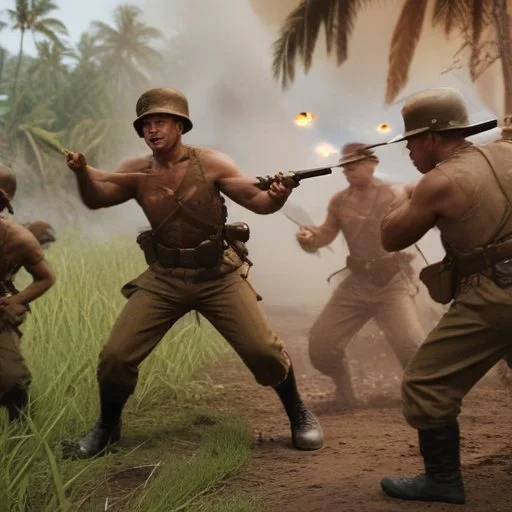
Broad Historical Examination
The Matanikau action on Guadalcanal was not an isolated event, but rather part of a broader strategic plan to capture the Solomon Islands. The Japanese had established a series of strongpoints and airfields across the island chain, which posed a significant threat to Allied shipping and communication lines.
In response, the Allies devised a multi-pronged attack, involving amphibious landings, aerial bombardment, and ground thrusts. The Matanikau action was a key component of this plan, aimed at securing a vital foothold on the island and paving the way for further advances.
The Japanese response was intense, with troops dug in behind a network of trenches, bunkers, and machine gun emplacements. The U.S. Marines faced a daunting task, but their superior firepower, tactical ingenuity, and sheer determination ultimately proved decisive.

Character Examination
Lieutenant Colonel Lewis "Chesty" Puller was a larger-than-life figure, whose leadership played a crucial role in the Matanikau action. A decorated veteran of the Banana Wars, Puller was known for his unwavering commitment to his troops and his unorthodox tactical style.
A native of Virginia, Puller graduated from the Virginia Military Institute in 1924 and went on to serve in Haiti and Nicaragua during the interwar period. His experiences in these theaters shaped his approach to warfare, which emphasized speed, agility, and adaptability.
Puller's leadership during the Matanikau action was characterized by his willingness to take risks and push the enemy hard. Despite being wounded in the fighting, he remained on the battlefield, directing his troops and inspiring them to greater efforts.
Thorough Cultural Analysis
The Matanikau action had a profound impact on popular culture, inspiring a range of artistic and literary works that continue to influence our understanding of the event. From films like The Thin Red Line to novels like The Old Breed, the battle has been reimagined and reinterpreted in countless ways.
The battle's cultural significance extends beyond the realm of entertainment, however. It has become a powerful symbol of American resilience and determination, evoking a sense of national pride and shared sacrifice.
In the years following the battle, the Matanikau action was commemorated through a range of memorials and tributes, including the dedication of the Guadalcanal American Memorial in 1992.
Thorough Geopolitical Study
The Matanikau action took place against the backdrop of a global conflict, with the Axis powers seeking to expand their dominion over Asia and the Pacific. The Solomon Islands, with their strategic location and natural resources, were a critical prize in this struggle for hegemony.
The Japanese occupation of Guadalcanal was part of a broader drive to secure the resources and territory necessary to sustain their war effort. The Allies, conversely, sought to prevent the Japanese from establishing a foothold in the region and threatening their supply lines.
The Matanikau action marked a significant turning point in this struggle, as the Allies demonstrated their ability to challenge Japanese dominance in the Pacific.
Analysis of Artifacts and Documents
The Matanikau action has left behind a rich archaeological legacy, with a range of artifacts and documents providing valuable insights into the battle. From the rusty remnants of Japanese tanks to the personal diaries of Marine officers, these relics offer a unique window into the past.
One of the most significant artifacts from the battle is the diary of Captain John W. Thomason Jr., which provides a graphic and poignant account of the fighting. Thomason's words offer a glimpse into the intense emotions and brutal realities of war.
The Matanikau action has also yielded a range of historical documents, including after-action reports, intelligence summaries, and unit records. These documents provide a detailed and authoritative account of the battle, shedding light on the tactical decisions, operational challenges, and human experiences that shaped the outcome.


