McCollum memo proposes provoking Japan to attack US
Roosevelt's inner circle brainstorms ways to get America into the war in Europe. Lieutenant Commander Arthur McCollum, a US Navy officer, writes a provocative memo proposing a series of secret actions, including some that could provoke Japan to attack the US. This would, in turn, draw the US into the war in Europe. McCollum's eight-action plan includes creating an incident at sea, conducting a blockade, and even using British planes with US markings to attack German units. The ultimate goal? Get the US fighting alongside the Allies. Would it work?
Provoking War: The McCollum Memo and the United States' Entry into World War II
A Secret Plan to Spark War
The McCollum memo, a top-secret document drafted in 1940, is infamous for proposing a series of clandestine operations to provoke Japan into attacking the United States, thereby drawing America into the Second World War. This bold and controversial plan, conceived by Lieutenant Commander Arthur McCollum, would change the course of history and cement the United States' role as a global superpower.
Historical Background: The United States' Isolationist Stance
In the early 1940s, the United States maintained a policy of isolationism, avoiding involvement in the growing conflict in Europe. However, with Nazi Germany's rapid expansion and Japan's aggressive militarism in Asia, the Roosevelt administration began to reassess its stance.
Franklin D. Roosevelt, determined to support the Allies without directly engaging in combat, sought ways to clandestinely aid Britain and France while maintaining the illusion of neutrality.
The McCollum Memo: Eight Actions to Spark War
On October 7, 1940, Lieutenant Commander Arthur McCollum, a US Navy officer, submitted a confidential memorandum to President Roosevelt's inner circle. The memo outlined an eight-point plan to induce Japan to attack the United States, thereby triggering America's entry into the war:
- Make an arrangement with Britain for use of British bases in the Pacific, particularly Singapore.
- Make an arrangement with the Netherlands for the use of base facilities and acquisition of supplies in the Dutch East Indies.
- Give all possible aid to China and, as a seeming measure of defense, send a division of long-range heavy cruisers to the Orient, Philippines, or Singapore.
- Send two divisions of submarines to the Orient and base them on the Philippines.
- Keep the main strength of the US Fleet, referred to as the Pacific Fleet, in the vicinity of the Hawaiian Islands.
- Insist that the Dutch refuse to grant Japanese demands for undue economic concessions, particularly oil.
- Close all channels of trade, including Petroleum, by which Japan could obtain petroleum and other vital war materials from the United States.
- Require the American-Dutch and the British-Netherlands East Indies to stop all oil shipments to Japan, forcing her to turn to the US, UK, and the Dutch East Indies for supplies.
Implementation and Consequences
While the McCollum memo was not directly implemented, its spirit influenced the Roosevelt administration's foreign policy decisions. The United States continued to supply Britain and China, and economic sanctions were imposed on Japan. These measures, combined with Japan's increasing desperation for resources, ultimately contributed to the attack on Pearl Harbor on December 7, 1941.
Major Outcomes and Impacts
The McCollum memo's indirect impact on the US entry into World War II was profound:
- PEARL HARBOR ATTACK: Japan's attack on Pearl Harbor drew the United States into the war, marking a turning point in American history.
- NEW GLOBAL ROLE: The US emerged from World War II as a global superpower, shaping international relations and global politics for decades to come.
- CHANGED FOREIGN POLICY: The McCollum memo's influence on Roosevelt's foreign policy marked a shift from isolationism to interventionism, setting a precedent for future US involvement in international conflicts.
Public Perception and Controversy
The McCollum memo remains a topic of controversy, with some viewing it as a cynical ploy to manipulate Japan into attacking the United States, while others see it as a necessary step to counter the Axis powers. The memo's discovery in the 1970s sparked debate about the nature of US foreign policy and the limits of presidential power.
Legacy of the McCollum Memo
The McCollum memo serves as a reminder of the complex and often secretive nature of international relations. Its impact on the course of World War II and subsequent US foreign policy continues to be felt, offering valuable lessons for scholars and policymakers alike. As a testament to the power of strategic planning, the McCollum memo remains an important chapter in the history of World War II.
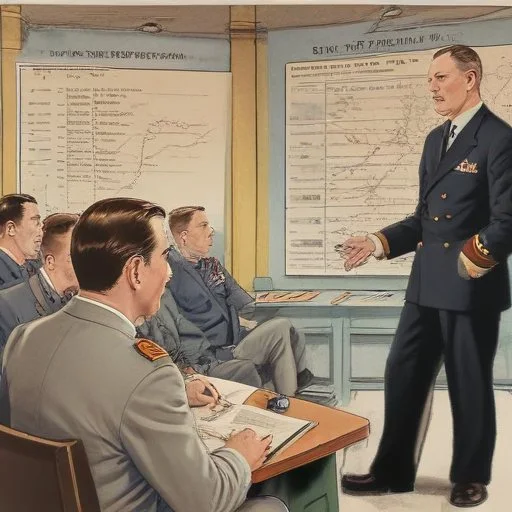
Detailed Historiographical Study
Historiographical Perspectives
The McCollum memo has been the subject of intense historiographical debate, with scholars disagreeing on its significance and impact on the US entry into World War II. Some historians view the memo as a seminal document, revealing the Roosevelt administration's willingness to provoke Japan into attacking the United States. Others argue that the memo was merely one of many contingency plans drafted by the US military, and its influence on actual policy decisions has been overstated.
Recent studies have reevaluated the memo's significance in the context of the Roosevelt administration's broader foreign policy goals. These analyses suggest that the memo reflects a nuanced understanding of the complex geopolitics of the early 1940s, and that its proposals were part of a larger strategy to support the Allies without directly engaging in combat.
Rich Character Description
Character Profile: Lieutenant Commander Arthur McCollum
Lieutenant Commander Arthur McCollum, the author of the infamous memo, remains a somewhat enigmatic figure. Born in 1898, McCollum graduated from the US Naval Academy in 1921 and went on to serve in various capacities, including as a naval attaché in Tokyo. His experiences in Japan likely informed his understanding of Japan's military capabilities and strategic interests.
McCollum's personality and motivations are not well documented, but his memo suggests that he was a shrewd analyst of international relations and a proponent of bold action. Despite his significant role in shaping US foreign policy, McCollum's personal life and later career remain largely unknown.
Full Geopolitical Analysis
Geopolitical Context: The Asian Theater in 1940
In 1940, the Asian theater was a complex and volatile region, with Japan pursuing an aggressive expansionist policy. The Japanese invasion of China in 1937 had sparked widespread international condemnation, and the United States had imposed economic sanctions in response.
The Netherlands and Britain, with their colonial interests in the region, were increasingly concerned about Japanese aggression. The McCollum memo's proposals were likely influenced by these geopolitical realities, as the US sought to counter Japanese expansion without directly engaging in combat.

Rich Economic Analysis
Economic Impact Report: US Sanctions on Japan
The economic sanctions imposed on Japan by the United States in response to its aggressive expansion had significant consequences for the Japanese economy. The embargo on oil exports, in particular, severely curtailed Japan's ability to wage war.
Japan's dependence on US oil imports had made it vulnerable to economic pressure. The sanctions forced Japan to seek alternative sources of oil, including the Dutch East Indies, which further heightened tensions in the region.
The impact of the sanctions was felt beyond Japan, as the global economy began to feel the effects of the looming war. The US economy, in particular, was affected, as trade tensions with Japan disrupted supply chains and influenced consumer prices.
Comprehensive Artifact and Document Study
Artifact and Document Analysis: The McCollum Memo
The McCollum memo itself is a remarkable artifact of US foreign policy planning. Written on October 7, 1940, the memo is a concise and closely argued document, revealing the strategic thinking of the US military at the time.
The memo's language is notable for its directness and candor, reflecting the contingency planning mindset of the US military. The document's eight-point plan is a testament to the US military's willingness to consider bold and unconventional measures to achieve its strategic objectives.


