


Sophie and Hans Scholl, both in their early twenties, were the driving force behind the White Rose. Their family, rooted in Christian values and humanism, instilled in them a strong sense of morality and justice. Their parents, Robert and Magdalena Scholl, encouraged their children to think critically and stand up against injustice, laying the groundwork for their future activism.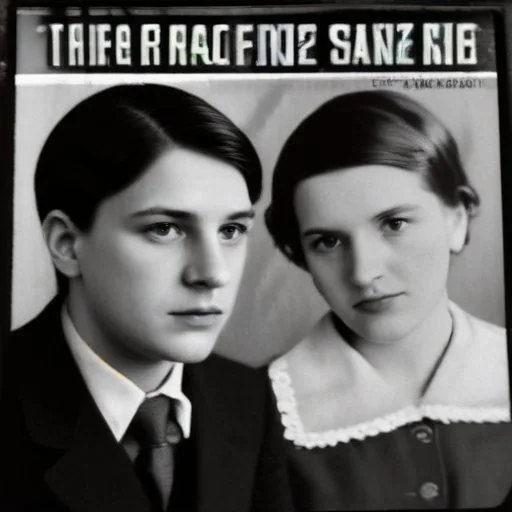
Sophie Scholl's final statement, as recorded by the Gestapo, embodies the spirit of the White Rose: "You know as well as we do that the war is lost. Why, then, do you still want to continue to shed your precious German blood? We will not be intimidated."
Their sacrifice paved the way for future resistance movements, including the Deutsche Widerstand (German Resistance) and the Kreisau Circle. The White Rose's message of non-violent resistance, tolerance, and human rights continues to inspire social movements around the world.
The execution of Sophie Scholl, Hans Scholl, and Christoph Probst serves as a powerful reminder of the importance of standing up against oppression, even in the face of overwhelming odds. Their sacrifices will continue to inspire generations to come, a testament to the transformative power of courage and conviction.
As we remember the brave hearts of the White Rose, we honor their ultimate sacrifice. May their story continue to ignite the flames of resistance against injustice and tyranny, guiding humanity toward a brighter, more just future.
Hans Scholl, the charismatic leader of the White Rose, was more than just a rebel against the Nazi regime. He was a complex individual with a strong sense of justice and a passion for life.
As a medical student, Hans was deeply affected by the horrors of war, which motivated him to take a stand against the Nazi's brutal policies. His involvement in the White Rose was not just a reaction to the regime's atrocities, but a manifestation of his own values and principles.
Through his actions, Hans demonstrated a remarkable ability to inspire others to join the resistance. His courage and conviction were contagious, and his leadership played a crucial role in shaping the White Rose's message and actions.

In the early 1940s, Europe was a battleground, with Nazi Germany expanding its territories through aggressive military campaigns.
The annexation of Austria, the invasion of Poland, and the subsequent occupations of France, Belgium, and the Netherlands created an atmosphere of fear and uncertainty.
Against this backdrop, the White Rose's anti-Nazi activism was not only a moral imperative but also a desperate attempt to awaken the German people to the true nature of their government's actions.
The White Rose's story has been retold and reinterpreted in various forms of art and literature, ensuring their legacy endures across generations.
In addition to films and plays, the White Rose has inspired musical compositions, such as the opera "Die Weiße Rose" by Udo Zimmermann, and literary works, including the novel "Sophie Scholl and the White Rose" by Annette Dumbach.
These creative expressions not only pay tribute to the group's courage but also serve as a testament to the power of art to preserve historical memory and inspire social change.

Traditional narratives of heroism often focus on grand, military victories, but the White Rose's story challenges this notion.
Their quiet, non-violent resistance, though ultimately unsuccessful in the short term, has been recognized as a powerful form of heroism in the face of overwhelming oppression.
This reevaluation of heroism highlights the significance of individual actions and moral courage in the face of systemic injustice.
The White Rose's anti-Nazi stance was deeply rooted in their Christian values, humanism, and pacifism.
Their leaflets, though critical of the Nazi regime, were not motivated by hatred or revenge but rather by a desire to promote peace, tolerance, and human dignity.
In this sense, the White Rose's resistance was not only a political statement but also a moral and philosophical one, highlighting the importance of individual moral agency in the face of systemic evil.